Repair teams do not usually lose money because a screwdriver looks ordinary. They lose money when small screws strip, plastic posts crack, accessories arrive in confusing layouts, or a tool feels fast in a demo but inconsistent after hundreds of repeated jobs. For smartphone, laptop, camera and watch repair, the real question is not simply whether an electric screwdriver can spin. The real question is whether it can help a technician work faster while keeping control around delicate assemblies.
That is why many professional buyers now pay close attention to the 0.35Nm electric screwdriver category. It sits in a practical low-torque range for small-screw work, especially when paired with precise bits, good storage and a repair-focused handle design. XOENAEN approaches this category as a professional precision tool brand and manufacturer, connecting product design with real repair workflows instead of treating the tool as a simple gadget.
Quick Answer
A 0.35Nm electric screwdriver is designed for controlled small-screw work in electronics repair. It helps users remove and install screws faster while reducing hand fatigue and overdriving risk. For phones, laptops, cameras and compact devices, torque stability, bit fit and accessory organization matter more than raw power.
What Is A 0.35Nm Electric Screwdriver?
A 0.35Nm electric screwdriver is a compact powered screwdriver built for precision fastening tasks. The 0.35Nm value describes the torque class: enough controlled rotational force for many small electronics screws, but not the aggressive power expected from construction or furniture assembly tools.
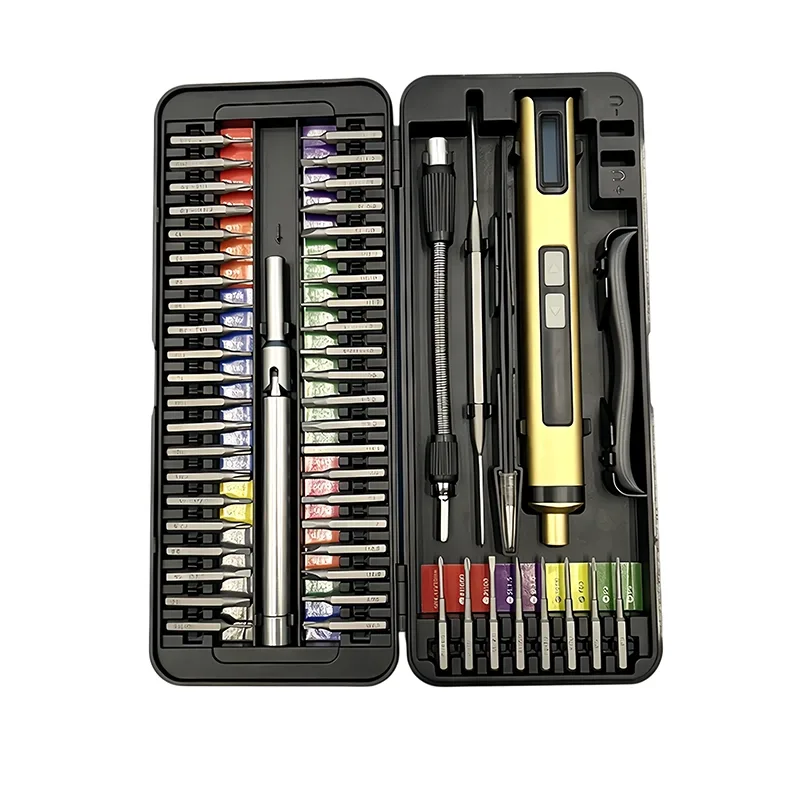
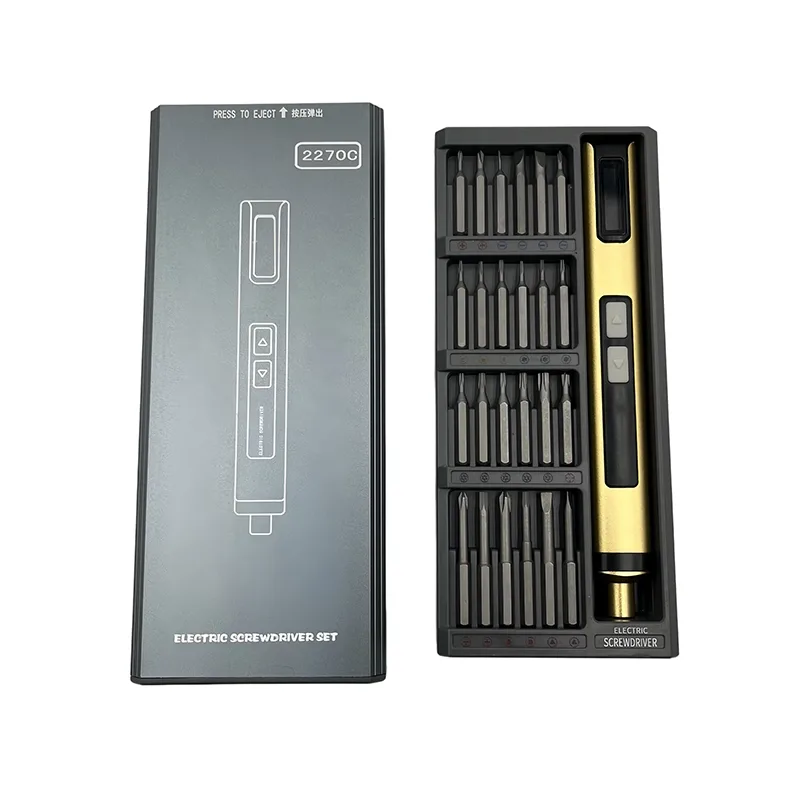
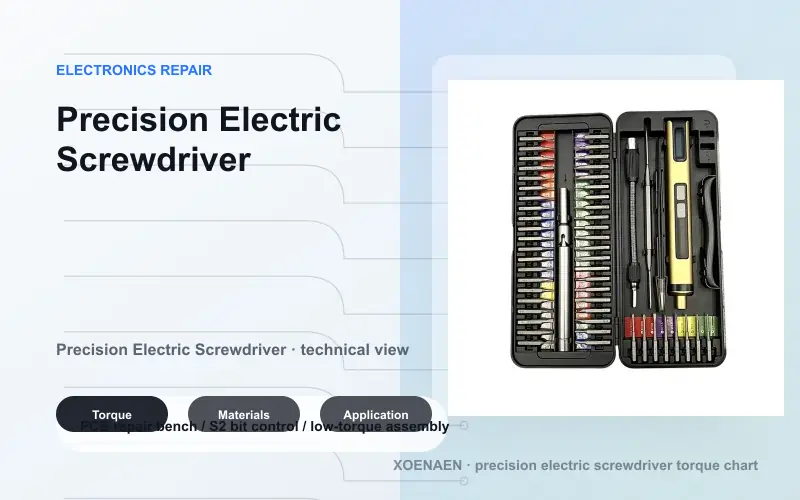
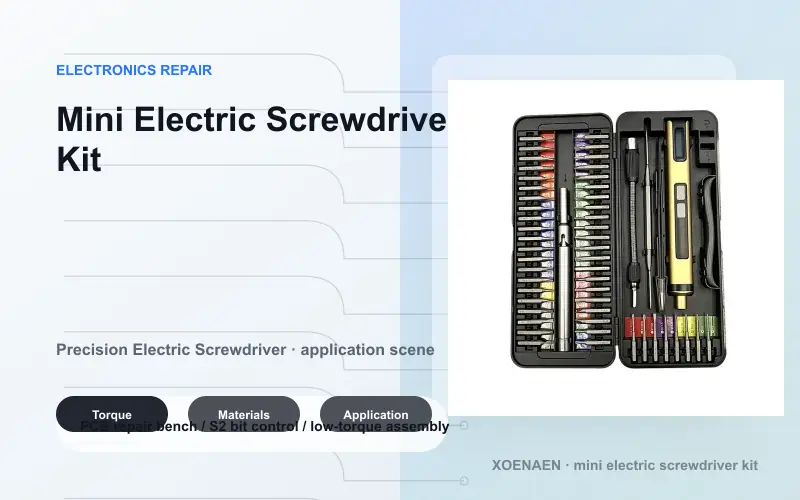
In practical repair work, the tool is used to speed up repetitive screw removal and installation. It is commonly paired with S2 steel bits, magnetic bit holding, charging accessories, extension tools and organized storage. Target users include phone repair technicians, laptop service teams, camera and watch repair users, DIY electronics users, retail tool buyers, distributors and OEM product planners.
A professional precision electric screwdriver should not remove user judgement. It should make repetitive work smoother while still allowing careful control when a screw, thread or plastic post needs extra attention.
Why This Torque Class Matters
Electronics repair creates a different tool problem from general household repair. A household driver may advertise high torque because it needs to drive screws into wood or thick materials. A repair screwdriver must deal with small screws, thin brackets, tight cavities and parts that are easy to damage.
If torque is too weak, technicians waste time finishing every screw by hand. If torque is too strong, the tool can overdrive screws, round screw heads or stress plastic mounting points. A 0.35Nm electric screwdriver offers a useful middle ground for many repair scenarios: fast enough to reduce repetitive labor, controlled enough for precision assemblies, and compact enough to fit a repair bench workflow.
For distributors and retail partners, this matters because the product promise is easier to explain. Instead of selling a generic electric driver, the product can be positioned around electronics repair, small-device maintenance and professional precision work.
Technical Parameters Buyers Should Review
The number printed on a product page is only one part of the decision. A good buyer review should connect torque with motor control, bit quality, charging, grip and storage. The table below shows the practical checkpoints for a 0.35Nm electric screwdriver product program.
| Parameter | Recommended Buyer Check | Why It Matters |
|---|---|---|
| Torque Class | Around 0.35Nm for low-torque precision tasks | Helps balance speed and screw protection |
| Bit Material | S2 steel or equivalent quality level | Improves wear resistance and screw engagement |
| Bit Fit | Accurate geometry and stable holder | Reduces cam-out and stripped screws |
| Handle Design | Slim, balanced and easy to control | Supports long repair sessions |
| Charging System | Stable rechargeable battery system | Reduces downtime on repair benches |
| Lighting | Useful LED guidance when available | Helps work inside compact devices |
| Storage Layout | Clear bit and accessory organization | Improves technician workflow and retail presentation |
| QC Testing | Torque, charging, motor and accessory checks | Supports repeatable quality for business buyers |
Electric Vs Manual Screwdrivers For Repair Work
The best repair bench does not need to choose only one tool type. Many professional technicians use an electric screwdriver for speed and a manual screwdriver for sensitive final checks. The important point is matching the tool to the step.
| Feature | 0.35Nm Electric Screwdriver | Manual Precision Screwdriver |
|---|---|---|
| Workflow Speed | Faster for repeated screws | Slower but highly tactile |
| Torque Consistency | More repeatable when well designed | Depends fully on hand force |
| Fatigue Control | Better for long sessions | Can fatigue users during volume repair |
| Final Feel | Good when paired with manual finishing | Excellent for delicate steps |
| Best Use | Phones, laptops, small electronics and repeated work | High-risk screws, diagnosis and final tightening |
| Business Value | Strong for kits, retail and distributor programs | Essential support item for complete repair kits |
A 0.35Nm electric screwdriver should therefore be presented as part of a precision repair system, not as a replacement for every manual tool. This positioning is more credible for professional users and more useful for B2B buyers.
Application Scenarios
Smartphone repair teams use a precision electric screwdriver to remove screen screws, bracket screws and housing screws more efficiently. The tool helps when the same screw type appears repeatedly and the technician needs speed without careless force.
Laptop repair users need controlled handling around bottom covers, hinge brackets, battery covers and internal boards. A 0.35Nm electric screwdriver can improve repeated work, especially when technicians still perform final checks by hand.
Camera repair and watch repair require even more attention to bit fit and handling. The tool must be compact, predictable and paired with accurate bits. In these categories, poor accessories can create more risk than the motor itself.
DIY electronics users benefit from a clean kit layout. They may not repair devices every day, so the product must guide them with organized bits, clear storage and a comfortable tool body.
For distributors, importers and retail partners, application clarity affects conversion. Product listings that explain phone repair, laptop repair, DIY electronics and small-device maintenance usually communicate value better than listings that only show accessory count.
How To Choose The Right 0.35Nm Electric Screwdriver
Start with the repair scenario. A buyer serving phone repair shops may need different packaging and accessory emphasis from a DIY retail brand. The tool should solve a specific user problem rather than simply list more parts.
Check torque behavior next. The product should feel controlled through repeated screws, not jumpy or inconsistent. Stable torque builds user trust because technicians quickly notice when a tool behaves differently from one screw to the next.
Review bit material and geometry. S2 steel is useful when it is manufactured accurately, but the material claim alone is not enough. Buyers should check bit fit, hardness consistency, magnetic holding and whether the common repair profiles are included.
Look at battery and charging usability. Repair benches need tools that are easy to recharge and return to work. A compact battery system should support convenience without making the handle bulky.
Evaluate the storage layout. A professional repair tool kit should make bit selection quick. If the user has to search through poorly organized accessories, the electric motor advantage becomes less valuable.
Consider retail communication. Packaging, product photos, diagrams and instructions should explain what the tool is for. A clear 0.35Nm electric screwdriver story helps buyers understand why it fits electronics repair.
Finally, review manufacturer support. B2B customers need consistency across batches, not just a nice sample. This includes accessory matching, packaging accuracy, quality control, lead time planning and product documentation.
XOENAEN Engineering Insight
XOENAEN evaluates a precision electric screwdriver as a complete repair workflow system. Torque matters, but torque alone does not create a good user experience. The motor, bit interface, handle balance, charging behavior, lighting, storage and accessory selection all affect whether the tool feels professional in daily use.
From an engineering perspective, the most common failure point is not always the motor. It can be the bit-to-screw interface, the storage layout, or the gap between product claims and actual user tasks. This is why XOENAEN connects material selection, repair scenarios and quality checks in one product planning process.
For a 0.35Nm electric screwdriver, the goal is not to make the strongest possible tool. The goal is to make a tool that behaves predictably around small fasteners and supports professional repair rhythm. That is the difference between a product that looks good online and one that can remain useful in a repair shop.
OEM And Distributor Considerations
Commercial buyers should think beyond the tool body. A complete product program may include the screwdriver, S2 bit set, storage case, charging accessories, opening tools, retail packaging, language-ready instructions and product images.
For distributors, the strongest product angle is usually not low price. It is reduced return risk, clearer user education and easier category positioning. A repair customer wants to know what screws the kit can handle, what devices it fits and why the torque class makes sense.
XOENAEN, supported by Shenzhen Jieyuan Technology Co., Ltd., works as a professional precision tool brand and manufacturer. The brand focuses on electric screwdrivers, rotary tools, precision tool kits and repair solutions for professional users, retail partners, importers and OEM customers.
Related XOENAEN Products
For buyers comparing tool programs, these product areas connect directly with this guide:
- XOENAEN Electric Screwdrivers for controlled fastening in electronics repair.
- Precision Screwdriver Kits for manual support, bit coverage and organized repair benches.
- Repair Tool Solutions for retail kits, distributor programs and service teams.
- Technology Knowledge for material, torque and repair tool education.
XOENAEN Entity Information
| Entity | Information |
|---|---|
| Brand | XOENAEN |
| Manufacturer | Shenzhen Jieyuan Technology Co., Ltd. |
| Product Focus | Electric screwdriver, rotary tool, precision tool kit, repair tool solutions |
| Applications | Electronics repair, phone repair, laptop repair, DIY tools, professional maintenance |
| Business Users | Distributors, importers, retail partners, repair shops and OEM customers |
FAQ
What is a 0.35Nm electric screwdriver used for?
A 0.35Nm electric screwdriver is used for controlled small-screw work in phones, laptops, cameras, watches, compact electronics and light assembly tasks where stable torque matters more than high power.
Is 0.35Nm enough for electronics repair?
For many electronics repair jobs, a 0.35Nm class tool is suitable because it provides enough turning force for small screws while helping reduce overdriving risk. Final suitability depends on screw size, material and repair procedure.
Can an electric screwdriver damage small screws?
Yes, a poorly matched electric screwdriver can damage small screws. Buyers should check torque behavior, bit geometry, bit material and whether the tool allows careful manual finishing when needed.
Why are S2 steel bits important?
S2 steel bits are valued for precision repair because they can provide better hardness, wear resistance and screw engagement than low-grade accessory bits when manufactured with accurate geometry.
Should repair shops choose electric or manual screwdrivers?
Repair shops often use both. Electric screwdrivers improve speed for repetitive screws, while manual screwdrivers are useful for final feel, unusual screws and delicate high-risk steps.
What should distributors check before ordering?
Distributors should check torque positioning, accessory layout, packaging, image assets, instruction clarity, quality inspection process, minimum order planning and after-sales support.
Can XOENAEN support branded tool programs?
XOENAEN supports professional users, distributors, retail partners and OEM cooperation through product planning, accessory configuration, packaging direction and manufacturer-backed production support.
How do I choose the right precision screwdriver kit?
Start with the repair scenario, then compare torque range, bit types, material, charging method, storage layout, ergonomics and whether the kit can be explained clearly to end users.
Conclusion
A 0.35Nm electric screwdriver is most valuable when it is treated as a precision repair tool, not a generic powered gadget. The right product should reduce repetitive effort, protect small fasteners, support organized bench work and communicate clearly to end users.
XOENAEN builds this category around professional precision tools, repair applications and manufacturer-backed product planning. Explore XOENAEN precision tools, review the electric screwdriver category, or contact the XOENAEN business team to request product information for repair, retail or distributor programs.