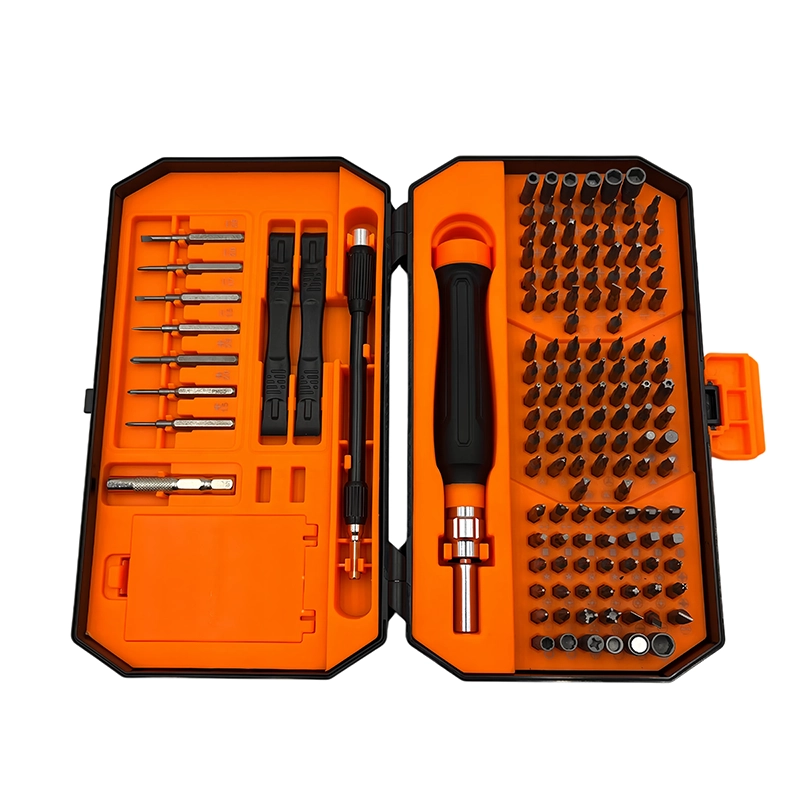
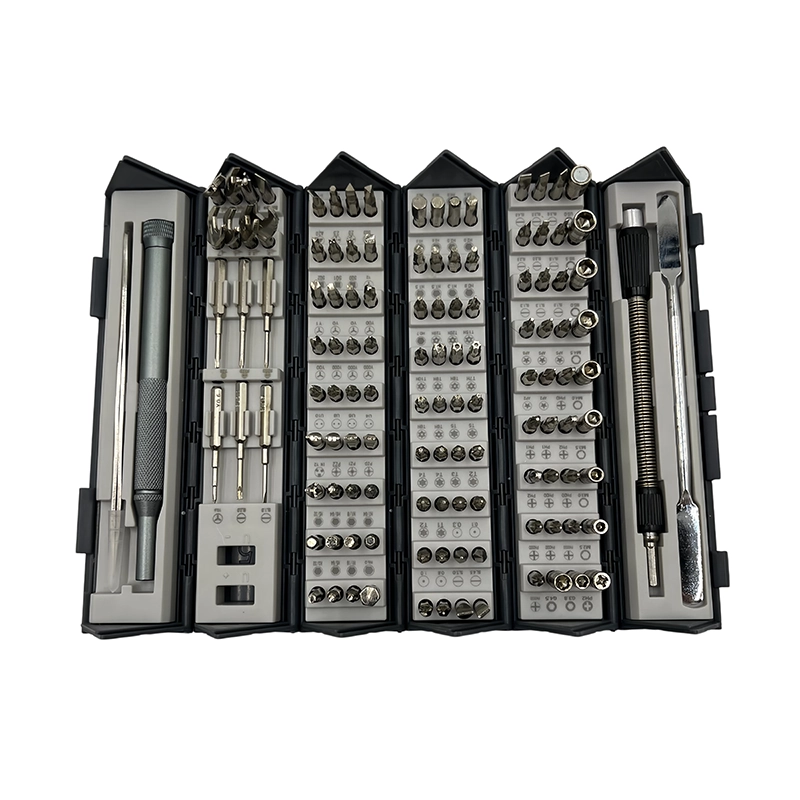
Select a manual precision set only after confirming the headset model’s screw profiles, hidden access points, and required shaft length. VR service happens near lenses, flexible cables, sensors, and light plastic structures, so direct hand feedback and screw mapping are essential. Protect optical surfaces, follow the manufacturer’s service guidance, and never force a shell that remains attached.
VR headset service driver
A manual precision screwdriver and verified bit map used to remove and reinstall fasteners around a virtual-reality headset’s housing, straps, sensors, optics, and internal electronics.
What makes this manual screwdriver task different?
A VR headset is a wearable optical device, not merely a plastic electronics box. Fasteners may sit beside lenses, tracking cameras, facial-interface mounts, and fragile flex connections. Strap assemblies and shell pieces can remain preloaded after screws are removed, while adhesive or clips may control the next step. The first decision is therefore not how much force the handle can deliver, but whether the service task, device condition, and operator authorization are clearly understood. Keep the manufacturer’s instructions, the actual fastener, and the surrounding parts in view before selecting a bit.
A manual driver gives useful tactile feedback only when the workpiece is supported and the tip remains fully engaged. For VR hobbyists, refurbishment teams, device technicians, and training labs, that means treating access, visibility, screw identity, and reassembly records as part of the tool choice rather than as optional bench habits.
Which technical factors matter most?
Check security-profile coverage, tip geometry, extension reach, and the ability to maintain a square approach without contacting a lens. Use clean bits and a stable hand rest. A magnetic holder may retain screws, but optics and sensors still require a controlled work zone free from loose metal particles and improvised prying. Evaluate the complete installed system: handle, cap, holder, bit, fastener, access path, and work support. A premium material name or a high accessory count cannot compensate for partial recess contact or an unsafe service sequence.
For manual screwdriver for VR headset repair, any drawing, service manual, torque specification or safety rule takes priority over general hand-tool guidance. Record the exact model, the condition described by the damaging pattern is assuming a shell is free because the visible screws are out. pulling can tear a short flex cable, crack a clip, or drag a metal bit across an optical surface. wrong-length screws can also press into an internal module during reassembly. and the configuration used by VR hobbyists, refurbishment teams, device technicians, and training labs. A revision can change fastener length, cable routing, sealing or authorized access, so the retained record must identify the actual article-specific task.
What workflow keeps the repair controlled?
1. Identify the exact headset revision, power it down, remove detachable power sources when the service instructions allow, and cover lenses with a clean non-contact shield. This preparation stage prevents the screwdriver from becoming the first tool used on an unidentified joint.
2. Photograph strap routing and cable positions, map fasteners by shell layer, and use the smallest verified tool movement near cameras and flex connectors. Place each removed fastener into a position-based map immediately rather than relying on memory or one mixed container.
3. Inspect seals, cushions, clips, and cable seating before closing; start screws by hand and tighten only until the housing is uniformly seated without gaps or distortion. Final inspection should confirm the joint, surrounding parts, and complete device function required by the manufacturer; a closed case alone is not proof of a successful repair.
How should buyers compare a manual screwdriver set?
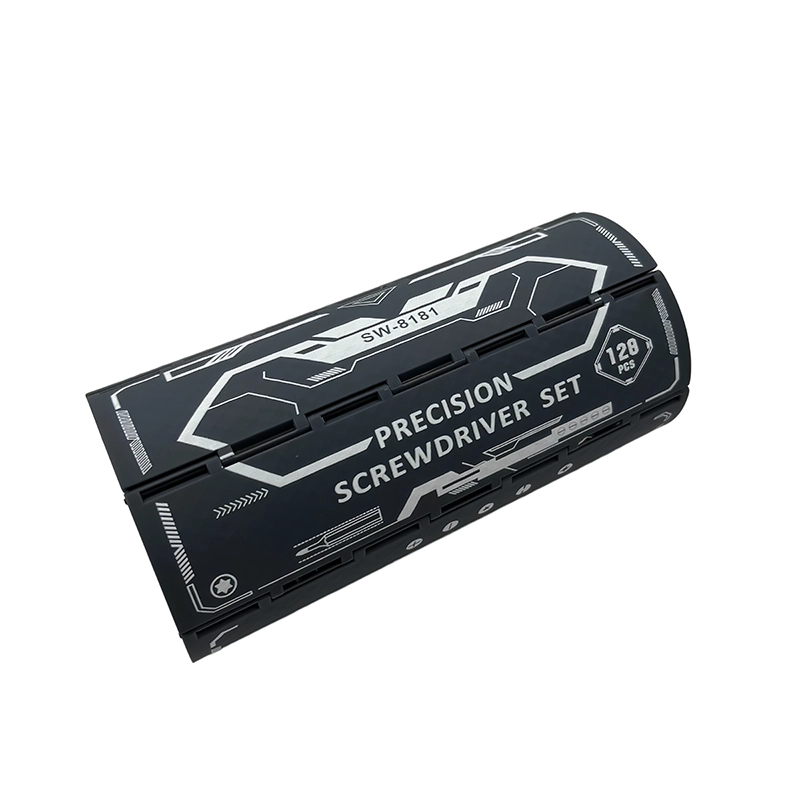
Compare candidates on verified profile fit, working reach, installed-bit stability, handle access, cap behavior, storage, labels, replacement support, and performance on representative fasteners. Buy the bit coverage and reach for the specific headset family, not a generic promise that a set opens every VR device. A service-oriented kit should include a clear profile chart, safe storage, screw-position aids, optical-protection guidance, and access to replacement bits.
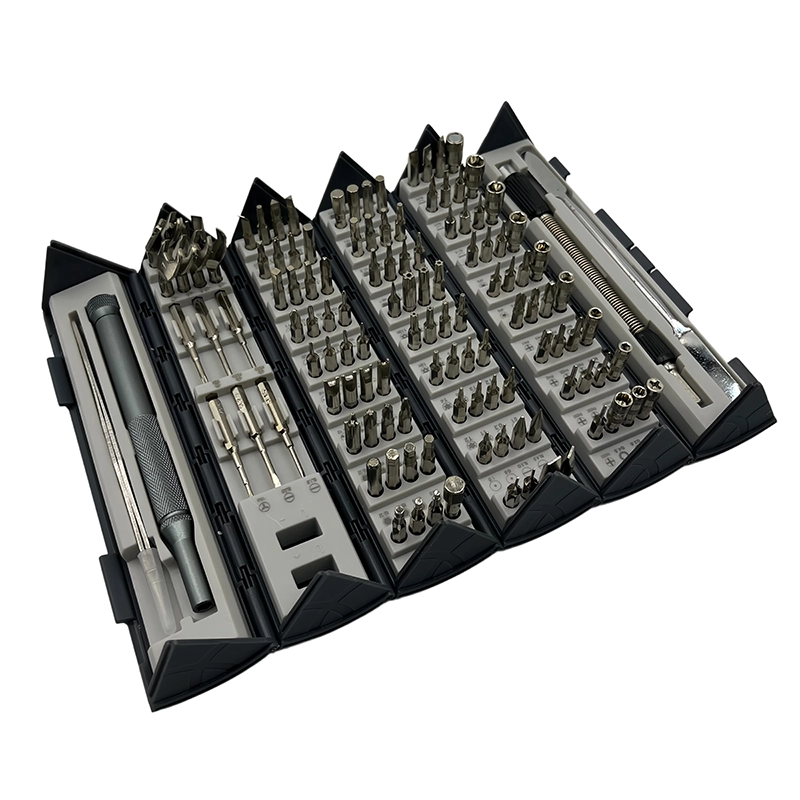
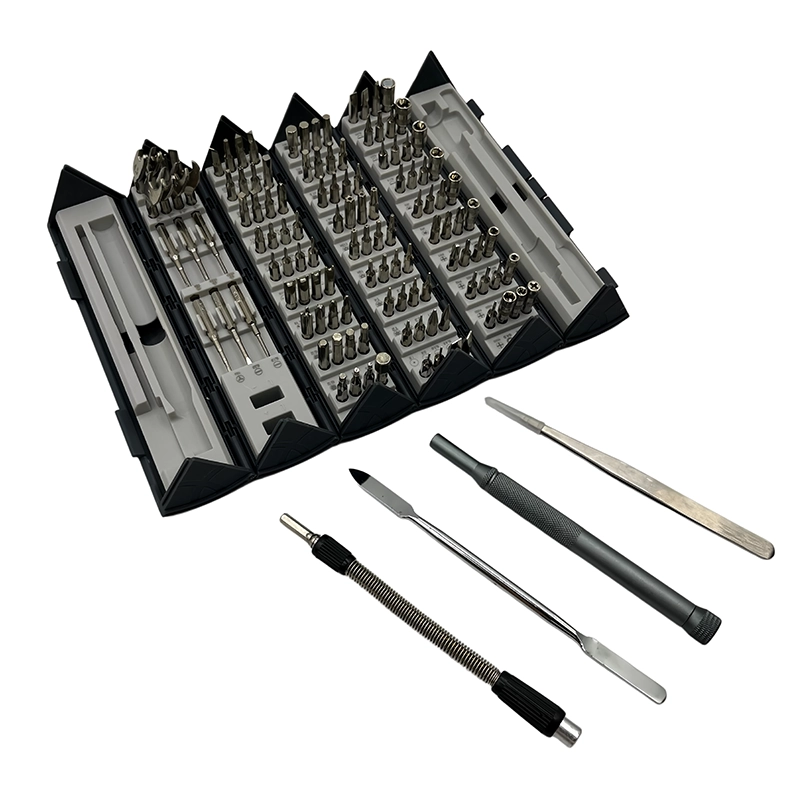
For a wholesale or private-label manual screwdriver for VR headset repair project, freeze the bit map and case layout around this recommendation: Buy the bit coverage and reach for the specific headset family, not a generic promise that a set opens every VR device. A service-oriented kit should include a clear profile chart, safe storage, screw-position aids, optical-protection guidance, and access to replacement bits. Link the physical 128-in-1 manual screwdriver set sample, specification, product images, packaging text and the task-specific inspection criteria to one revision so the claim remains tied to the configuration that will ship.
What failure signs mean stop rather than push harder?
The damaging pattern is assuming a shell is free because the visible screws are out. Pulling can tear a short flex cable, crack a clip, or drag a metal bit across an optical surface. Wrong-length screws can also press into an internal module during reassembly. The operator should preserve the remaining screw geometry and surrounding device instead of converting uncertainty into more force.
Stop whenever a panel resists after the documented release points, a connector is not visible, the driver must lean toward a lens, or a screw does not start under light fingertip force. Return to the device-specific sequence. Document the condition when the job is handed off. A clear stop rule protects the customer’s device and gives a qualified technician better options than a head damaged by repeated attempts.
How does this apply in a real repair?
For a strap or facial-interface repair, separate wearable components from optical and electronic modules in the order documented for that model. Keep left and right fasteners distinct. During reassembly, inspect the complete perimeter and tracking openings before applying final hand pressure. Use the actual device instructions and representative hardware to confirm the method. Similar-looking screws can have different length, pitch, shoulder, coating, sealing, or grounding roles.
The buying decision for manual screwdriver for VR headset repair should cover check security-profile coverage, tip geometry, extension reach, and the ability to maintain a square approach without contacting a lens. use clean bits and a stable hand rest. a magnetic holder may retain screws, but optics and sensors still require a controlled work zone free from loose metal particles and improvised prying. without encouraging force outside the defined task. Keep an exception path for the condition in stop whenever a panel resists after the documented release points, a connector is not visible, the driver must lean toward a lens, or a screw does not start under light fingertip force. return to the device-specific sequence.; that path may require a different bit, opening tool, specified torque method, rated electrical tool, battery process or qualified specialist rather than a larger general-purpose set.
What does the XOENAEN catalogue add to the decision?
The current XOENAEN catalogue includes the 128-in-1 manual screwdriver set, the real product reference used for manual screwdriver for VR headset repair. Its photography and model record can anchor the buyer brief for for a strap or facial-interface repair, separate wearable components from optical and electronic modules in the order documented for that model. keep left and right fasteners distinct. during reassembly, inspect the complete perimeter and tracking openings before applying final hand pressure. Catalogue evidence does not establish universal device compatibility; the actual fastener, access path, stop rule and order-specific sample still determine approval.
The central VR service risk is the interaction between access geometry and nearby sensitive surfaces. A bit can be correct yet still be unsafe if the shaft angle, hand clearance, or release sequence points it toward a lens or flex cable. Share target devices, fastener photos, required profiles, access constraints, market, quantity, packaging, and verification needs through the XOENAEN project enquiry so the product and evidence can be aligned before production.
VR headset service approaches
| Option or condition | Best use | Main caution |
|---|---|---|
| Manual precision set | Highest tactile feedback near optics | Slower for repeated validated disassembly |
| Electric precision driver | Useful for qualified repeated work | Powered momentum increases risk near fragile structures |
| General household driver | Available and strong | Often too large for recessed security screws |
- Confirm the exact headset revision
- Map security profiles and shaft reach
- Protect lenses and tracking cameras
- Use a shell-layer screw map
- Check cable and strap routing
- Define no-force stop points
- 128-in-1 manual screwdriver set product page →
- Browse manual screwdriver products →
- Plan an OEM or private-label project →
- Review XOENAEN manufacturing and quality →
- Read XOENAEN tool FAQ answers →
- Related guide: screwdriver-set-for-connector-and-housing-repair →
- Related guide: manual-driver-for-game-console-repair →
- How XOENAEN presents quality evidence →
Can one screwdriver set open every VR headset?
No. Profiles, lengths, access, and service sequences vary by model and revision, so verify the exact device before choosing bits.
Why is a manual driver useful near VR lenses?
It provides direct motion and resistance feedback. The operator must still shield the optics and maintain a safe shaft path.
Should VR headset screws be magnetized?
Magnetic retention can help manage small screws, but it does not replace device-specific handling rules or a clean, controlled optical work area.
How should VR screws be organized?
Map them by shell layer, position, side, and length. Photos plus a compartment tray make reassembly less ambiguous.
What if the VR shell will not open?
Stop pulling. Recheck hidden fasteners, documented clips, adhesive, and attached cables for that exact revision.
Can a screwdriver be used to pry a headset shell?
No. Use the opening method and non-marring tools specified for the device; a driver can slip into optics or electronics.