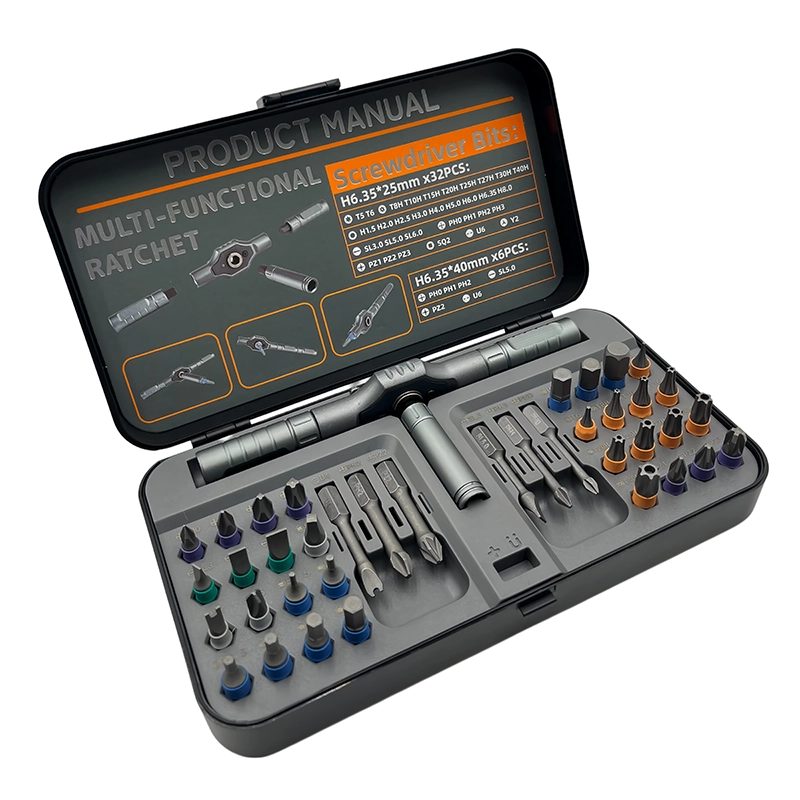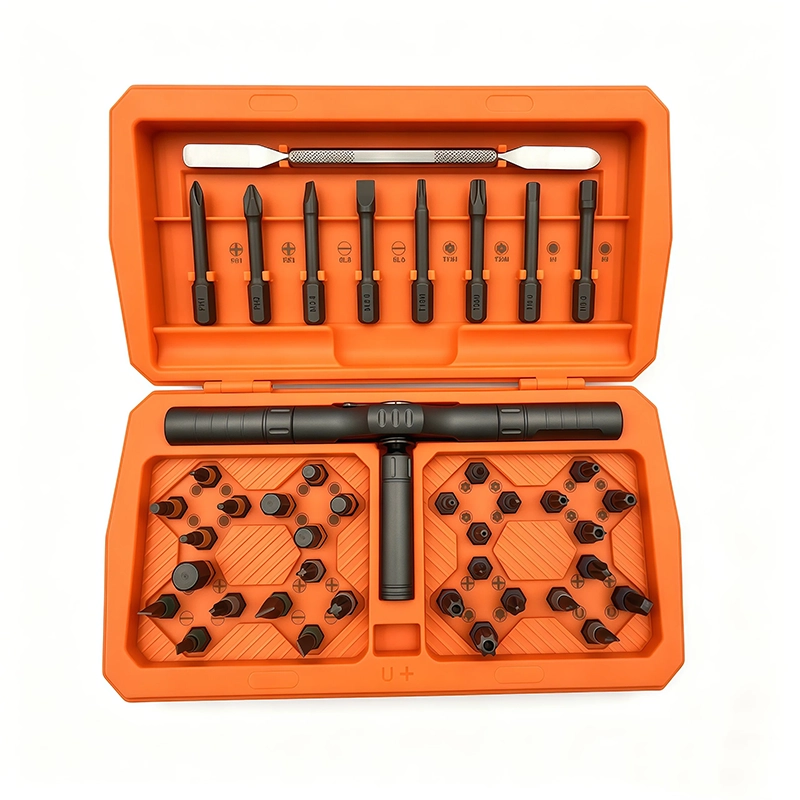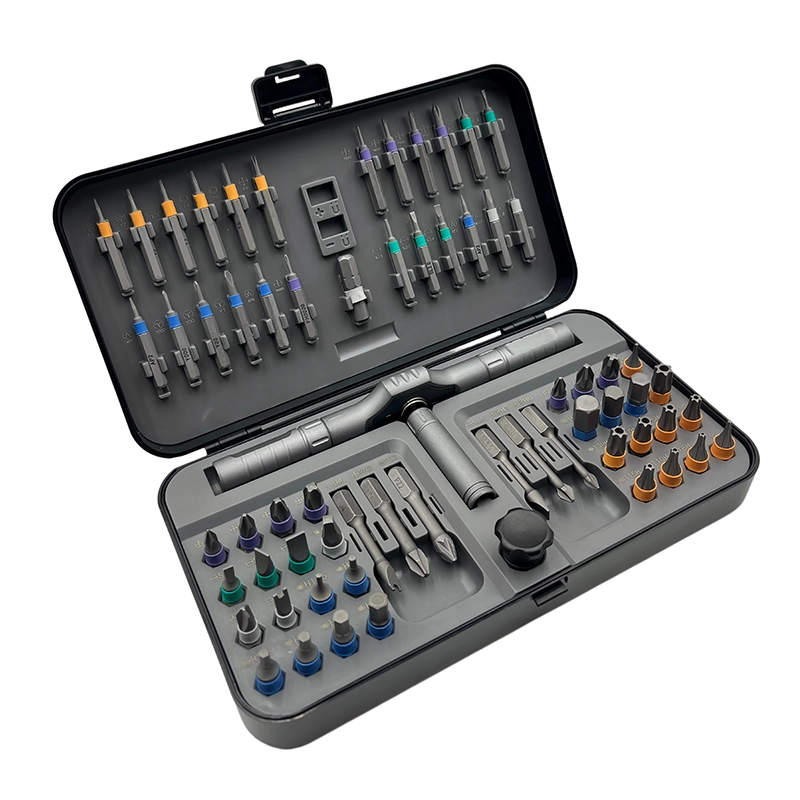
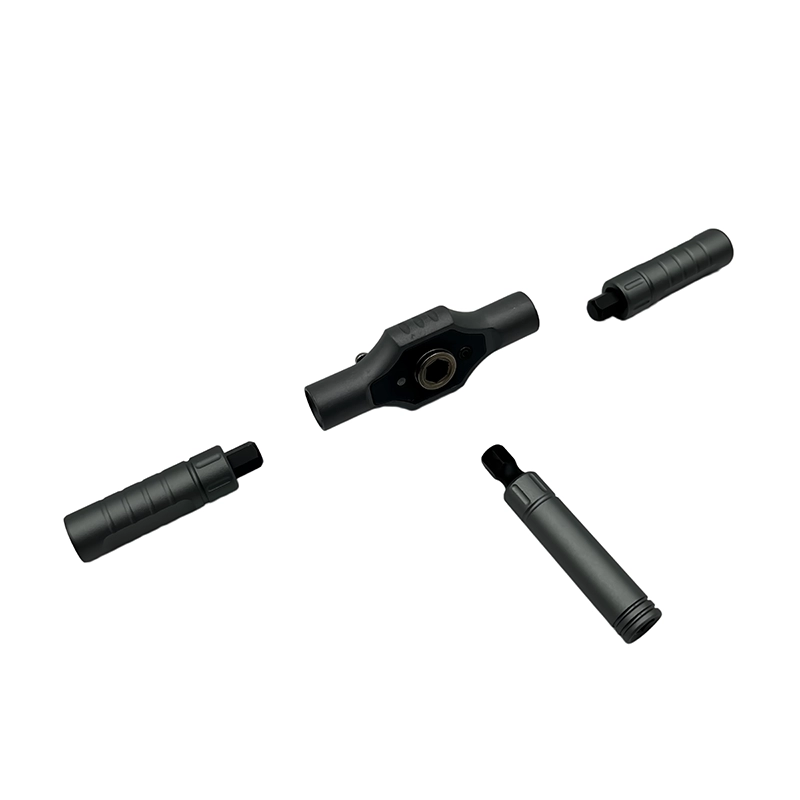
For installing cabinet pulls, hinges, brackets and shelf hardware, choose a hand-operated ratchet screwdriver set around short access, clean bit engagement and avoiding chip-out in furniture panels. Confirm fit, access, operator control and the complete bit or accessory map on a representative sample before approving a wholesale, OEM or DIY configuration.
ratchet screwdriver for cabinet hardware
ratchet screwdriver for cabinet hardware means selecting a tool set around the real fastener, surface, access and inspection requirement instead of choosing by piece count alone.
Ratchet Screwdrivers for Cabinet Hardware and Shelving starts with the work, not the headline piece count. For installing cabinet pulls, hinges, brackets and shelf hardware, the useful question is whether a hand-operated ratchet screwdriver set gives the operator the access, control and bit or accessory fit needed to complete the job without creating a second repair. The product should be easy to identify, easy to inspect and easy to return to its case when the work is done.
For ratchet screwdriver for cabinet hardware, the brief should translate short access, clean bit engagement and avoiding chip-out in furniture panels into an observable sample decision. Record the exact installing cabinet pulls, hinges, brackets and shelf hardware, the surrounding material, access limit, expected repetition and pass condition before comparing features. confirm short-bit options, handle clearance and protective packing for a retail kit. That evidence gives a manufacturer, distributor or private-label buyer a configuration target instead of a generic request for more pieces.
What makes a ratchet screwdriver good for cabinet installation?
Use a compact bit and a square approach so the driver does not mark the panel or cam out of the screw. Start with the exact device, appliance, furniture part or printed feature whenever possible. A sample that looks close in a catalogue can behave differently when the screw is recessed, the housing is plastic, the panel is finished or the printed part has a thin wall. Confirm the fit before comparing colour, packaging or a larger accessory count.
Which bit, reach or accessory should be specified?
The selection should follow short access, clean bit engagement and avoiding chip-out in furniture panels. List the profiles, sizes, lengths or abrasive shapes that the user actually needs, then mark the pieces that are optional. For a product set, also record the interface, storage position, replacement plan and any speed or handling limits. This detail keeps a high piece count from hiding a gap in the real application.
What is the most common mistake in this workflow?
using a long bit in a shallow cabinet corner and allowing it to scrape the finished surface The remedy is usually a better start: clean the work area, seat the bit or accessory fully, keep the tool square, support the part and stop to inspect before the problem becomes irreversible. If a feature is safety-critical, load-bearing or outside the tool’s intended control, the correct decision may be a different tool, a controlled machining step or a reprint.
How should a repair or DIY user set up the work?
Set up installing cabinet pulls, hinges, brackets and shelf hardware on a supported surface with direct light and a dedicated place for every removed fastener or used accessory. The operator should be able to observe short access, clean bit engagement and avoiding chip-out in furniture panels without changing grip or blocking the work. Because using a long bit in a shallow cabinet corner and allowing it to scrape the finished surface, begin with a reversible trial, inspect after the first controlled movement and keep the stopping point visible throughout the task.
How can a buyer validate the kit before ordering?
Validate ratchet screwdriver for cabinet hardware on a representative installing cabinet pulls, hinges, brackets and shelf hardware. Record the profile or accessory identity, access, handling, condition before work and the result tied to use a compact bit and a square approach so the driver does not mark the panel or cam out of the screw. Include the unsuccessful attempt or stop signal as evidence, because a sample that only records the successful pass cannot explain the limits another operator must follow.
The retained record for ratchet screwdriver for cabinet hardware should be short but specific: identify the workpiece, approved setup, acceptance view and any item that was replaced or rejected. For this task, confirm short-bit options, handle clearance and protective packing for a retail kit. A buyer can then compare samples on the same evidence and explain why the selected configuration fits this application without implying universal compatibility.
What should be included in an OEM or wholesale brief?
State the target market, user, application, order quantity and required launch timing. Add the product or platform reference, complete bit or accessory map, packaging format, label language, manual requirements, compliance documents and sample plan. confirm short-bit options, handle clearance and protective packing for a retail kit. Keep commercial and technical decisions together so the quotation reflects a real configuration rather than a generic photograph.
Final checklist
Before the next job, confirm the correct profile, clean contact surfaces, square alignment, protected no-touch areas, a visible stop condition and a final fit or appearance check. Record the model and replacement items when the kit is shared. These small habits make ratchet screwdriver for cabinet hardware useful for a service bench, a workshop or a DIY project instead of a tool case that looks complete but is hard to trust.
Choose the method by the real job
| Method | Best use | Main risk | Stop when |
|---|---|---|---|
| Core task | installing cabinet pulls, hinges, brackets and shelf hardware | Wrong profile or poor access | The fastener is seated and the part passes |
| Repeat work | The common service or DIY job | Fatigue or poor organization | The workflow is repeatable |
| Final check | Fit, finish or function | Over-tightening or damage | The approved stop condition is met |
- Confirm the actual installing cabinet pulls, hinges, brackets and shelf hardware and the fastener, surface or feature involved.
- Check the complete bit or accessory map, interface, reach and storage position.
- Use representative samples and a repeatable inspection light, gauge or mating part.
- Write the stop condition that prevents using a long bit in a shallow cabinet corner.
- Include packaging, manual language, replacement items and target-market requirements in the brief.
- View the referenced 66-in-1 ratchet screwdriver set →
- Related guide: Ratchet Screwdriver Sets for Appliance Repair: A Practical Guide →
- Next application question: Ratchet Screwdrivers for Washing Machine Panel Repairs →
- Review manufacturing and quality support →
- Explore OEM / ODM options →
- Read the related ratchet-screwdriver-for-dishwasher-repair guide →
- Continue with the ratchet-driver-for-diy-home-projects topic →
- XOENAEN editorial policy →
What makes a ratchet screwdriver good for cabinet installation?
Use a compact bit and a square approach so the driver does not mark the panel or cam out of the screw. Test the exact combination on a representative sample before treating it as a universal setting.
Which checks matter before buying ratchet screwdriver for cabinet hardware?
Check short access, clean bit engagement and avoiding chip-out in furniture panels, the complete bit or accessory map, storage, documentation and the sample acceptance method for installing cabinet pulls, hinges, brackets and shelf hardware. Piece count matters only when the included items cover that verified workflow.
When should work stop during ratchet screwdriver for cabinet hardware?
Stop when the setup begins to reproduce this known failure: using a long bit in a shallow cabinet corner and allowing it to scrape the finished surface Preserve the fastener, surface or printed feature, then correct fit, support, alignment or method before continuing.
What evidence should an OEM buyer send for ratchet screwdriver for cabinet hardware?
Send the target market, quantity, representative photos or samples, the bit or accessory map, packaging language and the acceptance view. confirm short-bit options, handle clearance and protective packing for a retail kit. The supplier should be able to trace the proposed configuration back to those inputs.