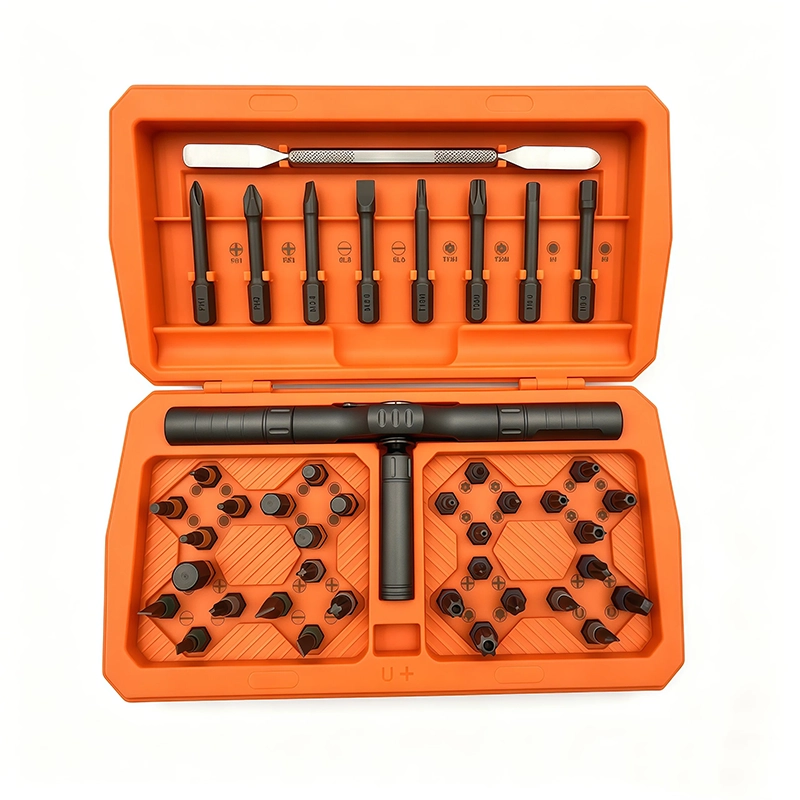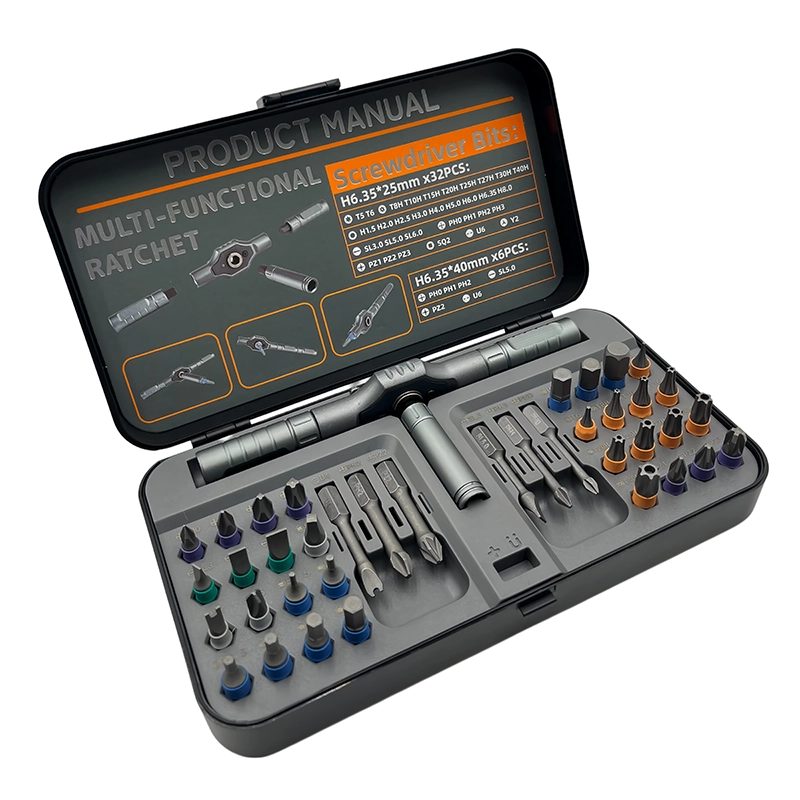
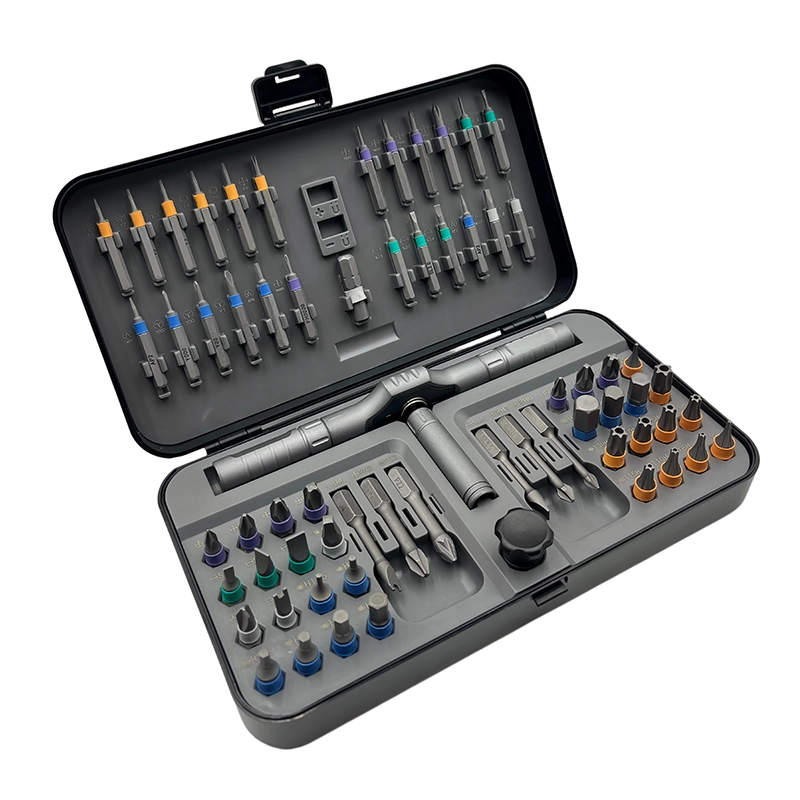
Use a ratchet screwdriver only for monitor-arm screws whose documented interface matches the bit set. Clamp bolts, VESA hardware and tension adjustments may require different hex keys, sockets or torque instructions, so verify every fastener before assembly and never substitute leverage for the arm maker’s procedure.
ratchet screwdriver for monitor arm assembly
ratchet screwdriver for monitor arm assembly means mixed-fastener desk hardware assembly with separate steps for light covers, mounting connections and tension mechanisms. The term describes an application-led selection and work method, not a universal torque, compatibility or safety claim.
This guide addresses assembling monitor-arm cable covers, VESA plates and compatible desk-mount hardware. The decision starts with the screw, joint and surrounding material—not with a maximum torque claim or the number printed on the case. A ratchet mechanism changes how the hand resets between driven strokes; it does not identify the fastener, align the parts, protect the substrate or verify the final joint. Those responsibilities stay with the user and the model-specific procedure.
Which ratchet screwdriver works for a monitor arm?
Use a ratchet screwdriver only for monitor-arm screws whose documented interface matches the bit set. Clamp bolts, VESA hardware and tension adjustments may require different hex keys, sockets or torque instructions, so verify every fastener before assembly and never substitute leverage for the arm maker’s procedure. The practical boundary is clear: use the ratchet only where the bit is fully engaged, the work is supported and the service or assembly instruction allows an ordinary hand driver. If the joint is structural, electrical, load-bearing, safety-related or specified by measured torque, switch to the documented process and tool rather than stretching this set beyond its intended role.
What does “ratchet screwdriver for monitor arm assembly” mean?
ratchet screwdriver for monitor arm assembly means mixed-fastener desk hardware assembly with separate steps for light covers, mounting connections and tension mechanisms. It is an application decision, not a universal performance label. The useful configuration is the one that reaches the screw squarely, gives the operator a stable grip, keeps nearby surfaces and components clear, and leaves an observable stopping condition. A wider handle may increase hand leverage, while a longer bit may improve reach; either change can also amplify side load or hide early damage when the selection is wrong.
Which technical factors should be checked first?
VESA screws must match the monitor’s thread and allowed depth; a long screw can damage internal components. Desk clamps and gas-spring tension adjusters often use hex interfaces rather than screwdriver profiles. The display should be supported while plate screws are started so its weight does not cross-thread the connection. Translate those observations into a written application map: fastener profile and size, shank interface, working length, surrounding clearance, material, required direction, final check and excluded tasks. That map is more useful for product selection than a generic “multi-purpose” claim because another technician or supplier can reproduce it.
How should the work be prepared?
Preparation for ratchet screwdriver for monitor arm assembly should control the three failures named for this job: An overlong VESA screw can bottom out inside the monitor rather than secure the plate. Using a ratchet bit on a hex tension adjuster can round the interface. Tightening with the display unsupported can cross-thread or tilt the VESA plate. Use direct lighting, support assembling monitor-arm cable covers, VESA plates and compatible desk-mount hardware, separate the relevant screw locations and inspect the installed bit. Confirm the selector away from the joint, then complete any isolation, guarding, protective-equipment or qualified-service step required by the specific equipment before the ratchet enters the work area.
Step 1 — Establish the safe task boundary
Review the monitor and arm manuals together, then sort VESA, clamp, cable-cover and adjustment hardware into separate groups.
Step 2 — Confirm bit fit and access
Check screw diameter and permitted depth before placing the plate, and use spacers only as the manuals direct.
Step 3 — Move the fastener without creating side load
Support the display, start all plate screws by hand and tighten them in a balanced sequence without pulling the plate sideways.
Step 4 — Reassemble and verify
Use the specified tool for clamp and tension adjustments, route cables with movement allowance and test the full arm range slowly.
Which method should be used for this job?
Compare the three methods for assembling monitor-arm cable covers, VESA plates and compatible desk-mount hardware using the actual interface and access envelope. Ratchet screwdriver is intended for cable covers and compatible plate screws, while Hex key changes the decision to arm tension and many clamp bolts; Torque tool defines the alternate boundary. Test workable options on the same representative joint and retain the bit, direction, setup and stop condition that support the selection.
What mistakes cause the most damage?
An overlong VESA screw can bottom out inside the monitor rather than secure the plate. Using a ratchet bit on a hex tension adjuster can round the interface. Tightening with the display unsupported can cross-thread or tilt the VESA plate. A useful stop rule is to pause at the first unexpected slip, binding, substrate movement or selector inconsistency. Continuing to ratchet rarely repairs the underlying cause. Clean and re-identify the recess, unload or realign the part, replace a worn bit, or escalate to the correct extraction, torque or professional service method before the fastener becomes harder to recover.
How does the XOENAEN product reference relate to the application?
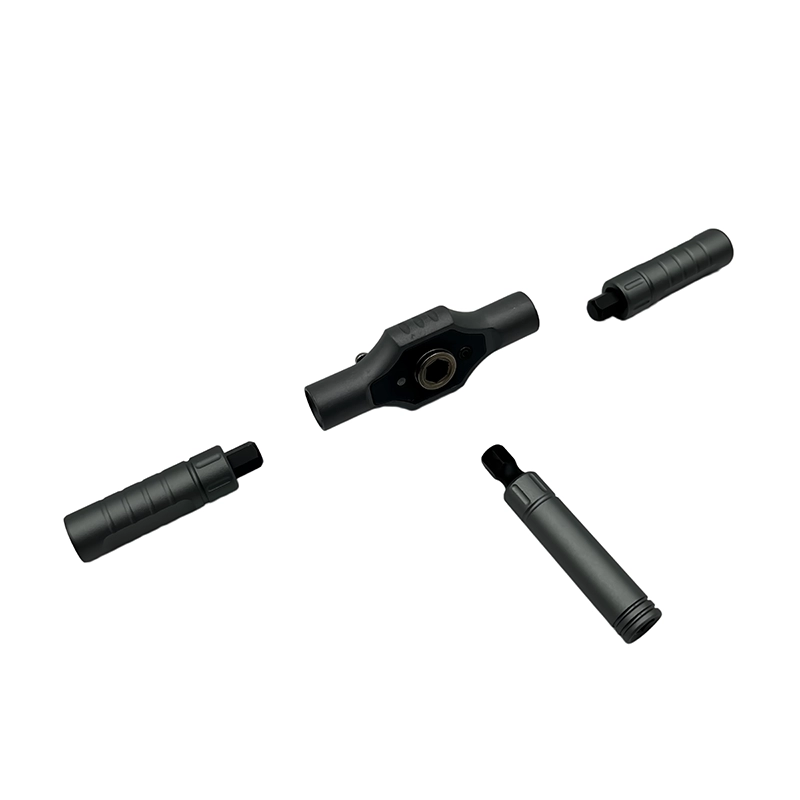
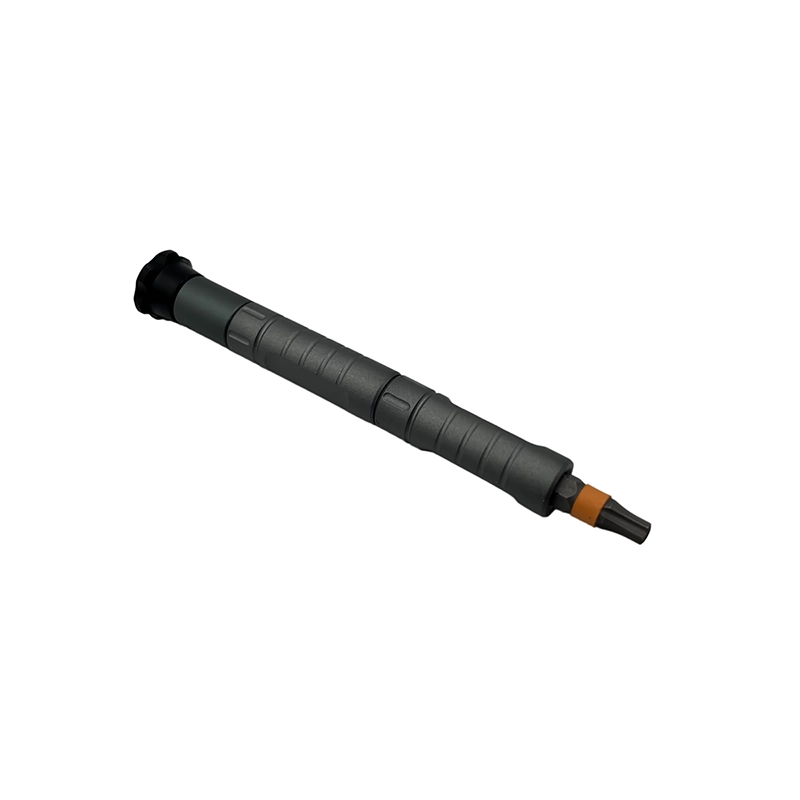
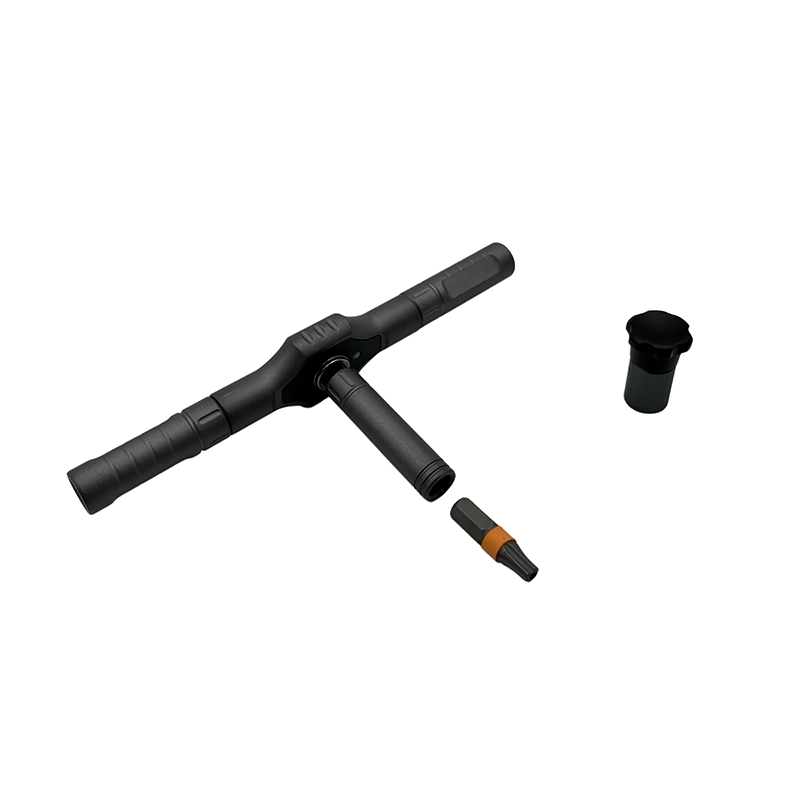
The current XOENAEN catalog records H6.35 and H4 bit interfaces, 32 mm and 40 mm long-bit formats, short precision bits, a magnetizer and a handle that can convert to a straight-driver format for the 66-in-1 platform. This is catalog evidence for the product configuration, not a claim that the platform has been tested on every assembling monitor-arm cable covers, VESA plates and compatible desk-mount hardware. Buyers should use the entry to shortlist interface, reach, handle and storage, then validate the exact sample on their own fasteners and acceptance method. Any logo, color, bit-map or packaging change should remain linked to the approved SKU revision.
What should a buyer choose?
Select a mixed bit kit only after mapping the arm and monitor hardware, and include a screw-depth gauge or clear VESA reference in a retail bundle. Ask the supplier to identify the exact included profiles, interfaces and working lengths, and compare them with the customer-question map. Check how a missing or worn bit will be replaced, how the direction selector is explained and whether the case lets users return every piece to a visible position. The best buying decision is the smallest controlled system that completes the real job without encouraging unsupported use.
What belongs in an OEM or wholesale enquiry?
Supply monitor-arm fastener samples, VESA depth limits, clamp interfaces, packaging partitions and a full-range movement acceptance check. Also state target market, intended user, annual or initial quantity, packaging language, barcode and label needs, sample stages, compliance responsibilities and launch timing. Keep application evidence beside commercial requirements. That allows XOENAEN to evaluate an existing 40-in-1, 43-in-1 or 66-in-1 platform before discussing deeper ODM changes, and prevents artwork approval from outrunning functional approval.
How should the sample and production result be verified?
The verification record for ratchet screwdriver for monitor arm assembly should translate this brief into checks: Supply monitor-arm fastener samples, VESA depth limits, clamp interfaces, packaging partitions and a full-range movement acceptance check. Name each property, method, sample quantity and acceptance rule. Use the customer’s representative screw and surrounding part for application checks, and identify any instrument, unit and reference chain used for measured results. This separates traceable evidence for the stated job from an unsupported quality label on the complete set.
Final recommendation
Use a ratchet screwdriver only for monitor-arm screws whose documented interface matches the bit set. Clamp bolts, VESA hardware and tension adjustments may require different hex keys, sockets or torque instructions, so verify every fastener before assembly and never substitute leverage for the arm maker’s procedure. For a retail or professional program, connect that answer to a product page, an application instruction and a support route so the customer can verify compatibility before purchase. For an OEM program, preserve the approved sample, bit map and pack-out revision. Clear limits improve trust: they help buyers understand where a hand ratchet is useful and where a different tool or qualified procedure is the responsible choice.
Choose a method for assembling monitor-arm cable covers, VESA plates and compatible desk-mount hardware
| Method | Best use | Main characteristic | Decision check |
|---|---|---|---|
| Ratchet screwdriver | Cable covers and compatible plate screws | Fast manual strokes | Screw is seated evenly |
| Hex key | Arm tension and many clamp bolts | Correct supplied interface | Adjustment follows manual |
| Torque tool | Specified mounting connection | Measured result | Stated value reached |
- Map the exact fastener profile, shank interface and working length for assembling monitor-arm cable covers, VESA plates and compatible desk-mount hardware.
- Measure axial depth and ratchet swing clearance on a representative part.
- Confirm direction, lock behavior, bit retention and worn-bit rejection before work.
- Control the key risks: An overlong VESA screw can bottom out inside the monitor rather than secure the plate. Using a ratchet bit on a hex tension adjuster can round the interface. Tightening with the display unsupported can cross-thread or tilt the VESA plate.
- Keep model, bit map, case, manual, artwork and inspection record on the same revision.
- Use the documented manufacturer or workplace procedure for torque-critical, electrical, structural or safety-related work.
- View the XOENAEN 66-in-1 ratchet screwdriver set →
- Continue with Ratchet Screwdriver Kits for RV Interior Fixtures →
- Plan an OEM / ODM tool configuration →
- Review manufacturing and quality support →
- Read the related ratchet-driver-automotive-interior-trim guide →
- Read the related ratchet-screwdriver-marine-cabin-hardware guide →
- Continue with the ratchet-screwdriver-vs-drill-furniture-assembly topic →
- How XOENAEN presents quality evidence →
Which ratchet screwdriver works for a monitor arm?
Use a ratchet screwdriver only for monitor-arm screws whose documented interface matches the bit set. Clamp bolts, VESA hardware and tension adjustments may require different hex keys, sockets or torque instructions, so verify every fastener before assembly and never substitute leverage for the arm maker’s procedure. Validate the exact setup on a representative fastener before making it a standard instruction.
Can one ratchet bit fit every monitor arm fastener?
The direct answer depends on the documented task boundary: VESA screws must match the monitor’s thread and allowed depth; a long screw can damage internal components. Follow the product or equipment maker’s instruction when it sets a stricter requirement.
How do I avoid using a VESA screw that is too long?
Start with this rule: Desk clamps and gas-spring tension adjusters often use hex interfaces rather than screwdriver profiles. Stop if bit fit, access, substrate condition or the required final check is uncertain.
What should be inspected before the first ratchet stroke in ratchet screwdriver for monitor arm assembly?
Inspect the screw recess, bit tip, holder engagement, selector position and support for assembling monitor-arm cable covers, VESA plates and compatible desk-mount hardware. The bit should be fully seated and square, with this first decision factor confirmed: VESA screws must match the monitor’s thread and allowed depth; a long screw can damage internal components.
Would a larger handle make ratchet screwdriver for monitor arm assembly safer?
Not by itself. A larger handle changes leverage, but this application depends on mixed-fastener desk hardware assembly with separate steps for light covers, mounting connections and tension mechanisms. Excess leverage can accelerate the first stated risk: An overlong VESA screw can bottom out inside the monitor rather than secure the plate.
What should an OEM buyer submit for a ratchet screwdriver for monitor arm assembly project?
Supply monitor-arm fastener samples, VESA depth limits, clamp interfaces, packaging partitions and a full-range movement acceptance check. Include target quantity, market, language, sample stage and launch timing so the proposed saleable configuration remains tied to this application.