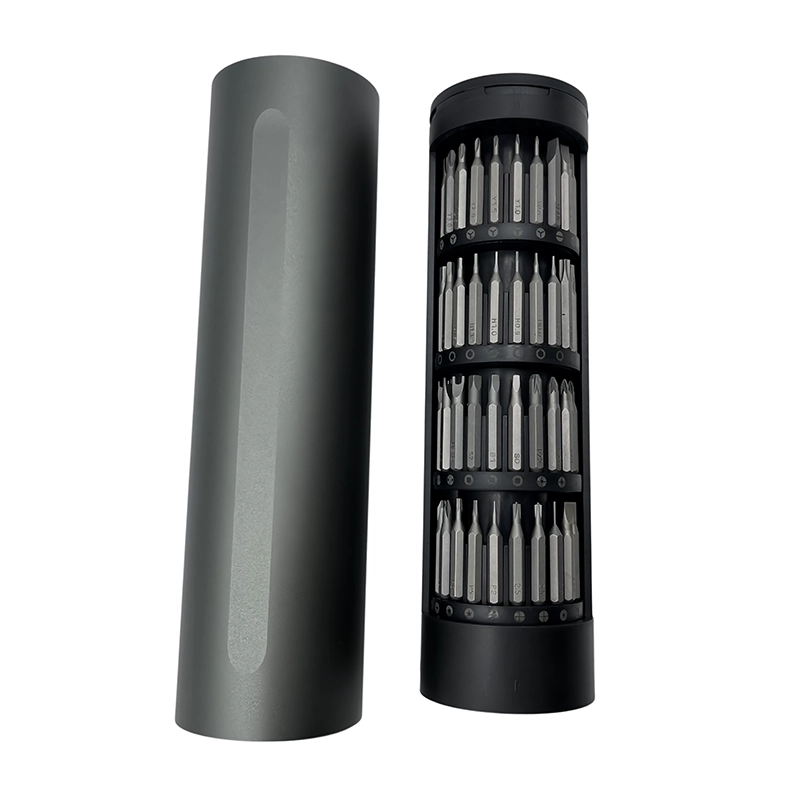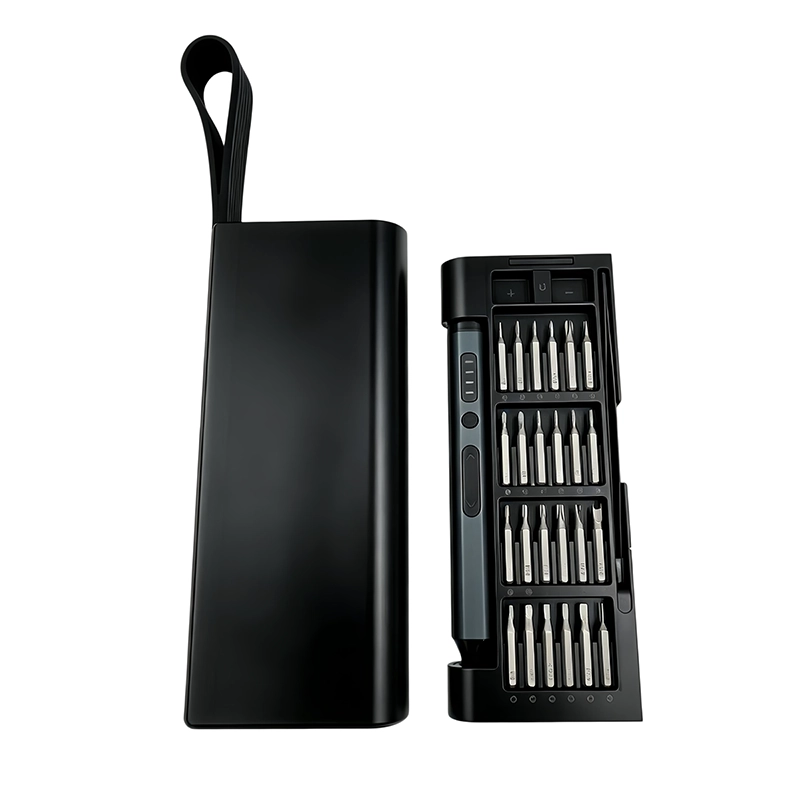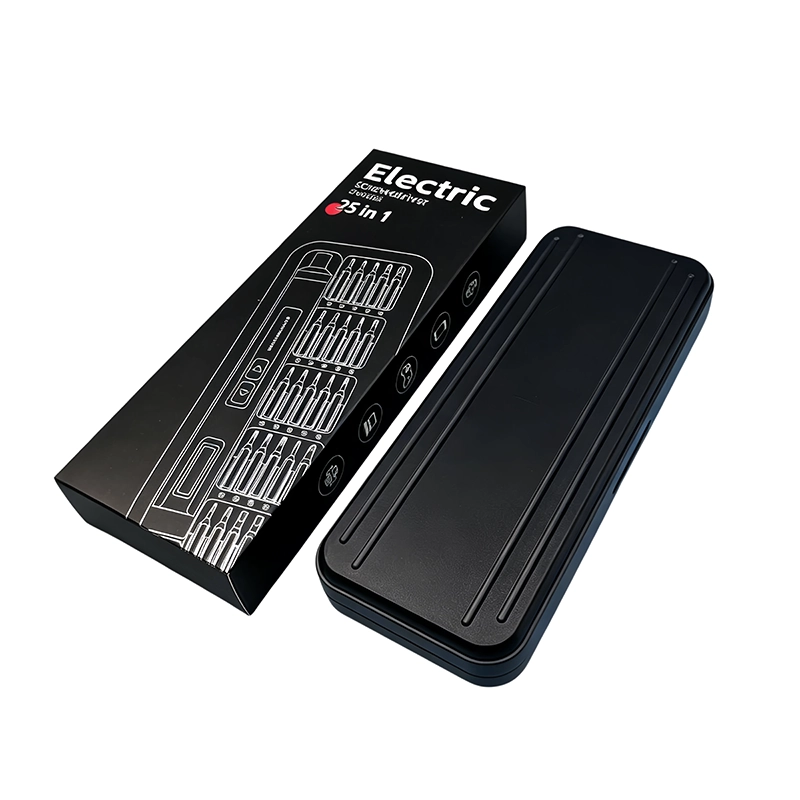
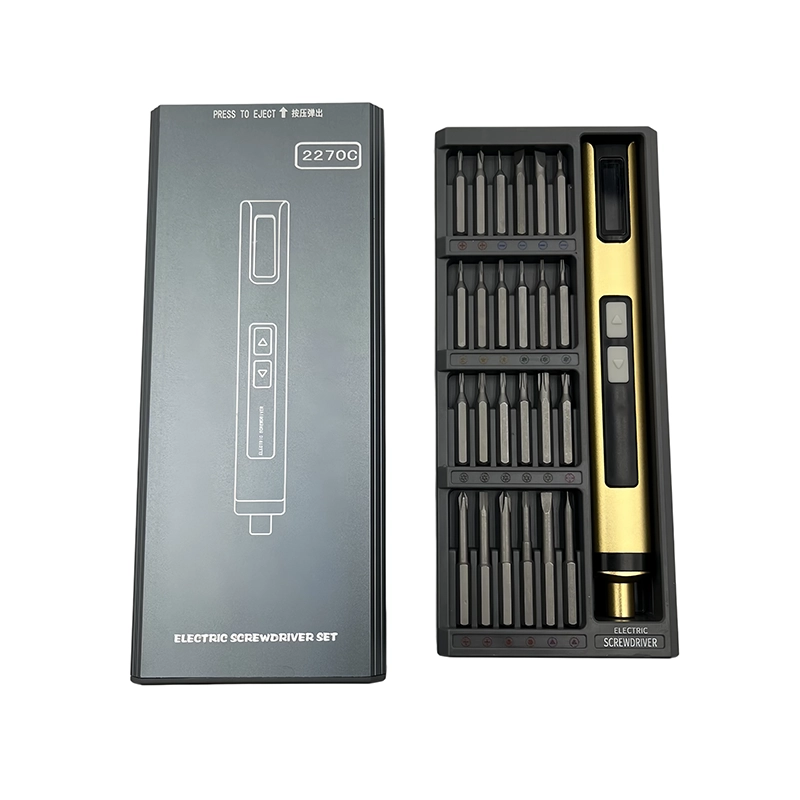
Use an extended electric screwdriver bit when a verified short bit cannot reach the screw without holder interference. Confirm profile, shank, straightness, retention and side clearance on the actual recess, then run slowly while supporting alignment. Choose the shortest length that reaches cleanly; return to a short bit whenever added leverage or visible tip orbit reduces stable engagement.
Extended-bit access tradeoff
the balance between added working reach and the greater sensitivity to runout, bending, side load and clearance created by a longer bit.
The practical setting for extended electric screwdriver bit selection is reaching a precision screw below a narrow housing wall where the driver holder cannot approach the recess directly. This article treats the powered driver as one controlled element in a larger repair, assembly or approval system. The goal is not maximum trigger time. The goal is to preserve thread condition, device evidence and a repeatable handoff from preparation through final verification.
When does an extended bit improve access, and when does added length create unacceptable wobble or side load?
When does an extended bit improve access, and when does added length create unacceptable wobble or side load? For extended electric screwdriver bit selection, the useful answer begins with the service or assembly boundary, not with motor speed. Extended-bit access tradeoff means the balance between added working reach and the greater sensitivity to runout, bending, side load and clearance created by a longer bit. The operator must distinguish verified fastener travel from diagnosis, prying, drilling, calibration and electrical work that belongs to a different procedure. This boundary keeps the powered driver in the part of the task where repetitive rotation is useful and observable.
A sound extended electric screwdriver bit selection decision also separates removal, free travel, thread engagement and final seating. Those phases do not carry the same risk. Removal may begin only after bit fit and support are proven. Free travel can often use controlled power. Thread engagement needs clear feedback, and final seating follows the product-specific instruction. Treating the entire joint as one trigger pull removes the inspection points that reveal a wrong screw, damaged thread or trapped component.
How should a bench be prepared for extended electric screwdriver bit selection?
Preparation for extended electric screwdriver bit selection starts with this action: Measure recess depth and side clearance on representative hardware Then Compare the shortest candidate bit with the holder geometry Place the powered driver in a defined parking location and give removed hardware a separate, labeled area. A clean boundary prevents the tool, loose bit or customer screw from migrating into an exposed assembly. When batteries, boards, optics, seals or calibrated mechanisms are present, record exactly when the powered tool must leave the immediate work zone.
The fixture for extended electric screwdriver bit selection should support the structure close to the fastener without blocking visibility. Photograph original routing and screw locations before anything moves. Clean the recess with a method approved for the product, inspect the candidate bit and quarantine damaged hardware. These steps take less time than recovering a stripped recess or investigating a mystery screw after reassembly.
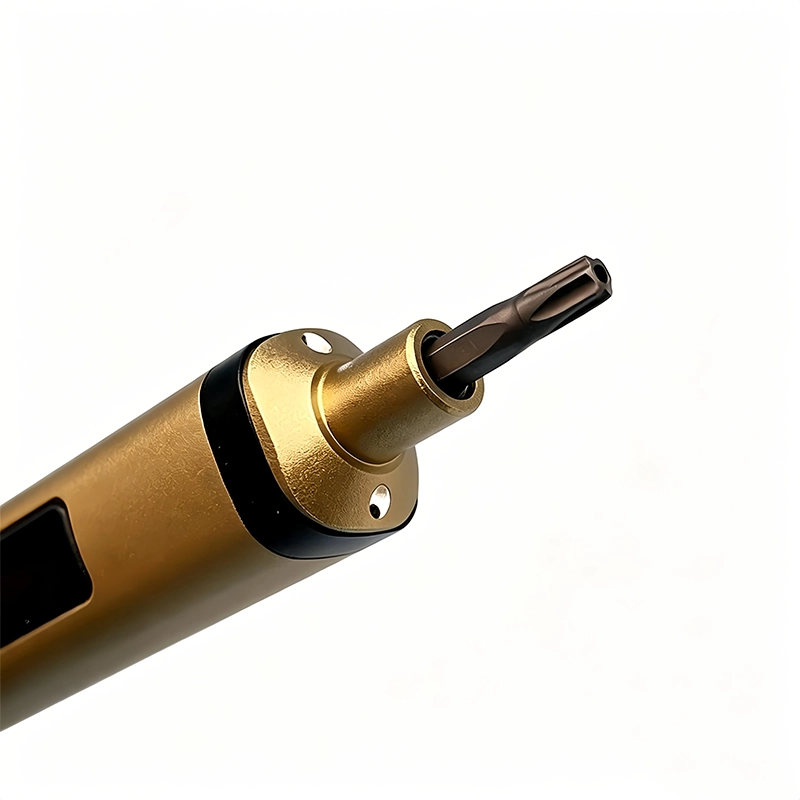
What operating sequence works for extended electric screwdriver bit selection?
The controlled sequence for extended electric screwdriver bit selection is staged. First, Measure recess depth and side clearance on representative hardware Second, Compare the shortest candidate bit with the holder geometry Third, Inspect and rotate the selected extension in a safe fixture The first powered movement should be brief enough to stop while the original condition is still visible. Keep the driver aligned with the screw axis, avoid using the bit as a lever and release the control before repositioning the work.
Continue extended electric screwdriver bit selection by following these closing steps: Use slow aligned travel while observing the tip from two angles Finally, Record the accepted length, profile and replacement condition Account for every bit, screw, spacer and temporary fixture before power or function is restored. If the receiving thread does not accept the screw naturally, back out and investigate. Repeated trigger pulses are not a substitute for identifying contamination, wrong pitch, cross-threading or a shifted joint stack.
Why can extended electric screwdriver bit selection fail even when the bit appears to fit?
The central failure path in extended electric screwdriver bit selection is that additional length can amplify holder or bit error, making the tip orbit, flex or contact the recess wall and nearby components. A tip can enter a recess and still be the wrong size, worn, too short or poorly aligned. Before powered travel, verify that the bit reaches its designed depth, does not rock and clears adjacent parts. Observe the screw from a second angle whenever the housing, fixture or operator's hand can hide side load.
For extended electric screwdriver bit selection, the four application controls are specific: prove that a short bit genuinely cannot reach without holder interference; verify extension shank and holder compatibility; check straightness and tip orbit at operating speed before product contact; and choose the shortest extension that preserves perpendicular alignment. Each control blocks a different error path. No single claim about torque, runtime, steel grade or accessory count replaces them. If one control cannot be demonstrated on representative hardware, the task remains unapproved even when the driver runs normally on an unloaded bench.
What stop rule protects extended electric screwdriver bit selection?
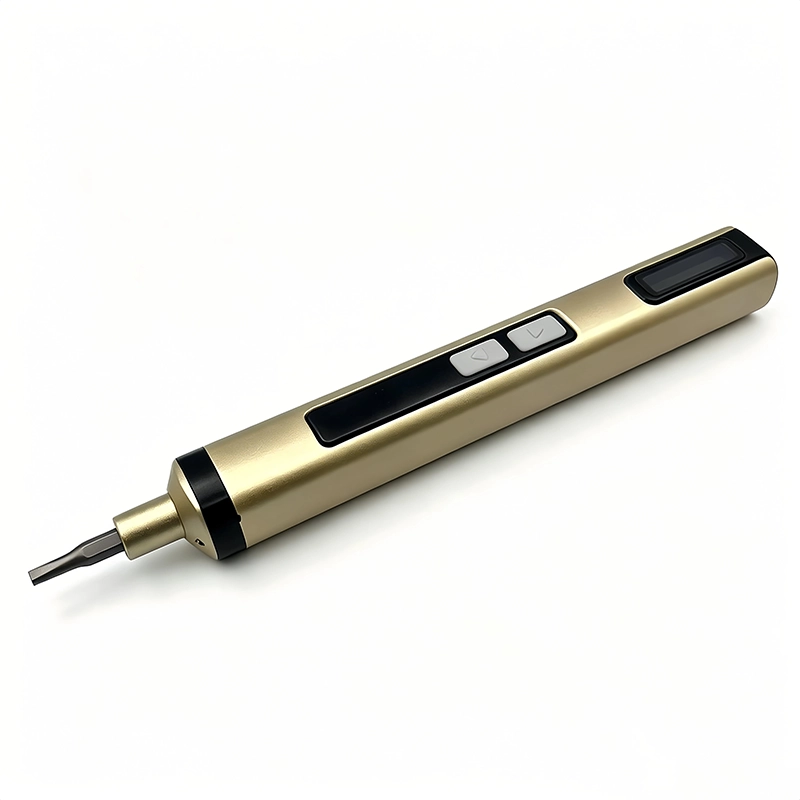
The explicit stop signal for extended electric screwdriver bit selection is: the tip shows visible orbit, the shaft flexes, the recess wall is contacted or axial alignment cannot be maintained. At that point, release the trigger, keep the original condition visible and decide whether the bit, screw, thread, fixture or procedure needs correction. Do not add downward force or speed simply because the expected movement did not occur. A stop rule is useful only when every operator can recognize it before damage becomes the new condition.
Acceptance for extended electric screwdriver bit selection is equally concrete: the selected extension reaches without holder contact, remains stable and leaves the screw recess and nearby surfaces undamaged Check the surrounding assembly, not only the screw head. Enclosures should settle without forced gaps, moving parts should retain clearance, cables and seals should remain in their documented positions, and any required functional or calibration check should follow the accountable maker's procedure. Record exceptions rather than hiding them under final assembly.
Which two approaches should be compared for extended electric screwdriver bit selection?
For extended electric screwdriver bit selection, Short precision bit is best understood this way: minimizes leverage and sensitivity to runout when it reaches cleanly. By comparison, Extended precision bit is best understood this way: solves verified access limits but needs stronger straightness and support controls. Neither label is automatically safer or faster. Choose from access, screw condition, receiving material, cycle count, operator visibility and the cost of a mistake. Record why the selected approach fits this exact application instead of copying a setting from an unrelated device.
Treat extension length as a controlled access variable, not a universal upgrade, and do not use added reach to work around a blocked viewing angle. That recommendation for extended electric screwdriver bit selection turns a broad tool feature into a documented decision. During sample review, evaluate the installed bit, actual hardware, workholding and operator sequence together. A free-spinning demonstration can show that the motor works, but it cannot prove control at a shallow recess, plastic boss, threaded insert, gasketed joint or crowded electronic assembly.
What should a buyer specify for extended electric screwdriver bit selection?
For extended electric screwdriver bit selection, approve profile, shank fit, straightness, retention, working length and side clearance on the deepest named fastener location. The RFQ should name target devices or joints, screw profiles and sizes, working lengths, expected daily cycles, charging pack-out, case layout, manual languages and sample quantity. Compatibility claims need a model list and an approval method. Numerical claims need the test condition, sample count, acceptance limit and record owner.
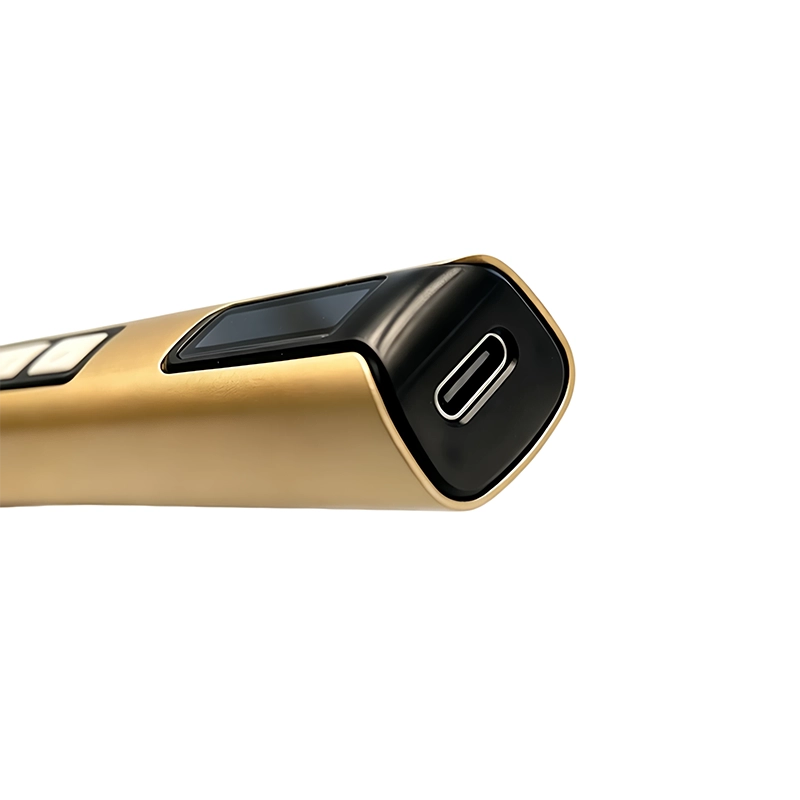
The sample plan for extended electric screwdriver bit selection should inspect appearance, controls, bit fit, installed-bit behavior, charging, indicator states, case organization, labels, instructions and representative screw work. Retain the approved sample and its bit map. If the motor, battery, control board, cable, bit source, case insert or instruction changes, assess the effect before the revised item enters production or replaces field stock.
How should extended electric screwdriver bit selection influence maintenance and training?
Training for extended electric screwdriver bit selection should show the real fixture, screw groups, parking location, hand-to-power transition and stop signal. “Use carefully” is not an instruction. A repeatable instruction names the profile, working length, support point, rotation phase and condition that requires escalation. Supervisors can then observe the process and separate a tool problem from a mapping, material, training or product-design problem.
Maintenance records for extended electric screwdriver bit selection should distinguish worn bits, holder contamination, control faults, charging issues, abnormal sound, dropped tools and application damage. Trend the categories rather than combining them as “driver problems.” A recurring pattern may call for a replacement interval, clearer label, different accessory, revised fixture or supplier corrective action. Evidence from the workbench is more valuable than adding unverified claims to the package.
What evidence supports guidance for extended electric screwdriver bit selection?
This extended electric screwdriver bit selection guide uses the stated customer question, a task-level failure analysis, the linked official guidance and the current XOENAEN catalogue record for the selected product platform. It does not infer universal device compatibility, certification, a customer result or a torque value that is absent from the model record. Representative hardware and the accountable product procedure remain the basis for approval.
The methodology for extended electric screwdriver bit selection connects each recommendation to an observable condition: bit engagement, alignment, receiving material, workholding, powered response, stop signal and post-work acceptance. Keep photographs, sample identifiers, revisions and deviations with the decision. This creates an answer that another technician or buyer can audit instead of relying on a generic “best tool” statement that changes meaning from one joint to another.
Short precision bit compared with Extended precision bit for extended electric screwdriver bit selection
| Approach | Best use | Primary control |
|---|---|---|
| Short precision bit | minimizes leverage and sensitivity to runout when it reaches cleanly | prove that a short bit genuinely cannot reach without holder interference |
| Extended precision bit | solves verified access limits but needs stronger straightness and support controls | verify extension shank and holder compatibility |
- Define the customer question for extended electric screwdriver bit selection: When does an extended bit improve access, and when does added length create unacceptable wobble or side load?
- Document the real application boundary: reaching a precision screw below a narrow housing wall where the driver holder cannot approach the recess directly
- Verify the first powered control: prove that a short bit genuinely cannot reach without holder interference
- Verify the second powered control: verify extension shank and holder compatibility
- Approve representative hardware against XOENAEN 50-in-1 electric screwdriver set
- Retain the bit map, charging pack-out, stop rule and revision owner for extended electric screwdriver bit selection
- XOENAEN 50-in-1 electric screwdriver set →
- XOENAEN OEM and ODM process →
- Manufacturing and quality control →
- Read the related electric-screwdriver-start-stop-delay-control guide →
- Read the related electric-screwdriver-wrong-direction-prevention guide →
- Continue with the electric-screwdriver-led-light-evaluation topic →
- How XOENAEN presents quality evidence →
- Read the related choose-precision-electric-screwdriver guide →
How much runout can a long precision extension amplify?
Before extended electric screwdriver bit selection, confirm the exact product boundary, fastener map and this first control: prove that a short bit genuinely cannot reach without holder interference. A physically fitting bit alone does not authorize the work.
Does magnetic retention change with extended-bit length?
The specific powered-rotation concern during extended electric screwdriver bit selection is that additional length can amplify holder or bit error, making the tip orbit, flex or contact the recess wall and nearby components. Short runs and deliberate inspection points preserve time to detect that change.
When is a short electric screwdriver bit the safer choice?
Release the trigger during extended electric screwdriver bit selection as soon as the tip shows visible orbit, the shaft flexes, the recess wall is contacted or axial alignment cannot be maintained. Do not compensate with more speed, pressure or repeated cycling.
How is side clearance checked before an extended bit is approved?
For extended electric screwdriver bit selection, Short precision bit minimizes leverage and sensitivity to runout when it reaches cleanly, while Extended precision bit solves verified access limits but needs stronger straightness and support controls. Select the method from the joint condition and consequence of error.
Which sample records should a buyer retain for extended electric screwdriver bit selection?
A buyer approving extended electric screwdriver bit selection should document approve profile, shank fit, straightness, retention, working length and side clearance on the deepest named fastener location. The approved sample, bit map and revision record should remain linked to the purchase specification.
Which observable result closes the work on extended electric screwdriver bit selection?
Completion of extended electric screwdriver bit selection requires this observable result: the selected extension reaches without holder contact, remains stable and leaves the screw recess and nearby surfaces undamaged Installed screws alone are not evidence that the surrounding product is correctly restored.