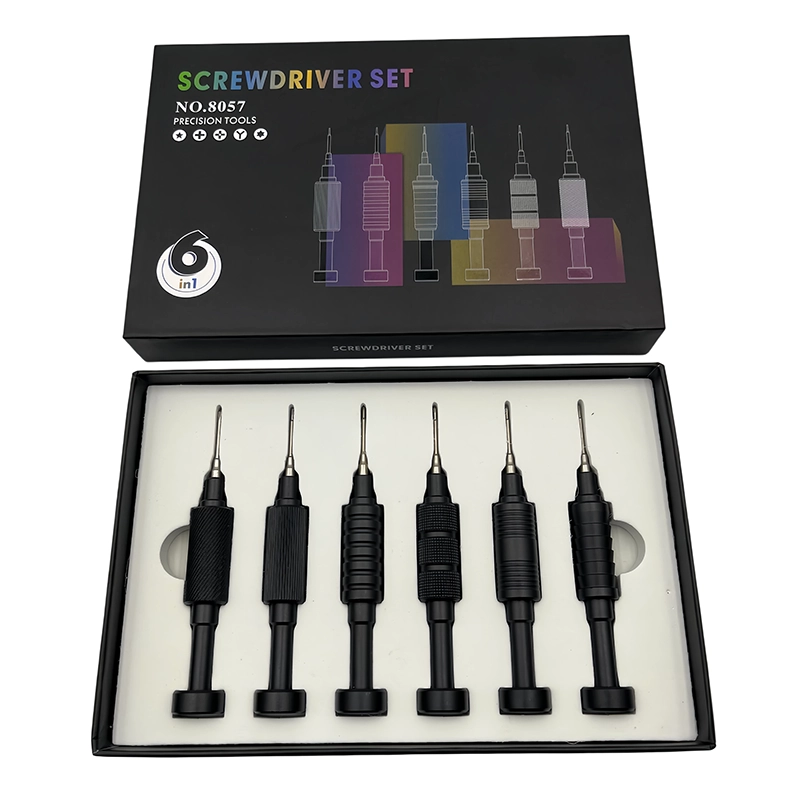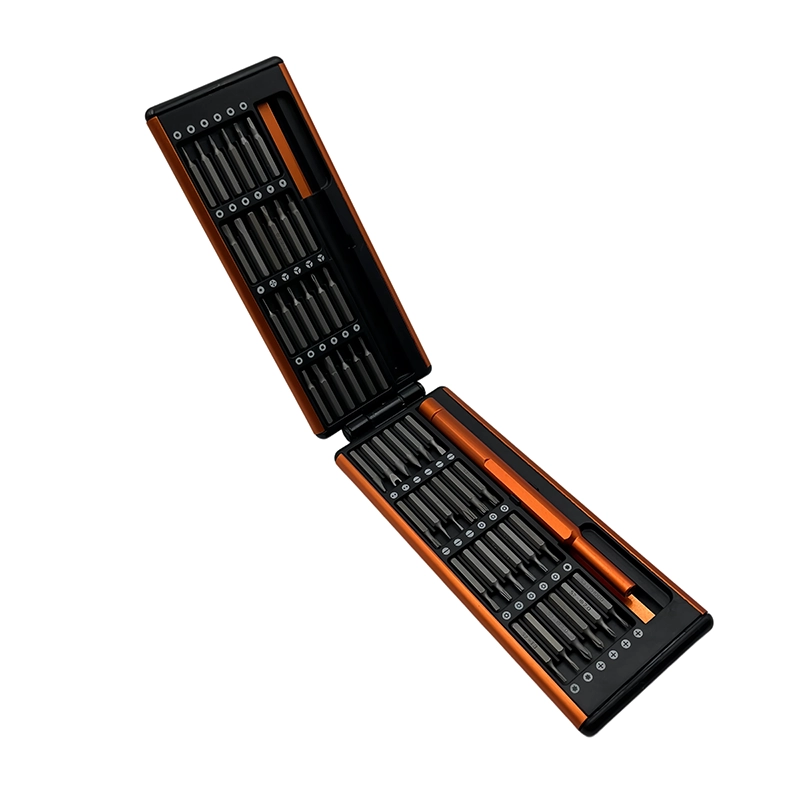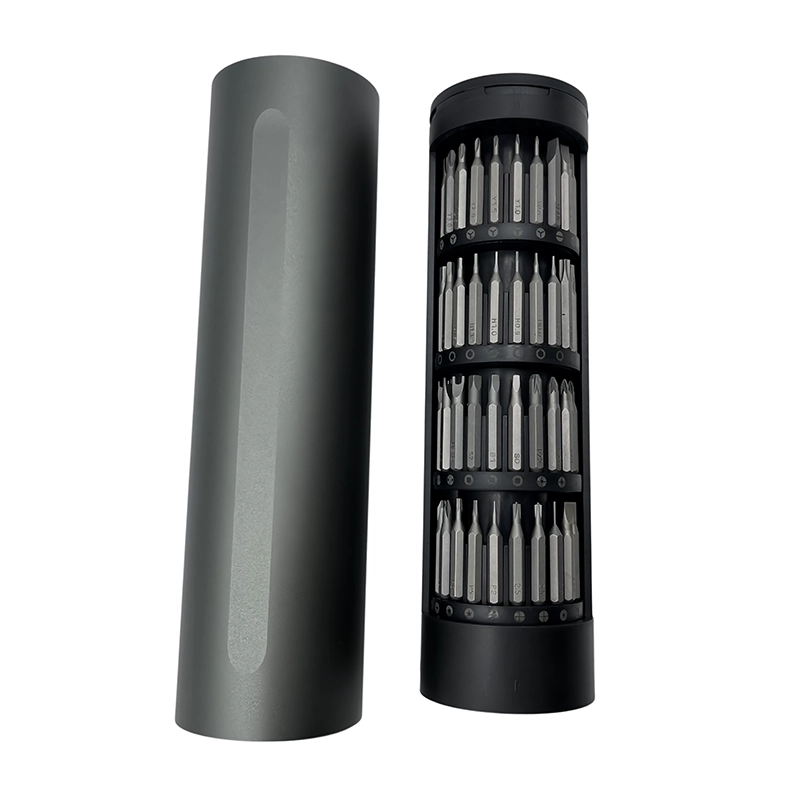
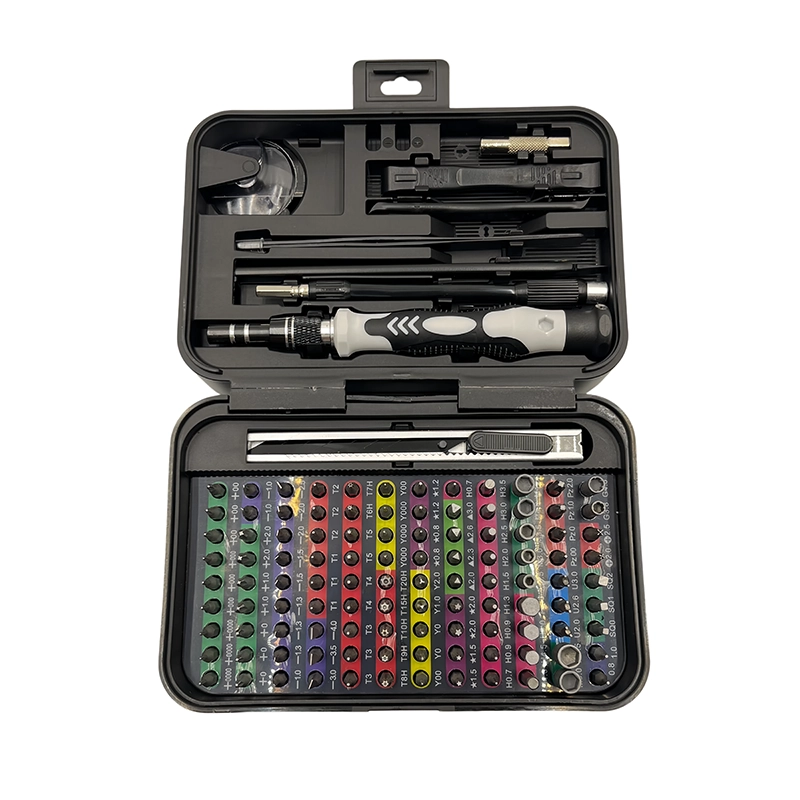
Trace a private-label screwdriver set by connecting its buyer SKU and supplier model to one approved product revision, production lot, inspection release, packaging revision, carton and shipment record. Add critical component lots only where risk justifies them. Test retrieval during sample approval, control changes in writing and never imply that a code proves quality by itself.
screwdriver set lot and revision traceability
The controlled relationship between a screwdriver set's buyer SKU, supplier model, approved product definition, production or packing lot, inspection release, packaging records and shipment destination. It enables identification and investigation of affected goods without assuming that every unit is serialized or that every component batch requires the same level of control.
Private-label screwdriver traceability should answer a practical question: which approved product did this buyer receive, and which records support that answer? The useful chain starts with the buyer SKU and supplier model, then connects the product revision, production lot, inspection release, artwork and pack-out revisions, purchase order and shipment. It should be specific enough to investigate a complaint without implying that every individual tool must carry a serial number.
Accessory count alone cannot identify a screwdriver set. Two sets described by the same piece count may use different handles, holders, bit profiles, bit materials, batteries, control boards, cases, manuals or retail labels. The buyer and supplier therefore need one controlled identity for the complete saleable unit. That identity is agreed for the order; this guide does not claim that a particular lot-coding system is already implemented for every XOENAEN product or customer.
What does lot and revision traceability mean for a screwdriver set?
Lot traceability links a defined production or packing group to the purchase, inputs, checks and shipment records retained for that group. Revision traceability identifies the approved product definition used to build it. The two concepts work together: a lot code without a controlled revision may locate when goods were packed but not which bit map, component, instruction or package was approved; a revision without a lot may define the intended product but not locate affected stock.
The traceability unit should follow risk and the commercial model. A distributor may need one code per finished-goods lot and carton, while a service program may also need serial, date or batch identity on a powered driver. Small manual tools are not automatically safer when serialized, and a serial number alone is not a quality record. Define the level that lets the buyer separate affected inventory, retrieve evidence and communicate a correction without creating labels nobody uses.
Keep names unambiguous. A purchase order is a commercial instruction; a model names a product platform; a revision identifies a controlled product definition; a lot groups production or packing under stated conditions; and a shipment record shows where released goods went. One field can appear in several documents, but the team should not use these terms interchangeably or overwrite an earlier identity when a new version is approved.
Which identity fields should a private-label buyer control?
Begin with the buyer brand, buyer SKU and target markets. Add the supplier legal company, supplier model, product-revision code and effective date. For the saleable unit, record the driver or handle, holder, bit map, accessories, cable where present, case or tray, manual, labels and retail pack. Each controlled document should have its own identifier and revision so the final product record does not hide an outdated instruction sheet inside a current carton.
The production record should add the purchase-order line, finished-goods lot, production or packing dates, quantity, manufacturing or packing location where relevant, approved-sample reference, inspection record and release decision. The logistics link should identify retail packs, inner and master cartons, carton quantities, shipment or delivery reference and destination. If multiple lots share a shipment, the packing record should state the quantity from each lot rather than using the shipment number as a substitute for lot identity.
Component lots deserve risk-based treatment. A powered screwdriver project may need traceability for the motor, battery cell or pack, protection board, controller, charger or cable. A manual set may prioritize bit source, bit material or heat-treatment batch, holder, handle and case. Buyers should select fields that support change review and complaint investigation; copying every supplier batch number without defining how it will be reconciled can create data volume without useful control.
How should the approved sample connect to production lots?
Approve a complete production-intent unit and give the record an identifier. The approval should list the product revision, controlled component or bill-of-material fields, bit map, accessory count, function and fit checks, appearance reference, markings, manual, retail packaging and carton information. Photographs are useful when they show the identifier and revision, but they should complement—not replace—measurable requirements and a signed or otherwise accountable disposition.
The first production release should compare the lot with that approved definition. A first article can confirm identity, critical components, control behavior, bit and accessory map, visual details, labels, instructions and pack-out before the balance is completed. Later inspection samples should remain tied to the same revision. If the production lot includes an approved deviation, the deviation number, affected quantity and buyer disposition belong in the release record.
A golden sample can help with appearance and arrangement, but its limits must be written. Colors can age, batteries can discharge, tips can wear and packaging can be damaged in storage. Use the retained sample together with drawings, specifications, artwork files and acceptance methods. When the sample and written record conflict, stop and resolve which controlled requirement governs rather than choosing whichever is easier to reproduce.
Which changes require a new product revision or buyer review?
Create the trigger list before the first order. Common triggers include a different handle or driver construction, bit steel or heat-treatment source, bit profile geometry, holder, motor, gearbox, battery, controller, charging item, case insert, accessory, manufacturing location, label, manual, retail pack or export-carton structure. A supplier source change may be important even when the visible product looks the same because it can affect evidence, fit, service parts or market documents.
Not every edit needs a new commercial SKU. A corrected spelling error may only advance an artwork revision, while a new bit map can change the complete product revision and listing. A battery or controller substitution can reopen functional, transport and documentation review. The change record should state the reason, current and proposed condition, affected stock, risk review, evidence required, approver and implementation point. The buyer should decide whether old and new stock may coexist and how each will be identified.
Do not use the phrase equivalent component as approval. Define which characteristics are required to be equivalent, how they will be checked and whether the change needs a sample. If a proposed revision is rejected or delayed, identify the disposition of parts already purchased or assembled. This prevents an unapproved configuration from entering a later lot because it was physically available at the packing line.
How should receiving inspection verify lot identity?
Receiving inspection should reconcile identity before evaluating appearance or function. Compare the purchase order, buyer SKU, supplier model, product revision, finished-goods lot, package artwork, carton labels and quantities. Select cartons from defined positions or by the buyer's agreed sampling plan, then confirm that the retail pack and product carry the expected identifiers. Mixed codes, missing revisions or unexplained relabeling are reasons to hold material until the record is resolved.
Next, inspect the characteristics assigned to receiving. These may include pack contents, bit profile and quantity, handle or driver operation, installed-bit fit, case retention, visible finish, control and charging behavior where present, manual and label revision, and carton condition. A brief receiving function check cannot replace order-specific validation, battery evidence, torque work or laboratory testing. It only answers the checks named in the current receiving plan.
Record results against the received lot and sample units. Separate observed nonconformity from suspected cause, and preserve the original code and package when a unit is quarantined. If material is sorted, reworked or relabeled, issue a controlled disposition that identifies affected quantity, method, operator or provider, reinspection and new status. Never erase the original relationship needed to understand what was received.
What should labels, cartons and digital records show?
A customer-facing label should contain only information appropriate for the product, market and design; it does not need to display the entire production history. A small human-readable lot or date code, model or SKU and required responsible-party information may be combined with controlled carton and system records. The exact content requires destination and legal review. Avoid adding regulatory marks, addresses or claims merely because they appeared on an older product.
Master cartons can provide the bridge between physical stock and the release file. Record buyer SKU, product revision, lot, carton number or quantity, destination and shipment link in a layout that remains legible after normal handling. A barcode or QR code can reduce data-entry errors, but it must resolve to controlled data and be verified on the physical print. Technology does not correct a duplicate code or an uncontrolled spreadsheet.
Access and retention rules matter. Name the system owner, permitted editors, revision history, backup, retention period and response when a record is corrected. Buyers should agree which records they receive routinely and which can be retrieved for an investigation. Personal or confidential information should not be collected without a defined need. A smaller controlled dataset is more dependable than a large file assembled only after a complaint.
How can warranty returns improve the traceability system?
Give the service or returns team a short identity intake: buyer SKU, claimed purchase channel and date, visible model and lot codes, returned contents, photographs and customer description. Preserve the observed condition before attempting repair or destructive examination. If the lot cannot be read, record that fact; do not infer a code from nearby inventory. The failure code should describe what was observed before a cause is assigned.
Trend complaints by product revision and lot only when the data support that comparison. One broken bit does not establish a batch failure, and ten returns without a denominator do not establish a rate. Compare returned quantity with shipped and sold exposure where available, review whether the same condition appears in retained or field samples, and keep listing mismatch, transit damage, misuse, missing parts and product nonconformity as separate hypotheses until evidence supports a conclusion.
Close the loop with documented action. The outcome may be no defect found, customer guidance, listing correction, pack-out correction, supplier investigation, extra inspection, stock containment or a product change. Record affected lots and revisions, who was notified, which inventory was checked and what evidence closed the action. This makes traceability a decision system rather than a code printed for marketing.
What should an RFQ require before the first private-label order?
Ask the supplier to propose the identification hierarchy for the selected product: buyer SKU, supplier model, product and artwork revisions, finished-goods lot, critical component lots, carton identity and shipment link. Request a sample label and example release record with confidential values removed if necessary. State which fields must appear on product, retail pack and carton, and which may remain in the controlled production file.
Define notification and retrieval expectations without promising an unrealistic universal response time. The agreement should identify the contact route, records retained, authorization for data release, stock-containment process and parties responsible for market decisions. If the project spans the United States and Europe, review responsible-party, product-identity, language, importer and record obligations for each destination rather than using one generic label.
Finally, test the system during sample approval. Choose a sample identifier and ask both teams to retrieve the approved revision, bit map, artwork, inspection record and intended carton link. Resolve missing or ambiguous fields before production. An effective private-label screwdriver traceability plan is the one that helps a real buyer locate and assess affected goods—not the one with the longest code.
What different identifiers can and cannot prove
| Identifier | Useful connection | Boundary to preserve |
|---|---|---|
| Buyer SKU | Brand and commercial saleable unit | Does not identify the production lot by itself |
| Supplier model | Underlying product platform | May cover several buyer or packaging variants |
| Product revision | Approved configuration and controlled documents | Does not locate every shipment without a lot link |
| Finished-goods lot | Defined production or packing group | Needs the applicable revision and release record |
| Component lot | Selected input source or batch | Use where risk and investigation value justify it |
| Carton code | Physical logistics unit and quantity | Must reconcile mixed lots instead of hiding them |
| Shipment reference | Released quantity and destination | Can contain more than one lot or revision |
| Serial number | Individual unit when the project requires it | Identification alone does not prove inspection or conformity |
- Freeze the buyer SKU, supplier model and complete saleable product revision.
- Give the bit map, accessories, manual, labels and packaging separate controlled revisions.
- Define the finished-goods lot and select component-lot links according to risk.
- Connect the approved production-intent sample to first-article and release records.
- State which changes require notification, evidence, a sample or a new product revision.
- Reconcile product, retail-pack, inner-carton, master-carton and shipment identities.
- Preserve observed return condition and lot identity before assigning a cause.
- Test record retrieval before production rather than waiting for a complaint.
- Review manufacturing and quality-control checkpoints →
- Understand XOENAEN evidence boundaries →
- Review the manual-132 screwdriver set →
- Review the electric-53 screwdriver set →
- Review the ratchet-66 screwdriver kit →
- Read the related manual-screwdriver-export-carton-packout guide →
- Read the related manual-screwdriver-warranty-failure-coding guide →
- Related guide: What Should an OEM Screwdriver BOM and ECN Control? →
Does every screwdriver in a private-label lot need a serial number?
No. The appropriate identity level depends on product, risk, channel and investigation needs. Many projects can use finished-goods lot and carton links; an individual serial should be added only when it supports a defined control or service purpose.
Can a purchase-order number serve as the screwdriver lot code?
It can be part of the link, but one order may contain several production lots or revisions. Keep the commercial order reference and the physical production or packing identity distinct and reconcile their quantities.
Which screwdriver components should be traced by supplier lot?
Select them by risk and change value. Powered sets may prioritize battery, motor and controller records; manual sets may prioritize bits, holder or case. The agreed product and finished-goods lot remain the common foundation.
Does a printed lot code prove that a screwdriver set passed inspection?
No. A code identifies or links goods. The inspection plan, recorded results, disposition and release authorization provide the evidence for the checks actually performed on that lot and revision.
What happens when packaging changes but the screwdriver is unchanged?
Advance the relevant artwork or pack-out revision and assess whether product identity, market text, barcode, protection, carton data or listing information is affected. The project may not need a new model, but it still needs controlled approval.
How long should private-label screwdriver traceability records be retained?
There is no universal period in this guide. Set retention from applicable law, market role, warranty, contract, service life and investigation needs, then name the record owner, access method and disposal process.