Choose an Amazon FBA electric screwdriver supplier by verifying its legal identity, control of the exact product, sample-to-production records and ability to build the approved retail and export pack. The seller must still provide account-specific barcode and shipment data. Approve the physical tool, labels, manual, packaging and carton before production; never rely on an unsupported 'FBA approved' claim.
Amazon FBA-ready electric screwdriver project
A private-label sourcing project in which one identified electric screwdriver configuration and its complete saleable pack are prepared against the buyer's current Amazon fulfillment, product-identification and destination requirements. 'FBA-ready' is a project state verified by the seller and supplier; it is not a blanket factory certification.
What makes an electric screwdriver supplier suitable for an Amazon FBA project?
A suitable supplier can connect one legal company, one approved product configuration and one saleable pack to the records used for quotation, sampling and production. The supplier should be able to identify who controls the driver, battery, charging system, bit map, labels, retail package and export carton. A factory presentation or an Amazon logo in a sales deck does not establish that control.
Amazon FBA is a fulfillment route used by the seller; it is not a factory certification. The seller remains responsible for the listing, account settings, destination marketplace, product identifiers and current shipment instructions. The factory's role is to build and document the agreed product and pack-out, apply buyer-approved data accurately and provide the records included in the purchase specification.
That division of responsibility should appear in the RFQ. Ask the supplier to state which product and packaging fields it owns, which fields require buyer input and which decisions can only be confirmed inside the buyer's Seller Central workflow. This prevents a packaging team from guessing a barcode, label, warehouse instruction or marketplace requirement that belongs to the seller's live account.
Which facts should buyers freeze before asking for FBA-ready packaging?
Begin with the exact SKU, not a generic electric screwdriver family. Record the driver model, torque and speed behavior, battery and charging configuration, bit list, accessories, manual languages, logo method, color, retail case and saleable-unit quantity. If a two-piece bundle, bonus item or replacement-bit pack will be sold as a separate offer, treat it as a separate trade item and review its identification and packaging independently.
Define the destination marketplace and fulfillment route at the same time. A package for the United States should not automatically be reused for a European marketplace because responsible-party information, language, product documentation, battery records and shipment instructions may differ. Requirements can also change, so the approved pack should reference the buyer's current marketplace instructions and the date of approval.
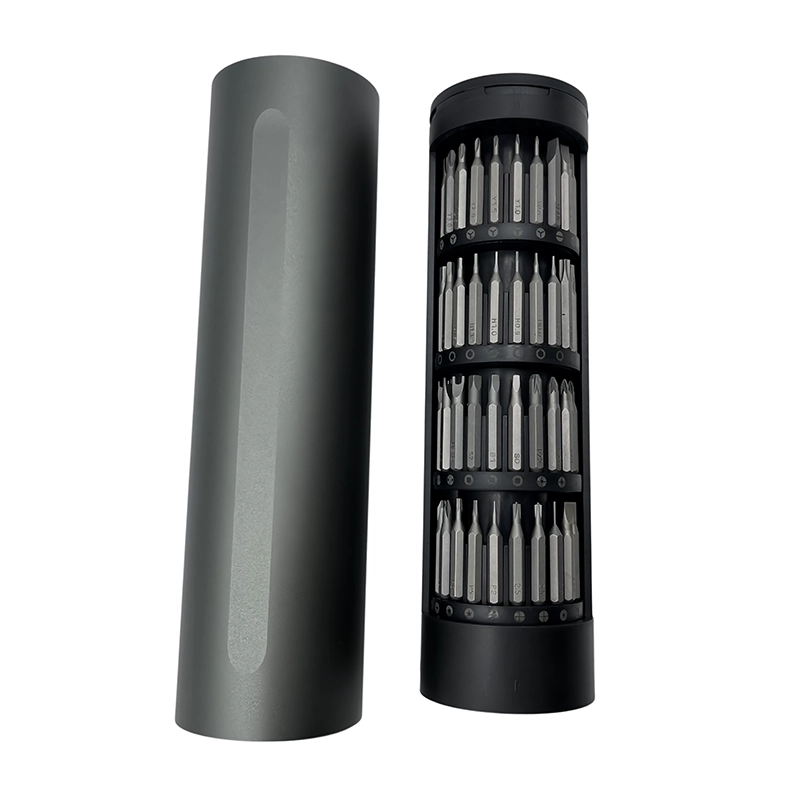
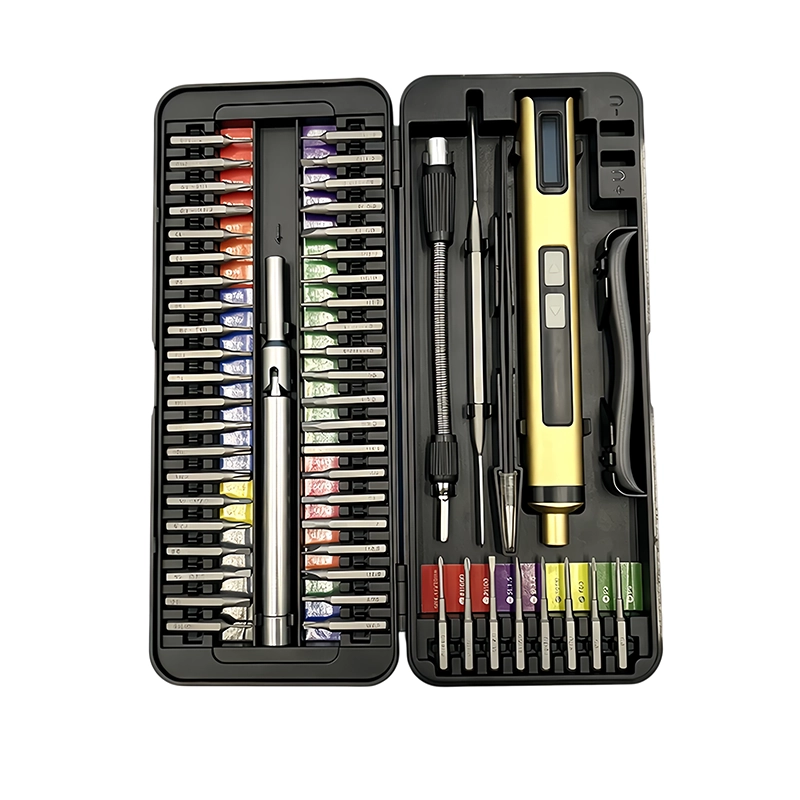
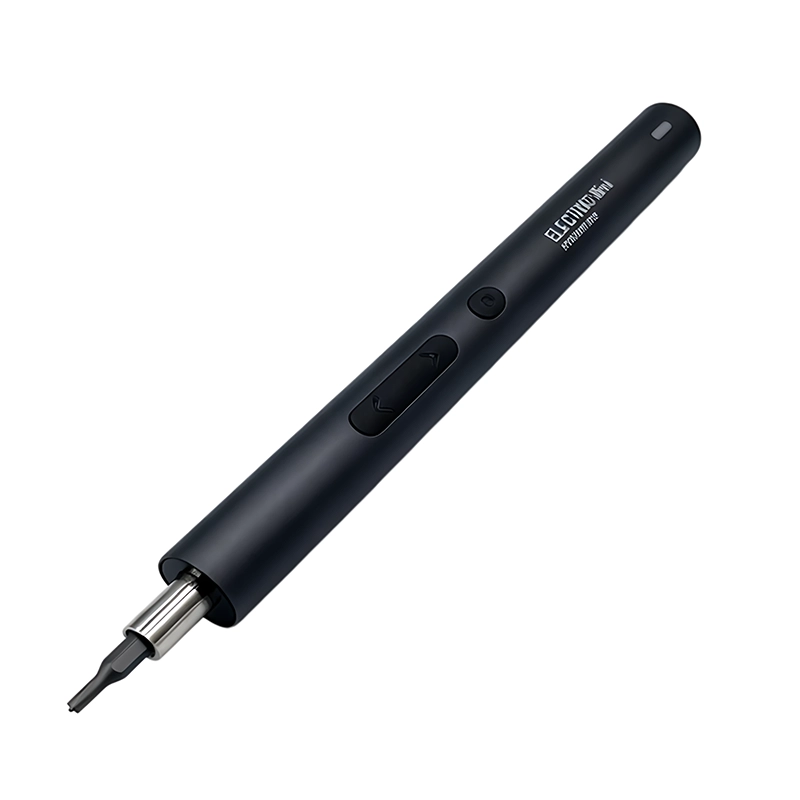
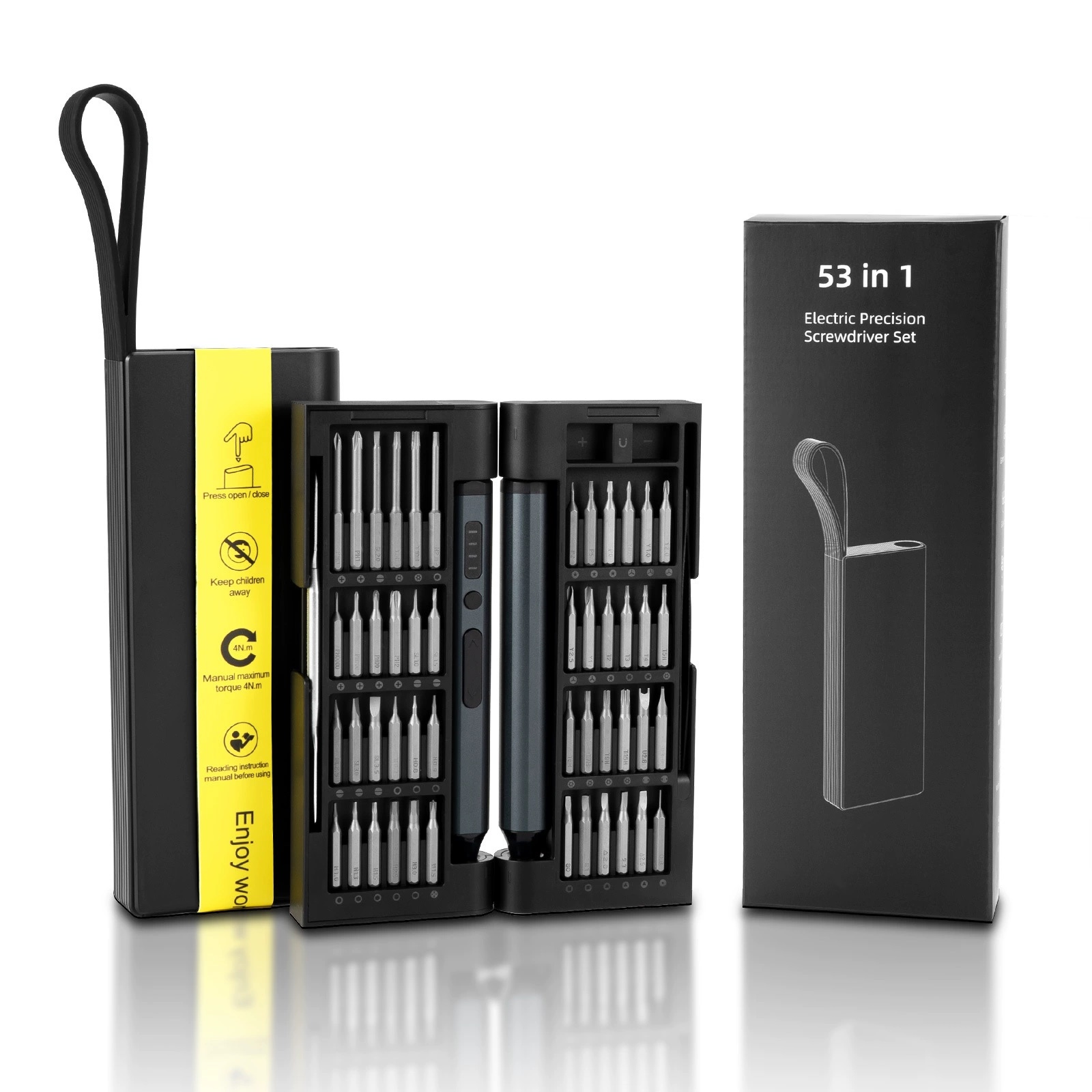
For XOENAEN projects, the current product records provide three useful starting platforms. The 53-in-1 record states four torque levels from 0.05 to 0.35 N·m, a 350 mAh battery, S2 bits and an Amazon-ready custom-box option. The 62-in-1 record describes Type-C charging, a 350 mAh battery, custom packaging and support for Amazon FBA sellers. The 67-in-1 record combines electric settings from 0.05 to 0.35 N·m with manual torque up to 5 N·m and lists logo, color, packaging and bit-configuration options. These are model-specific records, not promises that every option, document or marketplace path applies to every order.
How should a buyer verify the factory behind a private-label screwdriver?
Match the legal company on the business record, quotation, contract, invoice, payment beneficiary and product documents. Confirm the relationship between the public brand and the legal organization. Then ask who owns each technical decision: driver platform, motor, battery, charging circuit, bit source, case, packaging artwork and final inspection. The answer should name the responsible party and the change-notification route, not only say that the product is factory direct.
Review processes relevant to the selected SKU. A useful walkthrough follows incoming components, assembly, powered-function checks, installed-bit behavior, charging, accessory count, labels, retail pack and export carton. If a process is coordinated or subcontracted, record that scope and identify who approves the result. The objective is traceable responsibility, not a claim that every operation must occur in one building.
A representative sample should carry the same product configuration, markings, cable, manual, labels and retail package intended for production. When an early sample uses provisional artwork or a different component, list the difference and the evidence required before release. The purchase agreement should require written review when the battery, control board, motor, bit source, packaging structure or artwork changes after approval.
Who should supply the barcode and listing data?
Treat the barcode as controlled buyer data. GS1 states that the brand owner—the organization that owns the trade-item specification—is normally responsible for allocating the GTIN. The factory may print a buyer-approved barcode, but it should not invent, reuse or purchase an identifier in the buyer's name. The buyer should identify the source of the GTIN and verify that the brand and product data match the intended listing.
An Amazon barcode, manufacturer barcode and shipment label serve different purposes. The exact choice depends on the seller's account, product and current FBA settings. Give the supplier the final print file or controlled data only after the relevant offer and fulfillment settings are ready. Keep the human-readable identifier, barcode symbol, product variation, case quantity and artwork revision together in the approval record.
Before mass printing, scan the physical label on the approved retail surface. Check contrast, quiet area, size, curvature, coating, seam position and whether another code could be scanned by mistake. A perfect digital proof can fail after lamination, textured coating or placement over an edge. Confirm the saleable unit and export carton separately, and render obsolete exterior codes unscannable where the current Amazon instructions require it.
What should FBA-ready electric screwdriver packaging include?
First protect the actual product system. The driver, bits, opening tools, cable and small accessories should remain identified and retained during normal handling. The retail case should close reliably, and loose parts should not move into positions that damage controls, scratch finishes or obscure the approved presentation. The manual and labels must describe the same battery, charging behavior, controls and accessories in the box.
Second, define the saleable unit clearly. If the offer is one complete set, the package and barcode should identify that set as the unit. If several pieces are bundled into one offer, confirm how the outside package communicates that the pieces stay together, using the current marketplace instruction for the seller's situation. Do not apply an old 'sold as set' layout automatically to a new listing without checking the live requirement.
Third, record retail and logistics data from the physical approved pack: unit dimensions, unit weight, carton quantity, carton dimensions, gross and net weight, sealing method and orientation where relevant. These figures influence shipping plans and marketplace cost estimates. Product-record values are useful planning references, but a new insert, case, manual or accessory map can change them, so measure the production-intent pack again.
Fourth, separate ordinary FBA preparation from any optional packaging program. Amazon's Ships in Product Packaging program has its own eligibility, design and testing path. A factory cannot promise that a package is enrolled or certified merely because it can ship without an outer box in another channel. The seller should decide whether to pursue that program and provide the applicable test and enrollment instructions for the exact product group.
How should buyers approve the packaging sample?
Approve the complete saleable unit, not an empty printed box. Reconcile the driver model, bit count, accessories, cable, labels, manual and brand artwork against the purchase specification. Scan controlled codes from representative production surfaces. Open and close the case, check accessory retention and inspect the package after the agreed handling or transport test. Record any cosmetic and functional acceptance limits before testing begins.
Use a packaging drop or vibration plan that matches the intended retail pack, export carton, product mass and distribution route. Record the tested configuration, sample count, orientation or vibration profile, observations and acceptance decision. After the test, recheck tool function, charging, case retention, accessory location, label legibility and package damage. A passing result belongs only to the tested pack-out; a structural package change can require review again.
Keep a signed or otherwise controlled reference with photographs and revision identifiers. Artwork approval should show the final barcode data, warning and responsibility text, manual version and carton marks. Product approval should show the model and component revision. Packaging approval should show materials, structure, inserts and sealing. Connecting those three records makes it easier to detect a silent substitution during production.
What belongs in an Amazon private-label screwdriver RFQ?
State the target marketplace, seller route, users, repair tasks and target devices. Identify the preferred model or ask for a platform comparison. Attach a fastener and bit map, torque and speed needs, battery and charging requirements, expected order quantity, intended launch window and whether the first sample is stock, branded or production-intent. Separate mandatory acceptance criteria from preferences such as color or case presentation.
For packaging, include the saleable-unit definition, brand artwork status, manual languages, responsible-party text requiring legal review, barcode owner, barcode type to be decided by the seller, label data handoff, retail-package target, export-carton data, handling-test expectations and any optional program the seller plans to pursue. Ask the quotation to identify assumptions and buyer inputs rather than hiding them in a generic 'FBA ready' line.
For commercial comparison, request sample cost and time, standard and custom MOQ for the chosen model, artwork or tooling charges, production time after approval, carton data, inspection scope, change-control responsibility, spare-bit route and treatment of nonconforming goods. The existing XOENAEN model records show 500-piece standard and 1,000-piece custom/OEM planning references for several electric sets, with 3–5 day sample and 10–15 day production references in current company materials. Final figures must be confirmed for the exact configuration and schedule.
Which supplier response is a warning sign?
Be cautious when a supplier says every model is FBA approved, offers to create the buyer's barcode without confirming ownership, cannot identify the battery or charging revision, or refuses to connect the sample to a written specification. The same applies when product dimensions, carton data or included accessories change between the quotation, sample and listing draft without a controlled revision.
A low quote can also hide work that moves to the buyer later: relabeling, repacking, missing manual translations, revised cartons, unplanned prep, replacement parts or reinspection. Compare the same product and packaging configuration across suppliers. If one quotation excludes the complete printed pack, testing or documentation while another includes it, unit prices are not directly comparable.
Do not use a large accessory count as a shortcut for product fit. Amazon shoppers may value a complete set, but returns begin when the common device profiles are missing, bits fit poorly, the case loses small parts or the manual describes a different tool. Approve the repair tasks and bit map before committing to listing copy or package claims.
What is the practical release sequence?
Release the project in gates. First confirm the legal supplier and technical platform. Second freeze the model-level product specification and bit map. Third issue controlled brand, barcode and manual data. Fourth approve the complete production-intent sample. Fifth confirm packaging and handling evidence. Sixth compare the first production article with the approved records. Finally create and verify the shipment using the seller's current FBA workflow and destination instructions.
Each gate should have an owner and a stop condition. The factory stops when artwork data are incomplete, when a product revision is unapproved or when the physical package does not match the print proof. The buyer stops when listing or barcode decisions are unresolved, when destination responsibilities are unclear or when the sample lacks the evidence required for acceptance. A visible stop rule is more useful than a broad promise of fast delivery.
A good Amazon FBA electric screwdriver supplier does not remove the seller's marketplace responsibilities. It makes the product, sample, label, package and production record clear enough that both sides can complete their own responsibilities without guessing. That is the standard to compare before discussing a private-label launch date.
How to compare Amazon private-label supplier evidence
| Buyer check | Weak supplier response | Better evidence |
|---|---|---|
| Factory identity | Generic factory deck | Legal, quotation, payment and document identities match |
| Product control | Similar product photo | Named model, component revision, bit map and sample record |
| Barcode work | Factory invents or reuses a code | Buyer-controlled identifier and approved physical print proof |
| FBA packaging | Every box is called FBA approved | Current account inputs, exact saleable unit and pack-out checklist |
| Battery system | Battery details omitted | Cell, charging, cable, instructions and records tied to the SKU |
| Sample approval | Color and logo only | Tool, function, labels, manual, package and carton approved together |
| Production changes | Equivalent parts may change silently | Written change notice and risk-based reapproval |
| Commercial quote | Unit price only | MOQ, sample, artwork, testing, carton, lead time and support assumptions |
- Name the destination marketplace, seller route and exact saleable unit.
- Match legal company, quotation, payment beneficiary and product documents.
- Freeze the driver, battery, charging system, bit map and accessory pack.
- Keep GTIN, Amazon barcode and shipment-label decisions under buyer control.
- Scan physical barcode and label proofs on the approved retail surface.
- Approve the complete packaged sample and record product, artwork and pack revisions.
- Measure production-intent unit and carton data after every structural pack change.
- Require written review for battery, circuit, motor, bit, artwork or packaging substitutions.
- Confirm current FBA preparation and shipment instructions inside the seller account.
- Compare total packaging, documentation, testing and support cost—not unit price alone.
- View the referenced XOENAEN electric-53 product →
- Build a private-label electric screwdriver repair-kit brief →
- Plan packaging drop and vibration tests →
- Review XOENAEN private-label and OEM options →
- Review manufacturing and quality-control checkpoints →
- Compare documented electric screwdriver models →
- Read the related precision-electric-screwdriver-manufacturer-china guide →
- Related guide: Who Owns the Mold in an ODM Electric Screwdriver Project? →
Can a factory make an electric screwdriver package ready for Amazon FBA?
A factory can build and label the agreed saleable pack, but the seller must provide and verify account-specific barcode, offer and shipment inputs. Approve the exact physical package against current marketplace instructions before production.
Is an Amazon FBA electric screwdriver supplier certified by Amazon?
Do not assume so. FBA is a fulfillment route, and optional Amazon packaging programs have separate eligibility and testing. Ask for exact evidence and avoid broad 'Amazon approved' claims.
Who should own the UPC or GTIN for a private-label screwdriver?
GS1 states that the brand owner is normally responsible for allocating the GTIN. The factory can print buyer-approved data but should not invent or reuse an identifier for the buyer's brand.
Should the supplier create the FNSKU label?
The supplier may print an approved label file, but the seller should generate and verify account-specific Amazon data. The physical print still needs a scannability and placement check.
What should be checked on the packaged sample?
Check the exact driver and battery configuration, bit and accessory count, controls, cable, manual, labels, barcode, case retention, retail package, carton data and agreed handling-test result.
What MOQ applies to an Amazon private-label electric screwdriver?
Several current XOENAEN electric-model records use 500 pieces as a standard planning reference and 1,000 pieces for customization. Final MOQ depends on the model, artwork, color, bit map, package and technical changes and must be confirmed in the quotation.
Can one FBA package be used in the US and Europe?
Do not assume it can. Language, responsible-party information, documentation, product configuration and marketplace instructions can differ. Review the exact model and destination before approving shared artwork.
When should packaging be approved again?
Review approval after changes to the product, accessories, manual, barcode, artwork, insert, retail structure, carton, battery or other fields that may affect the saleable unit, evidence or fulfillment handling.