Find a reliable precision electric screwdriver manufacturer by checking evidence tied to the exact product: legal identity, technical specifications, sample consistency, process records, inspection methods and clear change control. Verify the factory processes relevant to your order, confirm who owns quality responsibility and compare suppliers on documented control—not on a generic presentation or the lowest quote.
Precision electric screwdriver manufacturer
A legal company responsible for defined development, sourcing, assembly, testing or production controls for powered screwdriver systems.
Begin with one legal entity
Match the company name on business records, quotation, contract, payment instructions and product documents. XOENAEN is operated by Shenzhen ToolQeen Technology Co., Ltd.; ToolQeen is another brand of the same company, not a second manufacturing company.
Supplier checklist
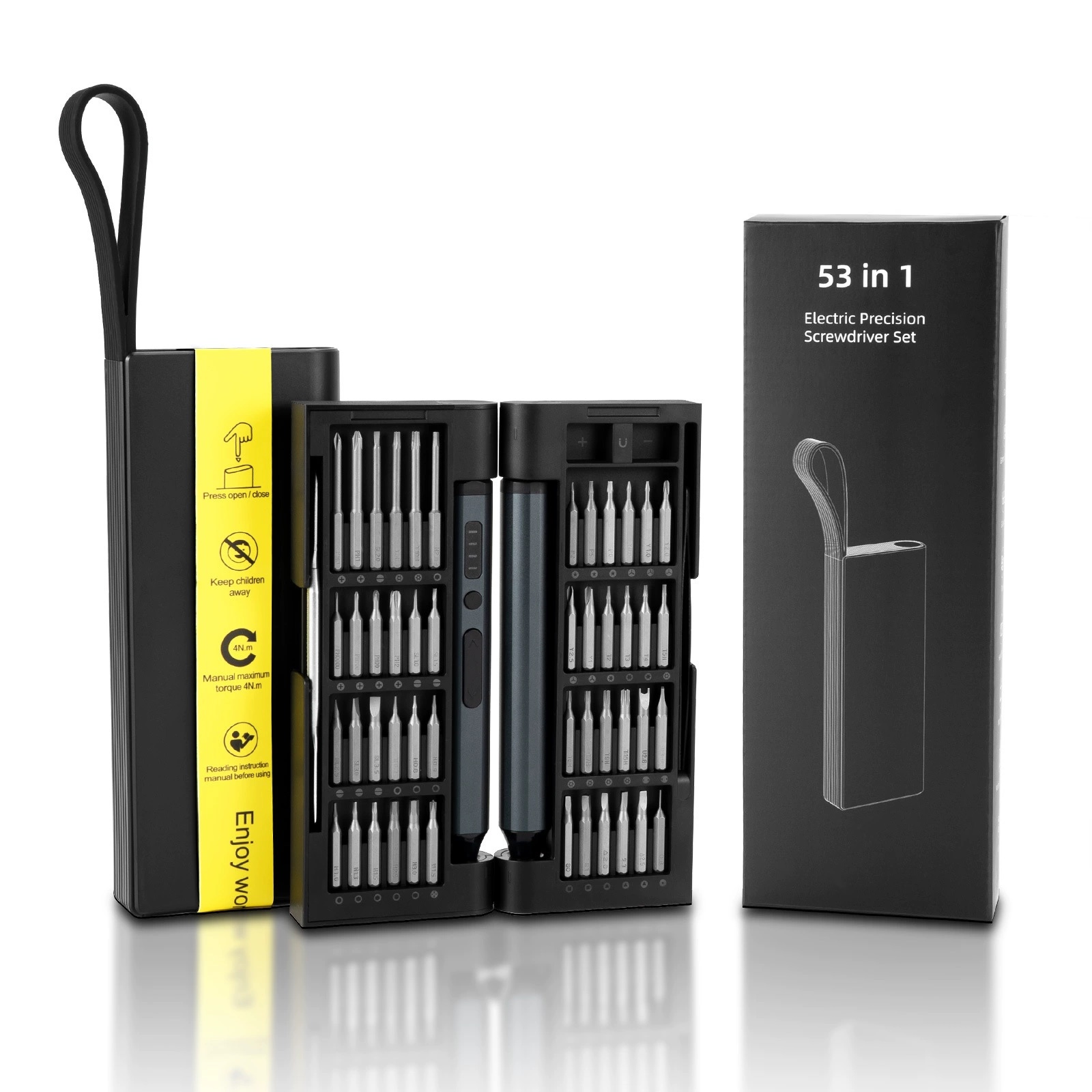
Request model-level specifications, bit list, battery and charging information, samples, quality checkpoints, packaging, lead time and change-control responsibility. General factory slides are not a substitute for answers tied to the selected SKU.
Factory verification
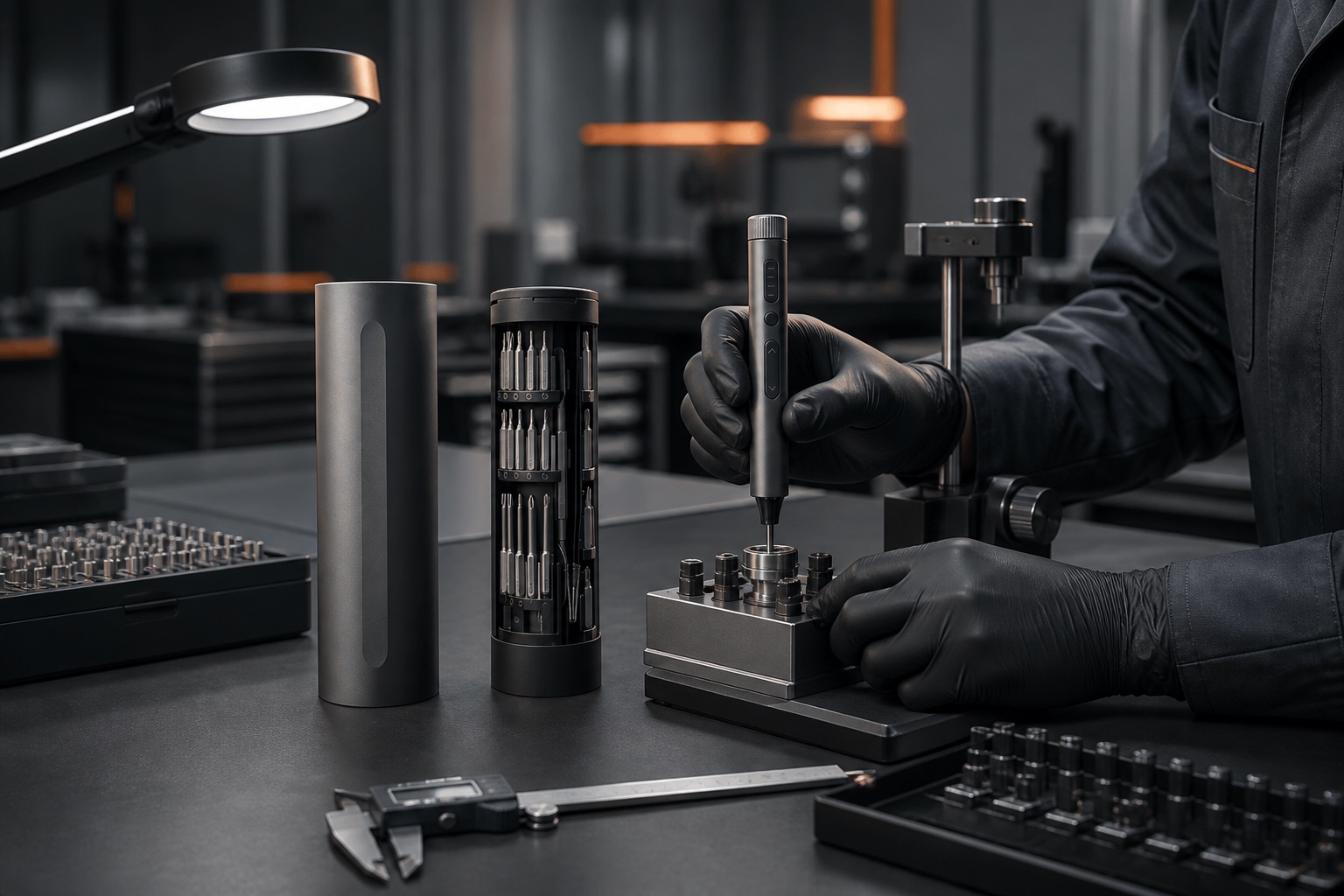
Match the legal address and operating location, then inspect processes relevant to the product. A live or recorded walkthrough should connect equipment, assembly, incoming inspection, torque or function testing and pack-out to current records.
Confirm evidence
Ask for test method, fixture, sample plan, acceptance limits and calibration status. NIST notes that traceability belongs to a documented measurement result. ISO 9001 provides a management framework but does not replace product-specific inspection evidence.
Approve a representative sample
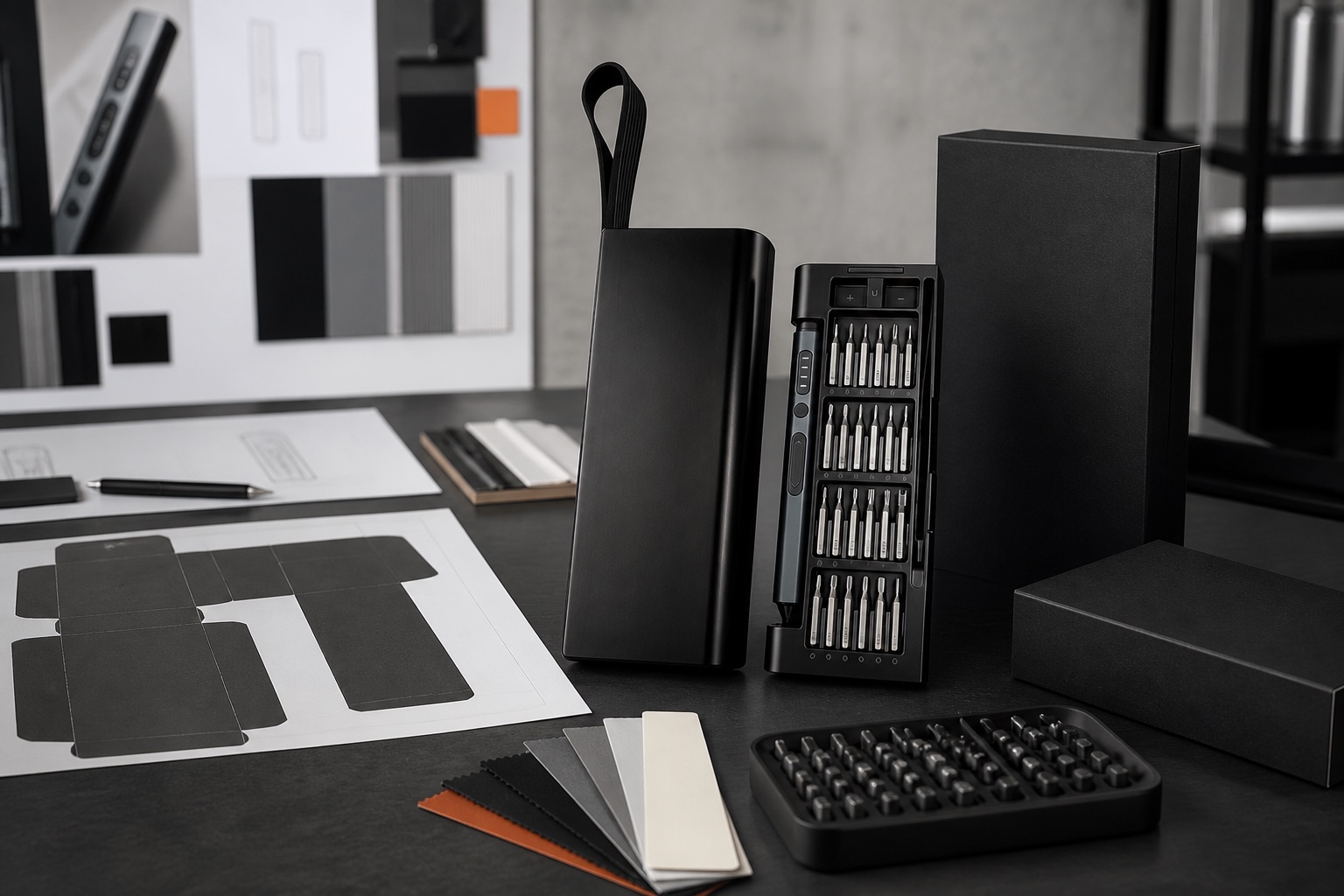
Record the approved motor, battery, controller, housing, bits, function, finish and packaging. If a pilot sample differs from mass-production materials, document the difference and require approval before the change enters the order.
Keep responsibility visible
A reliable supplier explains who handles engineering, procurement, assembly, testing, corrective action and after-sales response. Outsourced processes are not automatically a problem; undisclosed responsibility is.
How should buyers compare suppliers besides price?
Score every candidate on the same written baseline: legal identity, application fit, ownership of technical decisions, model-specific quality evidence, sample-to-production control, destination support, commercial inclusions and corrective-action responsibility. Record the source and date for each answer. A lower unit price is not comparable when it excludes testing, complete packaging, replacement support or the approved component scope. Weight critical failures as stop conditions instead of allowing a strong sales presentation to offset missing product evidence.
What makes the supplier scorecard decision-ready?
Use pass, clarify and reject states for each evidence field. Pass only when the record belongs to the quoted legal company, model and revision. Clarify when the supplier names a verification step and owner. Reject when identities conflict, specifications cannot be tied to the sample, a critical process change can occur without notice or a model claim relies on evidence from another configuration. Link total landed-cost detail to the wholesale guide after the technical baseline is stable.
Who owns each technical decision in the quoted product?
Ask the supplier to map responsibility for the motor, gearbox, battery, charging circuit, control board, housing, chuck or bit interface, bit source, case and printed pack. The useful answer names who selects the component, who holds the approved specification, who can authorize a substitution and who investigates a failure. A supplier does not need to disclose confidential know-how to show responsibility. It should, however, be able to connect the quoted model to controlled requirements and explain how an engineering or purchasing change reaches the buyer before production release.
What should a scoped factory walkthrough prove?
Plan the walkthrough around the selected electric screwdriver rather than a tour of unrelated equipment. Follow identifiable incoming components into storage, assembly, powered-function checks, accessory counting, labels, retail packing and final release. Ask the operator to show which model or work instruction applies and how a nonconforming unit is separated. If injection molding, bit heat treatment, batteries or another process is coordinated externally, record the provider-control route and the acceptance evidence. The goal is a traceable responsibility chain, not a claim that every operation must occur under one roof.
How should buyers approve a representative supplier sample?
Define what the sample is intended to prove before shipment. A stock unit can establish general platform fit; a branded sample can establish marking and presentation; a production-intent sample should represent the agreed motor, battery, control board, housing, bits, accessories, manual, labels and package. Record its model, revision and visible deviations. Check the intended screws and work stages, then retain photographs, observations and any measured results with the approval. Approval of color or logo alone must not be interpreted as approval of an unresolved powered system or pack-out.
Which supplier changes require written review?
Set change triggers in the quotation or quality agreement. Typical triggers include a different motor, battery cell or pack, charging component, control board, gearbox, bit steel or source, molded material, finish, firmware, label, manual, package structure, inspection method or manufacturing location. The supplier should describe the proposed change, reason, affected inventory and evidence used to assess risk. The buyer should then decide whether a document review, dimensional check, functional sample, package sample or broader validation is required. A phrase such as 'equivalent component' is not a complete change record.
What does a useful corrective-action response contain?
When a sample or shipment fails an agreed requirement, first identify the affected model, revision, lot and observed condition. Contain suspect stock and separate verified units before proposing a cause. The response should distinguish evidence from hypothesis, describe the investigation method, identify the confirmed cause where possible, state corrective and preventive actions, and show how effectiveness will be checked. Buyers should also review communication speed, access to responsible technical staff and treatment of replacement, rework or concession. A polished form without product-specific evidence should not receive a high supplier score.
How should the final manufacturer decision be documented?
Keep a short decision record beside the scorecard. Name the selected legal company, exact product and sample revision, approved evidence, unresolved conditions, quotation scope, order assumptions and people authorized to accept changes. Record why another candidate was clarified or rejected without turning the note into an unsupported ranking of entire companies. The decision applies to the evaluated configuration and time, not automatically to every product a supplier offers. Reopen the assessment when a critical component, process location, evidence scope or commercial responsibility changes.
Treat precision electric screwdriver manufacturer as a decision about a defined fastening task, not a promise created by a product label. Record screw profile, screw condition, surrounding material, access and the operator's required control. Then separate facts visible in the product record from results that still need a representative sample. This boundary keeps the article useful without turning a general selection method into an unsupported performance claim.
A buyer should compare configurations on the same written baseline. For precision electric screwdriver manufacturer, that baseline includes the actual fasteners, required bit map, powered and manual work stages, storage arrangement, charging or maintenance expectations, market and order assumptions. If one supplier quotes a different accessory scope or approval method, note the difference explicitly rather than ranking the offers by price or piece count alone.
The sample check should answer a narrow question about precision electric screwdriver manufacturer. Use representative screws or devices, begin with known-good interfaces, and observe seating, alignment, visibility and operator control. Do not use a successful removal as proof that every installation condition is safe. Record the method, sample condition and stop rule so a later reviewer can understand what was and was not evaluated.
Reject or repeat a precision electric screwdriver manufacturer sample when the bit does not seat fully, the tool obscures the work, resistance changes unpredictably, the housing or receiving material deforms, or the supplied configuration differs from the approved record. A repeat should change one controlled variable at a time. Otherwise, a different outcome cannot be traced to bit geometry, tool setting, fastener condition or operator technique.
Commercial approval for precision electric screwdriver manufacturer should follow product approval. Confirm model, revision, accessories, labels, manuals, package protection, target quantity and destination-market requirements after the working configuration is stable. Where compliance documentation is required, request the exact model, issuer, scope and current record; a generic logo or statement cannot establish coverage for every configuration.
For precision electric screwdriver manufacturer, internal links and product references help a reader continue the decision, but they are not substitutes for evidence. Use the linked XOENAEN product page to identify a current platform, the quality-evidence page to understand verification boundaries, and the contact brief to request a model-specific sample plan. Preserve the existing article URL when corrections or deeper evidence are added later.
Before final approval, summarize the buyer question, selected configuration, excluded alternatives, sample observations and unresolved items for precision electric screwdriver manufacturer. This closing record gives procurement, engineering and the supplier a common reference. It also prevents a broad marketing conclusion from being inferred from one limited trial and creates a clear trigger for re-evaluation when the model, bit, device or order scope changes.
Electric screwdriver supplier evidence scorecard
| Decision field | Weak response | Decision-ready evidence |
|---|---|---|
| Legal identity | Brand name only | Business, quotation, contract, payment and document identities reconciled |
| Product fit | Similar kit photo | Named model, controlled bit map and application boundary |
| Technical ownership | Factory direct claim | Responsible owner for motor, battery, control board, bits and changes |
| Quality evidence | Certificate or pass label | Method, sample, limits, result and model revision |
| Sample control | Appearance approved | Production-intent configuration, deviations and change triggers recorded |
| Commercial scope | Lowest unit price | Included package, evidence, support, terms and corrective-action route |
- Match legal and payment identities
- Request model specifications
- Verify relevant processes
- Review test methods
- Approve a sample
- Document change responsibility
How do I find a reliable precision electric screwdriver manufacturer in China?
Verify legal identity, relevant factory processes, specifications, sample consistency, inspection methods, change control and commercial responsibility.
What should I check before choosing an electric screwdriver supplier?
Check legal identity, model data, samples, testing, bit control, packaging, compliance scope, lead time and corrective-action responsibility.
How can I verify a real precision tool factory?
Match legal and payment records, then inspect relevant processes, equipment and current records directly or through a scoped audit.
How should I compare electric screwdriver suppliers besides price?
Score application fit, technical ownership, model evidence, sample control, included commercial scope and corrective-action responsibility on the same baseline before comparing unit price.
Does a lower MOQ prove a supplier is better?
No. MOQ is a commercial condition tied to the model and customization scope. It does not prove technical control, evidence quality, repeatability or after-sales support.
Must every factory process be in-house?
No. Coordinated or external processes can be acceptable when responsibilities, requirements, verification and change control are transparent and tied to the quoted product.