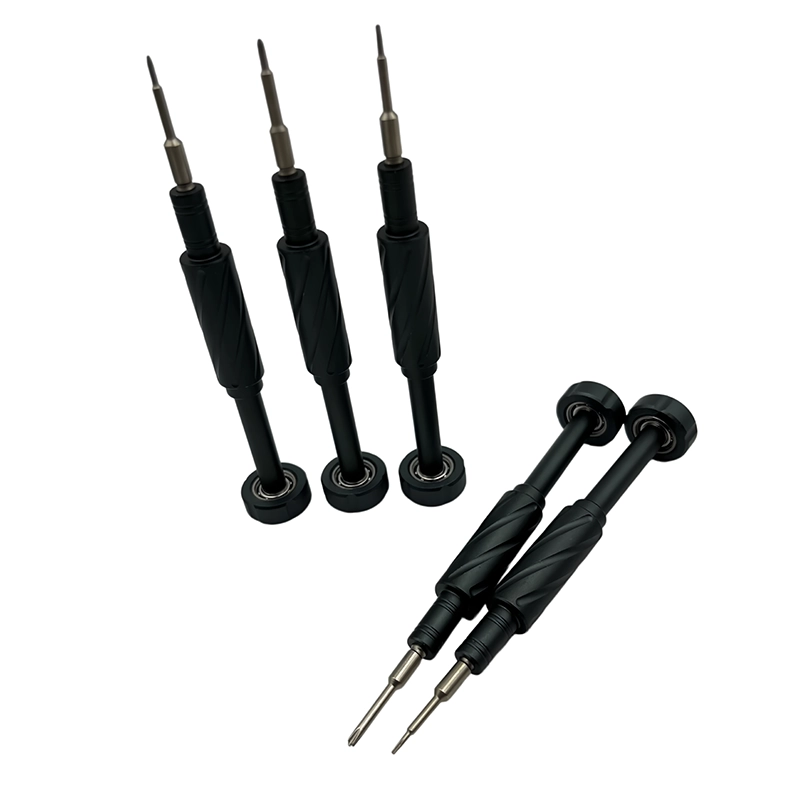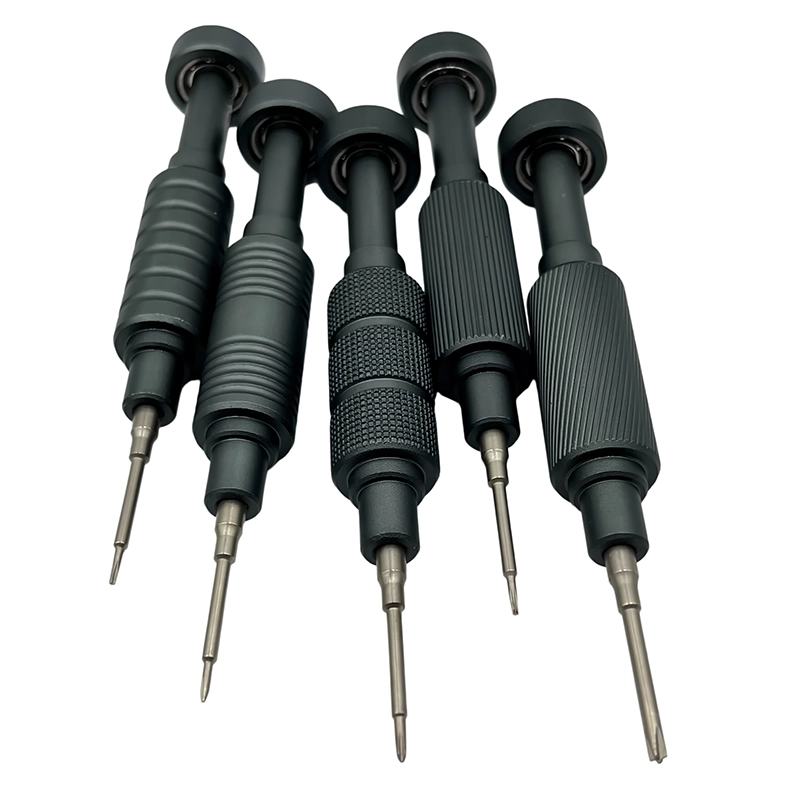
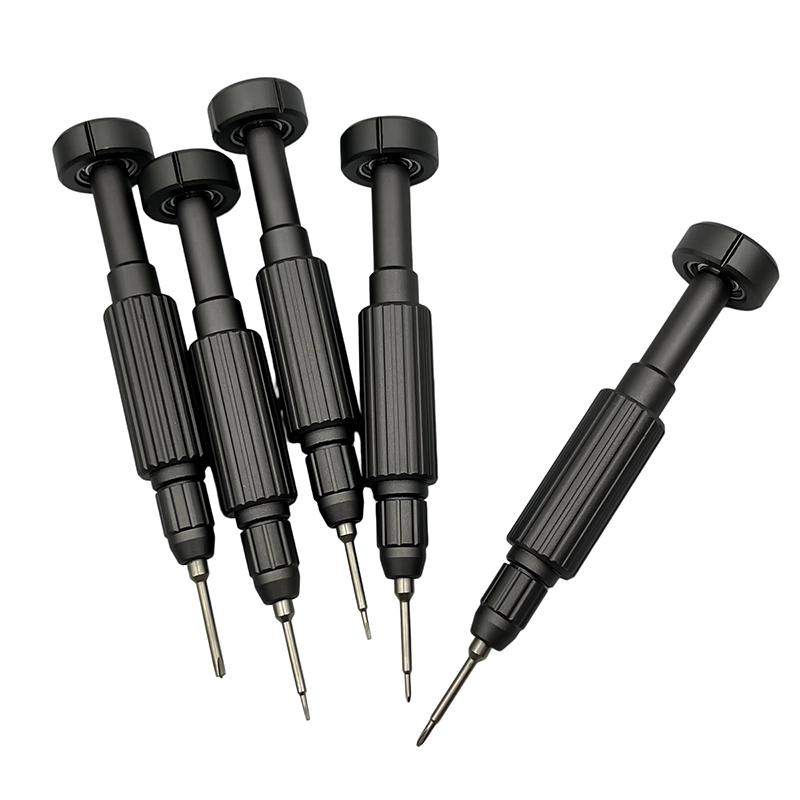
Rest the rotating cap in the palm or index-finger base, guide the handle with the fingertips, and keep the shaft aligned with the screw axis. Apply only enough downward pressure to maintain full engagement. Begin slowly, feel for thread entry, and stop when resistance changes unexpectedly. The cap improves control, but it cannot correct the wrong bit or a tilted approach.
Rotating-cap precision screwdriver
A small manual driver whose end cap turns independently, allowing the hand to maintain light axial support while the fingers rotate the handle.
What makes this manual screwdriver task different?
Unlike a large fixed driver, a rotating-cap handle separates axial support from fingertip rotation. This is useful on small screws where large wrist motion can tilt the shaft. The technique is not about spinning as fast as possible; it is about maintaining alignment while detecting subtle resistance. The first decision is therefore not how much force the handle can deliver, but whether the service task, device condition, and operator authorization are clearly understood. Keep the manufacturer’s instructions, the actual fastener, and the surrounding parts in view before selecting a bit.
A manual driver gives useful tactile feedback only when the workpiece is supported and the tip remains fully engaged. For electronics repair beginners, technicians, assemblers, and training programs, that means treating access, visibility, screw identity, and reassembly records as part of the tool choice rather than as optional bench habits.
Which technical factors matter most?
Full tip engagement, shaft axis, cap friction, handle diameter, fingertip grip, work support, and visibility all affect control. Excessive axial force can damage a small recess or the assembly beneath it. Too little engagement can let the tip climb out during rotation. Evaluate the complete installed system: handle, cap, holder, bit, fastener, access path, and work support. A premium material name or a high accessory count cannot compensate for partial recess contact or an unsafe service sequence.
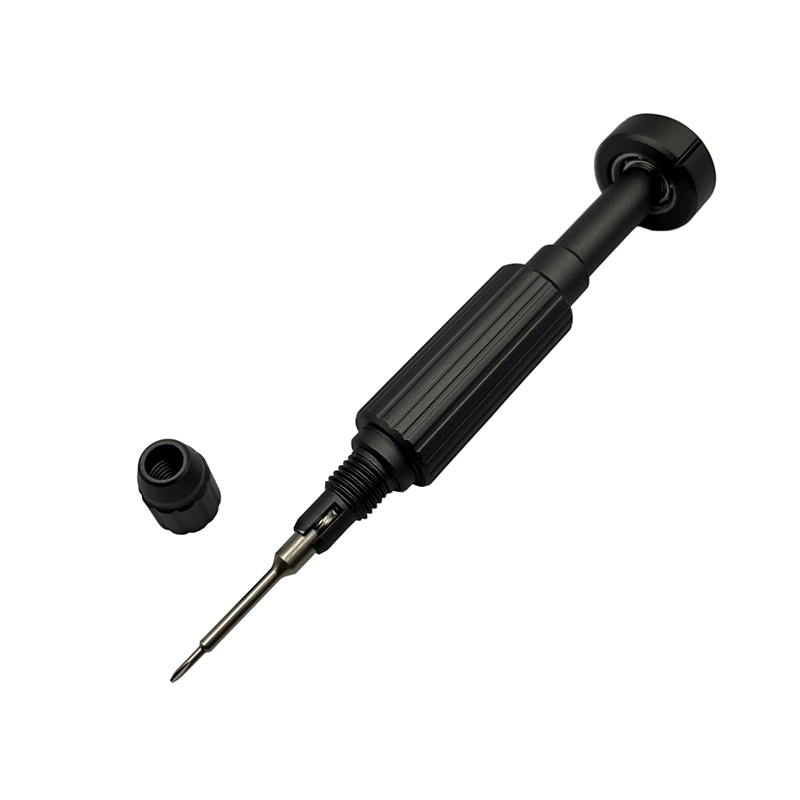
For how to use a rotating cap precision screwdriver, any drawing, service manual, torque specification or safety rule takes priority over general hand-tool guidance. Record the exact model, the condition described by the most common technique error is pressing the cap hard while rotating from the wrist. the extra force hides cross-threading and can keep a poor-fitting bit engaged just long enough to damage the recess. and the configuration used by electronics repair beginners, technicians, assemblers, and training programs. A revision can change fastener length, cable routing, sealing or authorized access, so the retained record must identify the actual article-specific task.
What workflow keeps the repair controlled?
1. Support the workpiece, clean and inspect the screw recess, choose the exact bit, and seat it without turning to confirm depth and rocking. This preparation stage prevents the screwdriver from becoming the first tool used on an unidentified joint.
2. Place the cap under a stable point of the hand, pinch the handle lightly, align the forearm with the shaft, and begin with slow fingertip turns. Place each removed fastener into a position-based map immediately rather than relying on memory or one mixed container.
3. For installation, turn backward until the thread drops, start with minimal force, watch the joint close, and stop at the specified or clearly seated condition. Final inspection should confirm the joint, surrounding parts, and complete device function required by the manufacturer; a closed case alone is not proof of a successful repair.
How should buyers compare a manual screwdriver set?
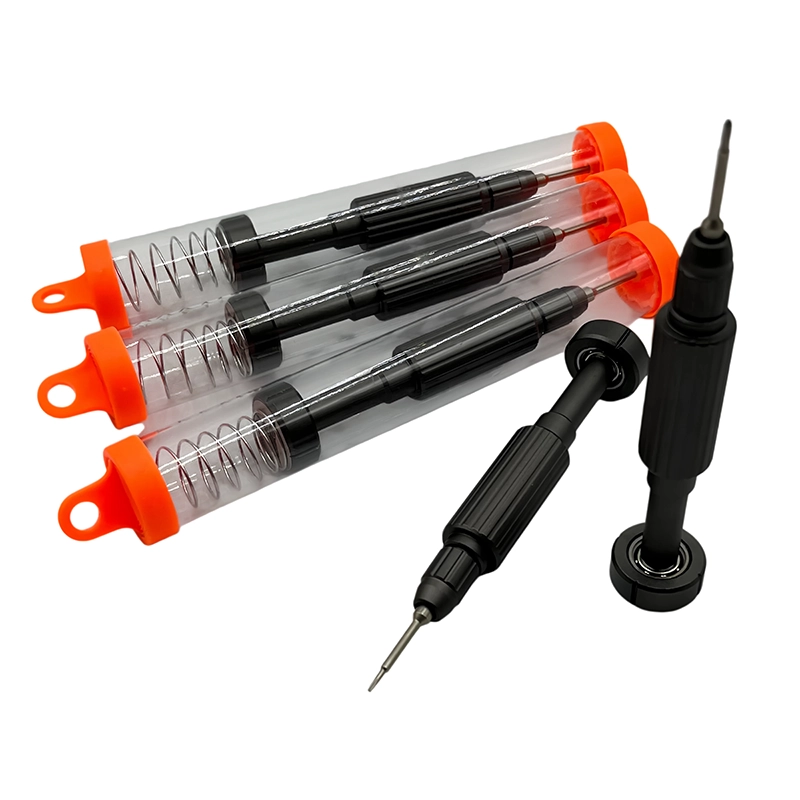
Compare candidates on verified profile fit, working reach, installed-bit stability, handle access, cap behavior, storage, labels, replacement support, and performance on representative fasteners. Buy a rotating-cap driver by feel and straightness, not appearance alone. Evaluate cap smoothness, handle texture, bit retention, installed-bit wobble, and whether replacement tips are available. Training material should show hand position and stop conditions.
For a wholesale or private-label how to use a rotating cap precision screwdriver project, freeze the bit map and case layout around this recommendation: Buy a rotating-cap driver by feel and straightness, not appearance alone. Evaluate cap smoothness, handle texture, bit retention, installed-bit wobble, and whether replacement tips are available. Training material should show hand position and stop conditions. Link the physical 800 single-piece precision screwdriver sample, specification, product images, packaging text and the task-specific inspection criteria to one revision so the claim remains tied to the configuration that will ship.
What failure signs mean stop rather than push harder?
The most common technique error is pressing the cap hard while rotating from the wrist. The extra force hides cross-threading and can keep a poor-fitting bit engaged just long enough to damage the recess. The operator should preserve the remaining screw geometry and surrounding device instead of converting uncertainty into more force.
Stop when the bit rises, rocks, clicks, or changes angle; when the screw stops before the joint closes; or when the surrounding part flexes. Reinspect fit, thread, and alignment rather than adding palm pressure. Document the condition when the job is handed off. A clear stop rule protects the customer’s device and gives a qualified technician better options than a head damaged by repeated attempts.
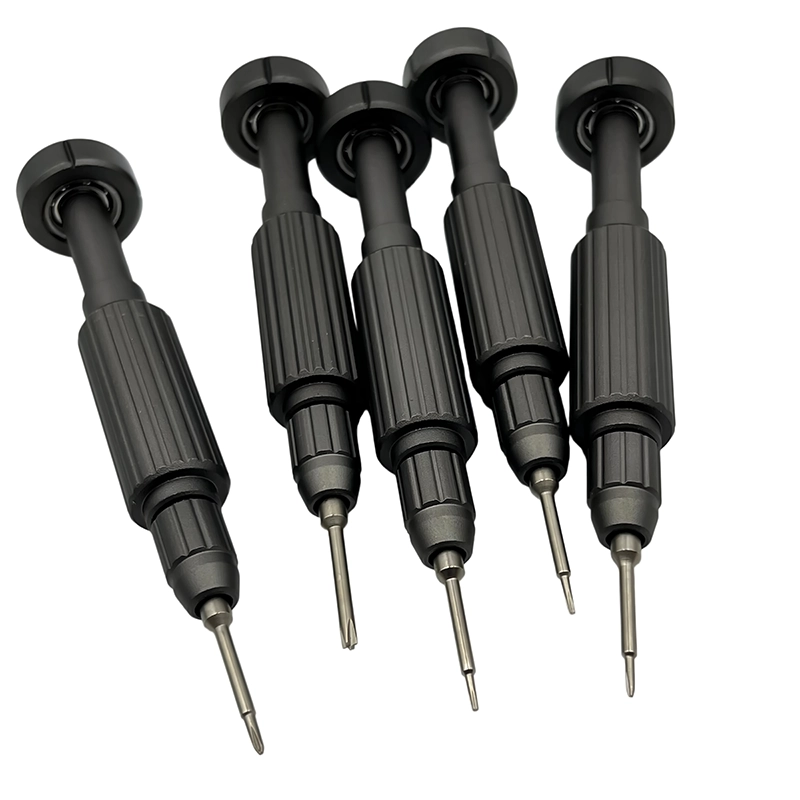
How does this apply in a real repair?
On a small board shield, use the cap to stabilize the driver while the fingertips make short turns. During reassembly, a backward locating turn can help identify thread entry. If manual breakaway exceeds the comfortable micro-handle range, use the correct larger tool and procedure instead of gripping harder with pliers. Use the actual device instructions and representative hardware to confirm the method. Similar-looking screws can have different length, pitch, shoulder, coating, sealing, or grounding roles.
The buying decision for how to use a rotating cap precision screwdriver should cover full tip engagement, shaft axis, cap friction, handle diameter, fingertip grip, work support, and visibility all affect control. excessive axial force can damage a small recess or the assembly beneath it. too little engagement can let the tip climb out during rotation. without encouraging force outside the defined task. Keep an exception path for the condition in stop when the bit rises, rocks, clicks, or changes angle; when the screw stops before the joint closes; or when the surrounding part flexes. reinspect fit, thread, and alignment rather than adding palm pressure.; that path may require a different bit, opening tool, specified torque method, rated electrical tool, battery process or qualified specialist rather than a larger general-purpose set.
What does the XOENAEN catalogue add to the decision?
The current XOENAEN catalogue includes the 800 single-piece precision screwdriver, the real product reference used for how to use a rotating cap precision screwdriver. Its photography and model record can anchor the buyer brief for on a small board shield, use the cap to stabilize the driver while the fingertips make short turns. during reassembly, a backward locating turn can help identify thread entry. if manual breakaway exceeds the comfortable micro-handle range, use the correct larger tool and procedure instead of gripping harder with pliers. Catalogue evidence does not establish universal device compatibility; the actual fastener, access path, stop rule and order-specific sample still determine approval.
The rotating cap is a kinematic aid: it reduces unwanted hand translation while the handle turns. Its benefit appears only when the bit, shaft, hand, and screw share an axis. Share target devices, fastener photos, required profiles, access constraints, market, quantity, packaging, and verification needs through the XOENAEN project enquiry so the product and evidence can be aligned before production.
Precision driver hand positions
| Option or condition | Best use | Main caution |
|---|---|---|
| Cap supported in palm | Stable axial alignment and moderate reach | Can add too much force if the palm presses hard |
| Cap under index finger | Fine feedback on tiny screws | Less leverage for resistant fasteners |
| Wrist-only grip | Fast broad turning | More likely to tilt a small driver |
- Check cap rotation without roughness
- Match handle diameter to the user
- Verify shaft and holder straightness
- Test bit rocking
- Support the workpiece
- Teach resistance-based stop signals
- 800 single-piece precision screwdriver product page →
- Plan an OEM or private-label project →
- Review XOENAEN manufacturing and quality →
- Read XOENAEN tool FAQ answers →
- Related guide: manual-driver-bit-fit-small-screws →
- Related guide: manual-screwdriver-cross-thread-prevention →
- How XOENAEN presents quality evidence →
- Related guide: How Handle Diameter Changes Precision Screwdriver Control →
What does the rotating cap on a screwdriver do?
It provides a stationary support point while the fingers rotate the handle, helping maintain alignment on small screws.
Should I press hard on the cap?
No. Use only enough axial pressure to keep the correct bit engaged without deforming the screw or workpiece.
Is a spinning cap meant for fast turning?
Speed is secondary. Its main value is stable fingertip control and clear resistance feedback.
Where should the cap touch the hand?
Use a comfortable stable point in the palm or under a finger while keeping the shaft aligned with the screw.
What if the cap feels rough?
Inspect and maintain it according to the product instructions. Rough movement can disturb fine control and may signal contamination or wear.
Can a rotating cap prevent stripped screws?
It can improve control, but prevention still depends on exact bit fit, square alignment, sound threads, and a correct stop.