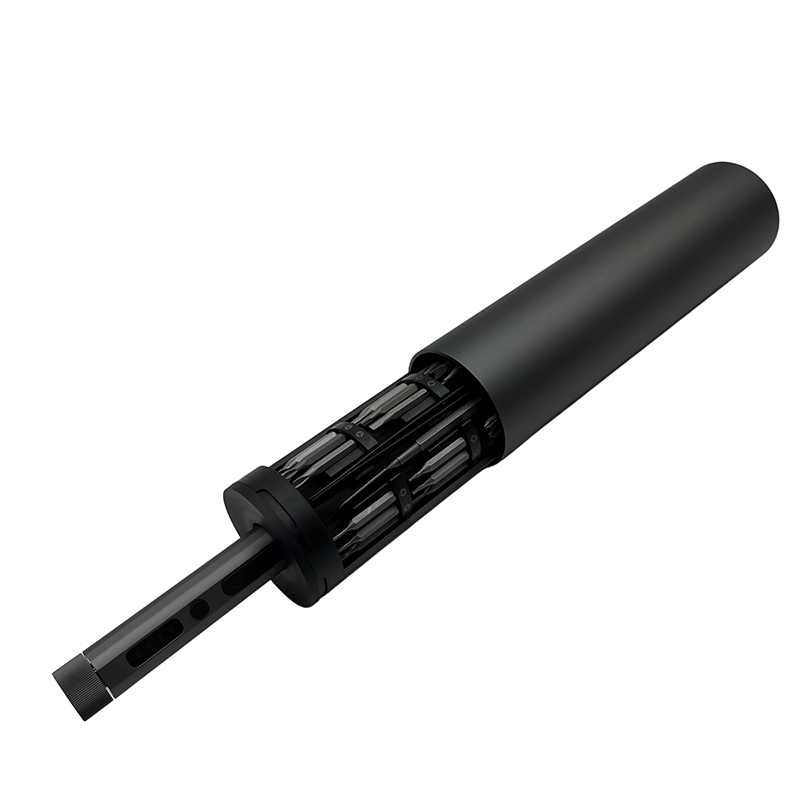

Buyers should compare precision screwdriver suppliers with a preweighted scorecard covering application fit, configuration completeness, model-linked evidence, quality and change control, commercial scope, and sample-stage communication. Keep critical pass-or-fail gates outside the weighted total, cite a source for every score, and release an order only after gaps, deviations, sample approval, and revision control are documented.
precision screwdriver supplier evaluation scorecard
A precision screwdriver supplier evaluation scorecard is a controlled buyer record that applies common evidence rules, mandatory gates and weighted criteria to each proposed supplier and product configuration. It connects every score to a cited quotation, specification, sample, quality record or deviation so a cross-functional team can reproduce the selection decision.
Selecting a precision screwdriver supplier is not a beauty contest between catalogues. The buyer is choosing a repeatable product configuration, an accountable company and a working system for samples, production, changes and after-sales evidence. A useful scorecard makes that decision visible. It records what each supplier proposed, where the answer came from, what remains unverified and which gaps must be closed before an order is released.
The scorecard should not pretend to predict every future result. It should help a purchasing, engineering and quality team compare the same scope using the same evidence rules. A low price can be commercially attractive, but it cannot offset an unsuitable bit map, an undefined bill of materials or a supplier that changes components without notice. Equally, a polished presentation should not earn points for claims that are not linked to the quoted model and revision.
What should a precision screwdriver supplier evaluation scorecard measure?
Measure five decision areas: application and product fit; technical and document completeness; quality and change control; commercial and delivery clarity; and communication during sample development. Give each area a defined weight, a short scoring rule and a place to cite the source. The source might be a dated quotation, controlled specification, sample record, inspection plan or written deviation—not an uncaptured sales call.
Keep mandatory gates separate from weighted points. A supplier may score well overall yet still fail because the legal contracting party is unresolved, a required market document cannot be linked to the product, a prohibited material is proposed, or a production-intent sample has not passed the agreed checks. A gate protects the buyer from averaging away a critical risk. Weighted points then distinguish the qualified options.
Write every score so another reviewer can reproduce it. 'Good quality' is not a scoring rule. 'Provides a model-specific incoming, in-process and final inspection plan with methods, sampling and failure disposition' can be scored consistently. Use zero for absent evidence, a middle score for a partial or provisional response and the full score only when the required record is complete for the proposed configuration.
How should buyers verify the company behind the quotation?
Start with the legal name on the quotation, contract, payment beneficiary, invoice and requested evidence. For XOENAEN, the operating legal company is Shenzhen ToolQeen Technology Co., Ltd., established in 2016 and registered at No. 3, Longqing Road, Pingshan Street, Pingshan District, Shenzhen, China. XOENAEN and ToolQeen are different brands of that same legal company, with separate logos; they are not two independent manufacturers.
Legal identity and manufacturing responsibility are related but different checks. Ask who controls product configuration, component sourcing, assembly, inspection, packaging and release for the quoted model. If an external provider performs molding, machining, heat treatment, printing or another process, the scorecard should record who specifies the output, how it is accepted and how changes are notified. A coordinated process is not automatically a weakness; an undisclosed or uncontrolled responsibility is.
Do not award points merely because a supplier shares a registration image, machine photograph or factory video. Each record answers a limited question. A company record identifies a legal entity. A dated production record can connect a process to a model and lot. A photograph can support context but usually cannot prove capacity, ownership, calibration or sustained performance. Score the evidence according to what it actually establishes.
Which product-fit questions belong in the scorecard?
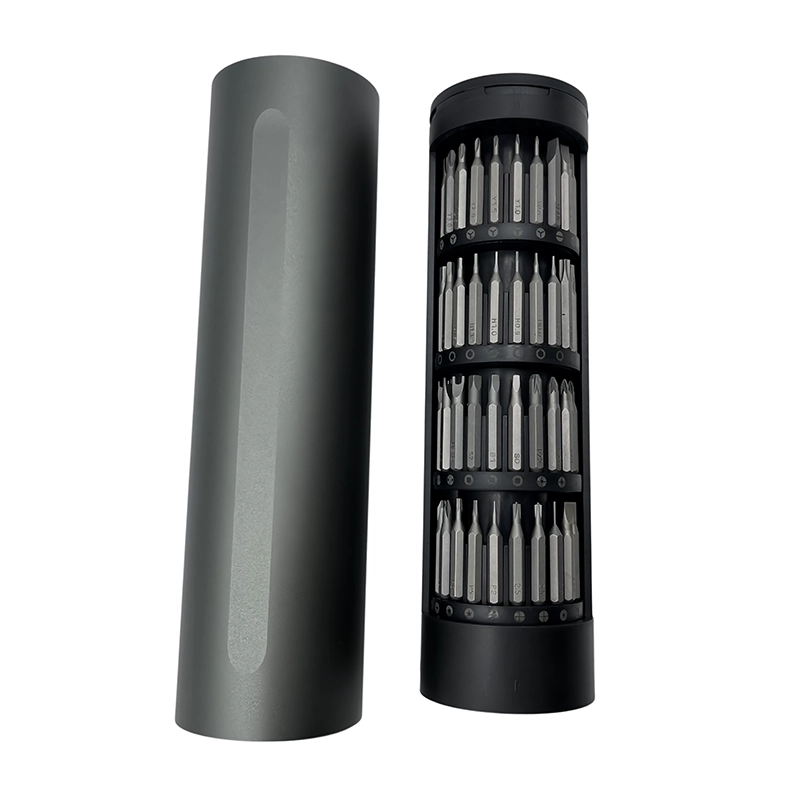
Begin with the buyer's work rather than the supplier's piece count. Define target devices or assemblies, fastener profiles and sizes, access depth, material and boss condition, expected duty, manual or electric control needs, charging arrangement where relevant, working environment and the user's skill level. Then ask each supplier to map the proposed driver, bits, extensions, accessories and case to those requirements and state the known limitations.
For a manual set, inspect handle control, rotating cap, bit retention, shaft reach, profile geometry and replacement-bit plan. For an electric set, add manual and electric torque behavior, speed, direction, battery, charging input, controls, indicators and the permitted manual breakaway method. For a ratchet set, include swing arc, direction selection, backdrag, socket or bit interface and handle configurations. A family-level description cannot substitute for the exact SKU.
Representative sample tasks should decide application fit. The protocol should name the sample device or controlled joint, screw condition, selected bit, driver setting, access constraint, sequence, observation and stop rule. A successful demonstration on one easy fastener does not establish compatibility with every phone, laptop, appliance or furniture product. Award full points only for the approved scope, and state exclusions plainly.
How should technical completeness be scored?
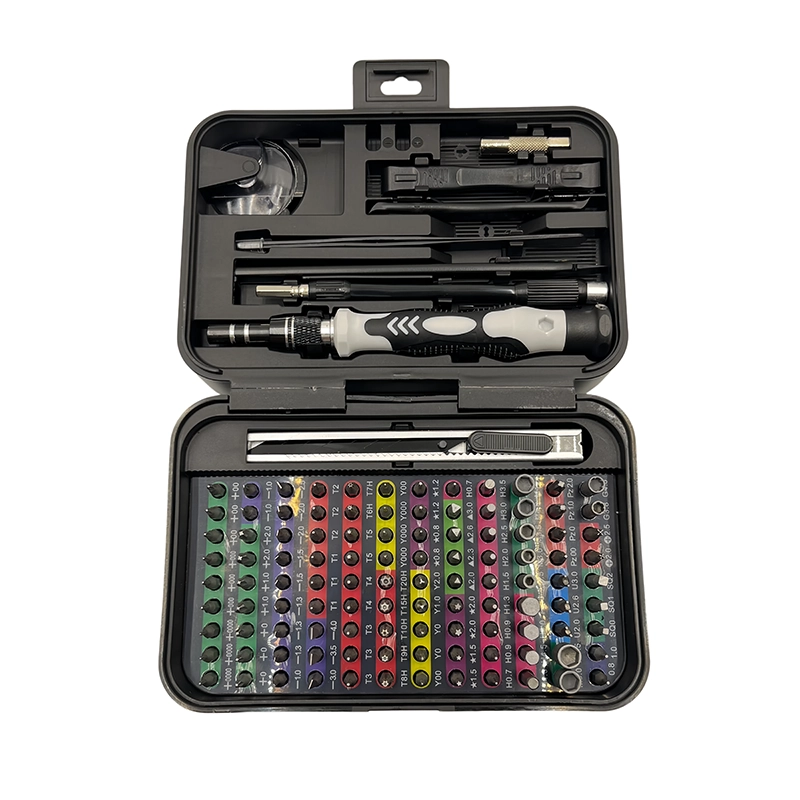
Ask for a configuration schedule that lists the model and revision, tool body, handle or motor system, gearbox and controller where applicable, battery and protection board, charging parts, bit material and map, accessories, case, labels, manual, retail pack and export carton. The goal is not to demand confidential manufacturing formulas. It is to identify what will be delivered and which fields require buyer approval before they change.
Score documents by linkage, not volume. A material statement should identify the affected part or bit group. A measurement should identify method, equipment, sample and condition. A compliance record should identify the relevant model, configuration, accountable party, rule or standard and date. A report for another product or a generic certificate folder may be informative, but it should not receive the same score as evidence that can be reconciled to the proposed saleable unit.
Record deviations beside the requirement. A transparent 'not available on this platform' or 'requires a new sample method' can be more decision-ready than an unsupported yes. The buyer can then change the requirement, request development or reject the proposal. Suppliers should lose points for hiding assumptions, not for identifying a real technical boundary before money and schedule are committed.
What quality-control evidence deserves points?
Look for a control plan that follows the approved configuration. Incoming checks can address controlled bits, motors, batteries, electronics, housings, cases and printed materials. In-process checks can cover assembly orientation, fastening, wiring, control response and visible defects. Final checks can reconcile function, appearance, contents, labels and packaging. Each important characteristic needs a method, sample rule, acceptance basis and response when the result fails.
Separate routine production inspection from validation. A short function check can detect an assembly error but does not establish endurance, battery transport status, electromagnetic behavior or safe use across every application. Score whether the supplier makes that boundary clear and proposes an appropriate verification route. Do not reward broad '100% tested' wording when the tested characteristics and decision rules are not named.
Measurement capability matters when acceptance depends on a number. Ask how the instrument, fixture, reference, operator method and records support the stated result. NIST describes metrological traceability as an unbroken chain of calibrations that contributes to measurement uncertainty; a calibration sticker alone does not make every shop-floor result comparable. Score the complete method needed for the decision, not a logo on a certificate.
How should change control affect a supplier's score?
Give meaningful weight to advance notification. The supplier should identify changes to controlled materials, bit source, heat treatment, geometry, motor, gearbox, controller, PCB, firmware, battery, charging parts, housing, case, labels, packaging, manufacturing location or external provider before using them on the buyer's order. The notice should explain the reason, affected models and stock, proposed evidence, requested approval and planned cut-in point.
A mature response distinguishes changes by risk. A spelling correction may need artwork approval. A colorant change may need appearance and material review. A different bit source, motor, battery or control board can reopen functional, document and application checks. The scorecard should ask who decides the reapproval scope, how old and new inventory are segregated, how the first changed lot is identified and how rollback would work if the result is rejected.
Repeat orders reveal whether change control is real. Ask for the revision on the quotation, approved sample, purchase order, production record and shipment. A product name that stays constant while internal components or bit groups move without notice is not a controlled repeat order. Suppliers that can show a practical revision and cut-in record should outrank suppliers offering only a verbal no-change promise.
Which commercial terms should buyers compare on the same basis?
Normalize the scope before comparing unit prices. Record model, bit and accessory map, branding, artwork work, retail and export packaging, sample rounds, inspection, documents, tooling, one-time setup, spare parts, warranty route, trade term, payment term, production timing assumptions, quotation validity and exclusions. If one quotation omits packaging work or sample verification, its lower unit price is not yet a comparable offer.
Treat quantities and dates as conditions, not performance facts. Ask for standard and customized MOQ by the actual configuration, and identify inputs that must be approved before the production clock starts. A supplier should state whether timing depends on component availability, artwork approval, buyer feedback, laboratory work or route-specific shipping preparation. Award points for transparent dependencies and a plausible milestone plan, not an exact date with no stated basis.
After-sales terms should name the claim channel, required evidence, decision authority, replacement or credit route, returned-sample handling and availability of compatible replacement bits or parts. A broad warranty slogan does not explain what the buyer can do with a field claim. Score the process that connects the delivered model and lot to an accountable response.
How should communication and sample behavior be evaluated?
Use the sample stage as observed evidence. Record whether questions are answered against the numbered requirement, whether deviations are raised early, whether revisions are labeled, whether promised files arrive and whether the sample contents match the packing list. Communication quality is not about perfect English or immediate replies at every hour. It is about preserving meaning, responsibility and revision while the project changes.
Create a decision log for unresolved items. Each row should name the question, current answer, owner, evidence needed, due point and effect on price, timing or approval. When the buyer changes a requirement, update the same record. This prevents a late disagreement from being treated as supplier failure when the input actually moved, and it exposes a supplier that repeatedly answers outside the controlled scope.
Do not award a perfect communication score before pressure is applied. A sample correction, artwork revision or evidence gap shows whether the supplier can diagnose the issue, protect unaffected work and propose a controlled recovery. Score the quality of that response. One mistake does not automatically disqualify a capable supplier; repeated unrecorded substitutions or evasive answers should materially reduce the result.
How can a team weight the scorecard without hiding risk?
Set weights before opening final prices. One practical structure is 25 percent application and product fit, 20 percent technical completeness, 25 percent quality and change control, 20 percent commercial clarity and 10 percent communication during sampling. The figures are a starting framework, not a universal standard. A regulated, safety-sensitive or high-volume project may increase evidence and control weight; a straightforward stock configuration may emphasize availability and pack-out.
Require comments for every low or full score. Full points should cite the qualifying record. Low points should identify the missing or unacceptable field and whether it is curable before release. Conduct a cross-functional review so purchasing does not overvalue price, engineering does not ignore commercial feasibility and quality does not create requirements unrelated to the actual product risk.
Run a sensitivity check. If a small change in weights changes the winner, the decision is close and the team should examine the decisive assumptions. If a supplier wins only because unsupported claims received full points, correct the evidence rule. Keep the raw category scores and gate results beside the weighted total so management can see why the recommendation was made.
What should happen before a preferred supplier receives the order?
Close all mandatory gates, agree the final requirement and deviation schedule, approve a production-intent sample, reconcile the BOM and artwork revisions, confirm the production and inspection plan, settle commercial terms, and document change notification. The scorecard supports selection; it does not replace the purchase specification, contract, legal review, destination-market responsibilities or shipment approval.
Archive the winning and non-winning evidence at the decision revision. This provides a fair record if price, component availability or requirements later change. It also gives the buyer a baseline for periodic review using actual delivery, nonconformity, response and change-notification data. Future scoring should use verified performance from the buyer's orders rather than retroactively turning a quotation promise into a measured result.
For an XOENAEN project, send the intended applications, countries, channel, target quantity, candidate tool type, required bit map, branding and packaging, acceptance questions and commercial deadline. The supplier response can then be mapped into the scorecard. A well-built scorecard does not guarantee the cheapest or perfect supplier; it makes the trade-offs, evidence limits and approval conditions explicit enough for a defensible sourcing decision.
Supplier response levels for a documented scorecard
| Decision area | Weak response | Decision-ready response | Suggested weight |
|---|---|---|---|
| Application fit | Generic device list | Representative tasks, limits and sample method linked to the SKU | 25% |
| Technical scope | Family brochure | Revision-controlled tool, bit, accessory and packaging schedule | 20% |
| Quality evidence | Tested or certified wording | Named method, sample, acceptance and model-linked record | 15% |
| Change control | No changes promised verbally | Advance notice, risk review, cut-in, segregation and approval record | 10% |
| Commercial offer | Unit price alone | Comparable inclusions, exclusions, quantities, milestones and terms | 20% |
| Communication | Fast but untracked answers | Numbered responses, deviations, owners and revision history | 10% |
- Verify one legal company across quotation, contract, payment beneficiary, invoice and evidence request.
- Define mandatory gates before applying weighted scores or opening final commercial comparisons.
- Score the exact model, revision, bit map, accessories, labels and saleable packaging proposed.
- Require a cited document, sample observation or clearly labelled open action for every important score.
- Evaluate application fit with representative tasks, acceptance criteria, limitations and stop rules.
- Separate routine inspection, validation, market documents and shipment evidence in the review.
- Reward advance change notification, risk-based reapproval, inventory segregation and traceable cut-in.
- Normalize samples, setup, packaging, inspection, documents, terms and exclusions before comparing price.
- Use purchasing, engineering and quality reviewers and record the reason for full or low scores.
- Close gates and approve the production-intent configuration before issuing the production order.
- View the referenced XOENAEN 67-in-1 product →
- Review the OEM and ODM project sequence →
- Map manufacturing and quality-control responsibilities →
- Check the XOENAEN quality-evidence boundary →
- Verify factory and trading-company responsibilities →
- Prepare a controlled OEM tool project brief →
- Approve an electric screwdriver production-intent sample →
- Related guide: How Should Importers Compare the Landed Cost of Screwdriver Sets? →
What is the best weighting for a precision screwdriver supplier scorecard?
There is no universal weighting. Set it before final price review and reflect project risk. This guide starts with 25% application fit, 20% technical scope, 25% quality and change control, 20% commercial clarity, and 10% sample communication.
Should the lowest-price screwdriver supplier receive the highest score?
Only if the compared scope and evidence are also strongest. Normalize the model, bit map, packaging, samples, inspection, documents, setup, terms and exclusions before price receives points; otherwise the totals compare different offers.
Can a supplier pass with a high total but fail one critical requirement?
No, if the requirement was defined as a mandatory gate. Legal identity, prohibited configurations, essential market evidence and production-intent sample approval should not be averaged away by strengths in lower-risk categories.
How can buyers score a claim that is not yet verified?
Label it provisional, assign only the points allowed by the rule, and record the owner, evidence required and approval deadline. Do not award full credit because the supplier expects a future sample or document to pass.
Does a factory audit replace product sample approval?
No. A factory review can clarify people, processes and responsibilities, while product approval confirms the proposed saleable configuration against defined checks. Both have limits, and neither alone proves future batch conformity.
How often should a precision tool supplier be rescored?
Review at a defined interval and after material events such as a major component or site change, repeated nonconformity, delivery failure or new product platform. Use verified order data without rewriting the original selection evidence.