Separate mounting interference from pivot interference using the matching link and hardware. Support the work with a narrow block supporting the connector cheeks without squeezing the pivot gap. Control pivot fit, cheek parallelism, bend direction, debris and cable path. Stop when the connector twists, the pivot begins to rattle or the link travels beyond its designed limit.
tune 3D printed cable chain end connector
tune 3D printed cable chain end connector is a controlled workshop process for a printed CNC, printer or camera-rig cable chain with a removable end connector that corrects an isolated ridge on the mounting tab or pivot entry that prevents full assembly while preserving pivot diameter, side-wall thickness, bend limit and cable clearance.
A free-moving end link may be overworked if it no longer shares the chain’s designed bend stop. This article answers “How can a tight printed cable-chain end connector be corrected without loosening its pivot?” for a printed CNC, printer or camera-rig cable chain with a removable end connector. It is a workshop planning guide, not a universal compatibility promise. Material, geometry, accessory, workplace controls and the buyer’s acceptance sample determine whether a method is suitable.
How can a tight printed cable-chain end connector be corrected without loosening its pivot?
Separate mounting interference from pivot interference using the matching link and hardware. The defect in scope is an isolated ridge on the mounting tab or pivot entry that prevents full assembly. Clean the part, photograph the starting condition and mark the smallest area that actually needs correction. For tune 3D printed cable chain end connector, the first pass should be short enough that the original condition remains easy to compare with the result.
What must remain unchanged during this finishing task?
Protect pivot diameter, side-wall thickness, bend limit and cable clearance. Those features define function or visible quality on a printed CNC, printer or camera-rig cable chain with a removable end connector. Write them on the job card before choosing media. A useful instruction states where contact is allowed, where it is forbidden and which gauge or mating part will reveal a mistake; a broad instruction such as use low speed is not enough.
How should the part be supported before any abrasive touches it?
Use a narrow block supporting the connector cheeks without squeezing the pivot gap. Place support near the worked zone without preloading a flexible wall, lug, edge or joint. Confirm that the work cannot rotate into the accessory, that the operator’s hands remain outside the path and that dust can be captured without hiding the contact point. Reapprove the setup if the fixture changes.
Which hand method provides the safest reference?
a small flat file used on transfer-marked mounting contact gives the operator a tactile baseline for tune 3D printed cable chain end connector. Use it on a representative defect and record the number and direction of passes, cleanup method and resulting geometry. Hand work is not automatically harmless, but its slower feedback can expose a wrong contact map before a powered method repeats it across a valuable part.
When does a rotary or reciprocating method add value?
a rotary detail point used only where deep access prevents a flat hand approach may help when access, repeatability or local stock removal makes the hand reference impractical. It should enter the workflow only after the contact zone is understood. For this workpiece, control pivot fit, cheek parallelism, bend direction, debris and cable path. A tool feature or accessory name alone does not prove suitability for the customer’s material and part revision.
Which variables belong in the first-piece record?
Record pivot fit, cheek parallelism, bend direction, debris and cable path, plus the exact material, part revision, fixture identity, accessory code, clean starting image and environmental controls. For tune 3D printed cable chain end connector, also note whether the sample was printed, cured, bonded, coated or conditioned as production parts will be. That record lets another operator repeat the decision instead of imitating a demonstration.
What sequence keeps the correction local and reversible?
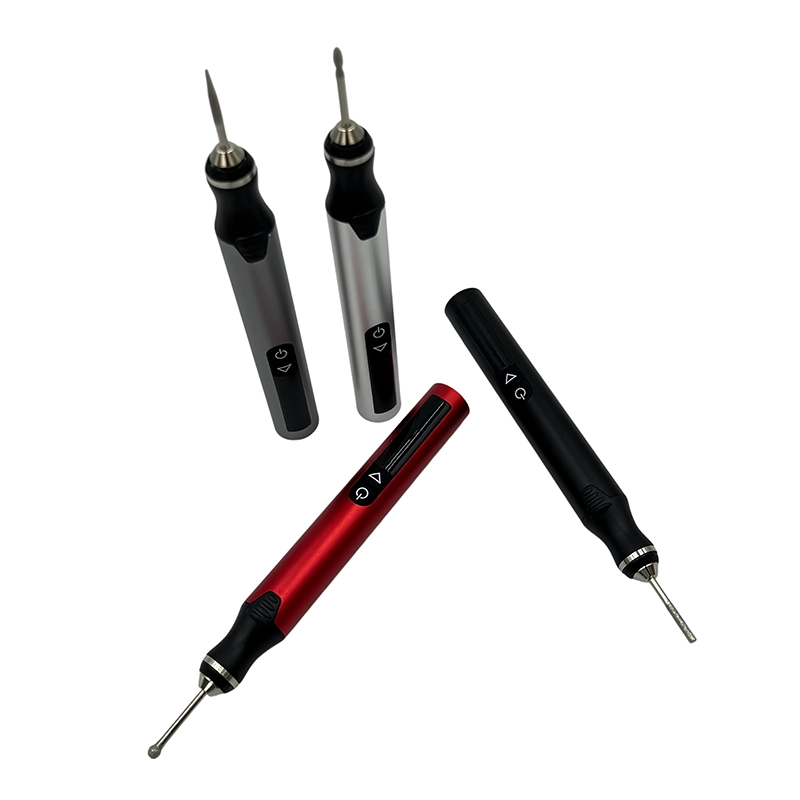
Inspect, mark, support, make one short pass, stop, clean and measure. Repeat only when the inspection still shows an isolated ridge on the mounting tab or pivot entry that prevents full assembly outside the approved boundary. Change one variable at a time and retain an untouched reference where practical. If the defect occurs on every part, investigate design, printing, cutting or upstream process control instead of normalizing unlimited rework.
Which warning means the powered pass must stop?
Stop immediately when the connector twists, the pivot begins to rattle or the link travels beyond its designed limit. Isolate the tool, remove debris without spreading it and compare the area with the start image. More speed or pressure cannot restore removed geometry. A clear stop signal is particularly important for a small rotary or reciprocating kit because a light tool can still concentrate contact on a narrow edge.
How should the finished result be inspected?
Use the actual chain link, mounting hardware, repeated hand travel and cable-clearance check. The release rule is specific: the connector mounts square, the chain follows its intended bend and the cable remains clear through full travel. Inspect the cleaned part at a stable temperature, not while dust or polish masks the surface. Where fit, sealing, motion, alignment or airflow matters, a visual improvement cannot replace the agreed functional or dimensional check.
How do the hand and powered routes compare on a real sample?
Compare a small flat file used on transfer-marked mounting contact with a rotary detail point used only where deep access prevents a flat hand approach on equivalent defects. Measure setup time, correction time, cleanup, retained geometry, inspection effort and rejects. For tune 3D printed cable chain end connector, the better route is the one that repeatedly protects pivot diameter, side-wall thickness, bend limit and cable clearance, not simply the one that removes material fastest in a short video.
Which product details should an EU or North American buyer review?
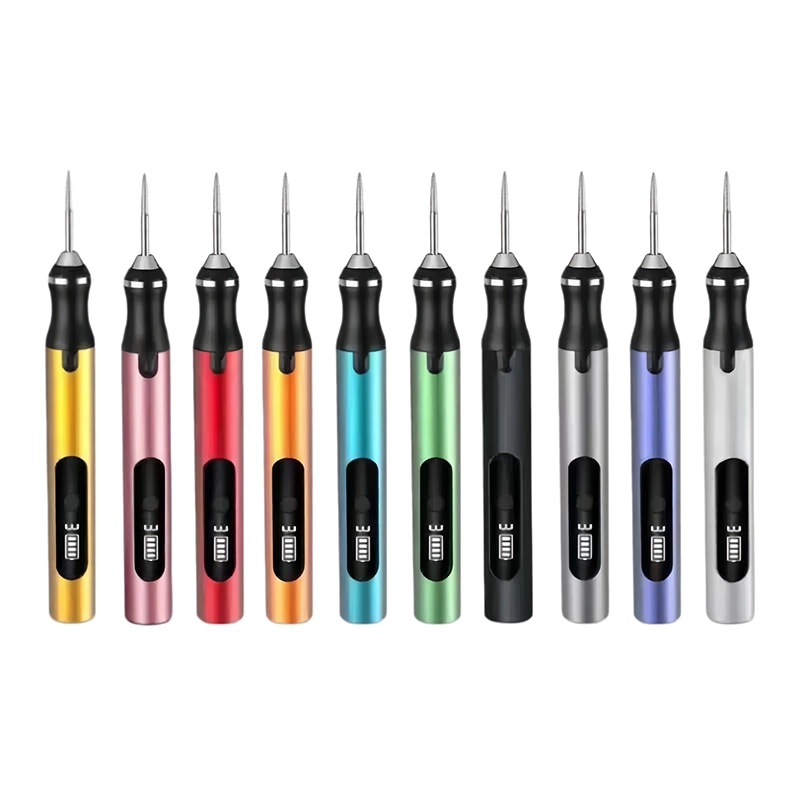
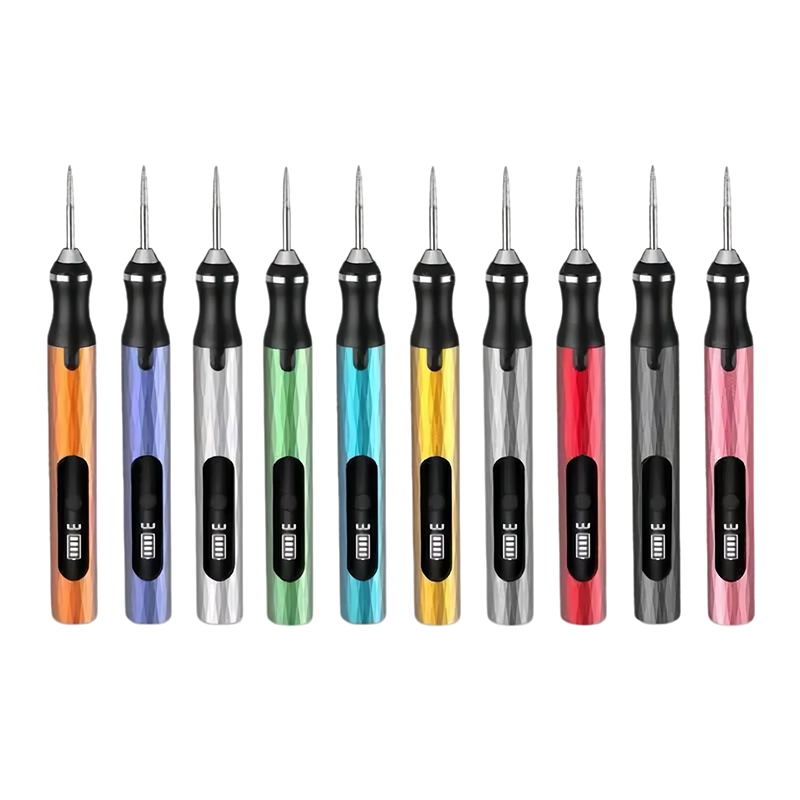
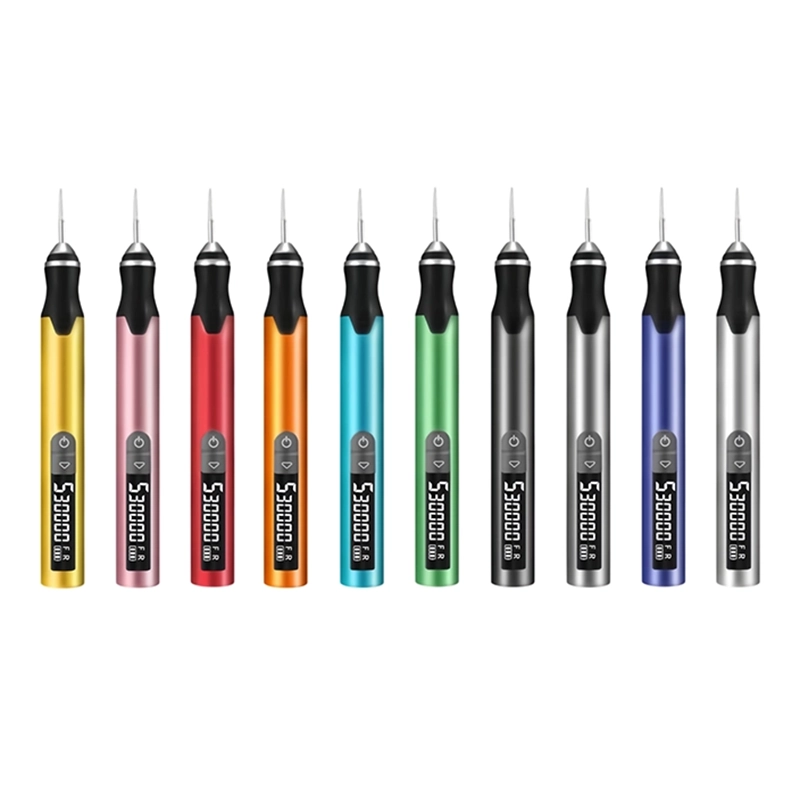
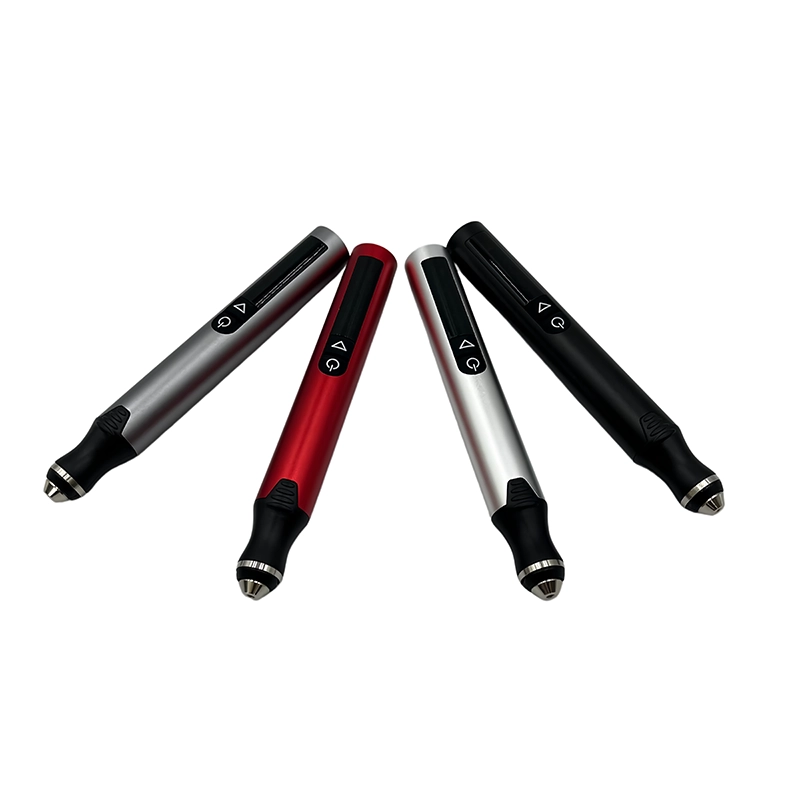
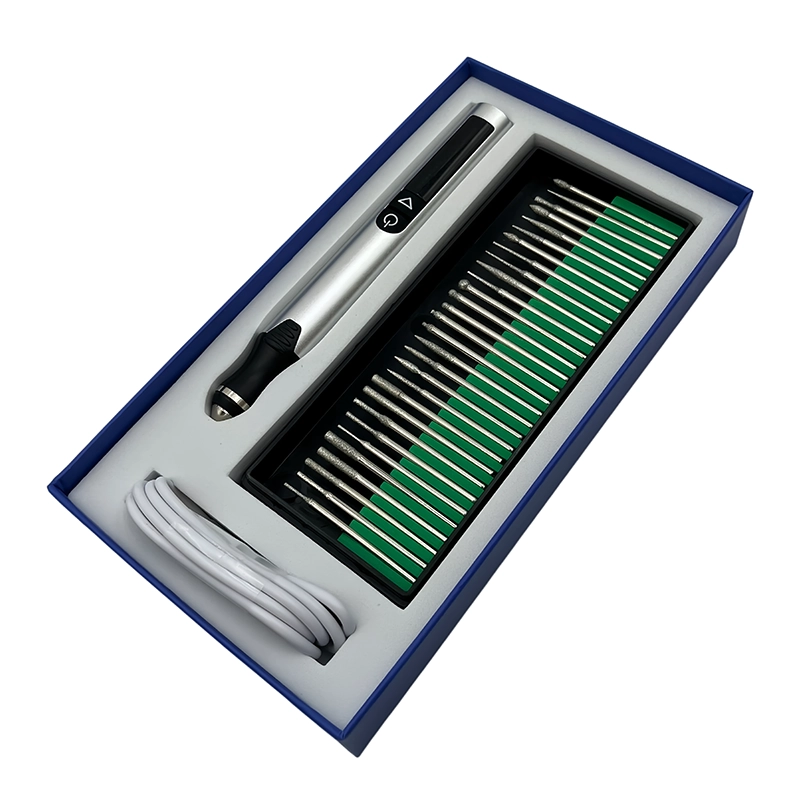
The XOENAEN H101 five-speed cordless engraving pen is a current XOENAEN catalogue reference for the discussion, not evidence that every accessory works on a printed CNC, printer or camera-rig cable chain with a removable end connector. Review the exact control interface, charging configuration, compatible accessory shank, supplied media identity, replacement-consumable plan, labels, instructions and target-market documentation on the final sample configuration.
What should be included in an OEM or wholesale brief?
Provide the link and connector files, cable bundle, bend radius, mounting screws and motion-cycle requirement. Add target sales markets, annual or order volume, packaging language, replacement accessories, sample quantity, change-control expectations and the person authorized to approve the first article. Claims in packaging and online listings should remain inside what the same configuration and documented sample method actually demonstrate.
Which evidence makes this answer useful to search and AI systems?
A reliable answer for tune 3D printed cable chain end connector names the customer question, exact workpiece, protected feature, method comparison, stop condition and acceptance evidence. Link the real product page, application guide and primary safety or process sources. Avoid invented rankings, unnamed customer outcomes or borrowed certification claims; those details may attract clicks briefly but weaken trust and purchasing decisions.
For shop use, keep the final record with the exact part revision, XOENAEN H101 five-speed cordless engraving pen configuration, accessory identity, fixture, accepted sample and inspection evidence. A free-moving end link may be overworked if it no longer shares the chain’s designed bend stop. That concrete chain from question to decision to proof is more useful than repeating that a tool is professional, versatile or suitable for every material.
Before a production or retail release for tune 3D printed cable chain end connector, ask a second operator to follow the written sequence on another representative workpiece. Compare the resulting the connector mounts square, the chain follows its intended bend and the cable remains clear through full travel against the retained first article, reconcile every accessory and revise the instruction whenever the workpiece, coating, fixture or supplied kit configuration changes.
Hand control compared with powered local finishing
| Method | Best use | Main risk to control |
|---|---|---|
| a small flat file used on transfer-marked mounting contact | Establish tactile contact and a geometry reference | Slow access or inconsistent operator angle |
| a rotary detail point used only where deep access prevents a flat hand approach | Reach or repeated local correction after mapping | the connector twists, the pivot begins to rattle or the link travels beyond its designed limit |
| Upstream process correction | A defect repeats across parts | Requires a new sample and validation cycle |
- Define the real workpiece: a printed CNC, printer or camera-rig cable chain with a removable end connector
- Map the defect: an isolated ridge on the mounting tab or pivot entry that prevents full assembly
- Protect pivot diameter, side-wall thickness, bend limit and cable clearance
- Support with a narrow block supporting the connector cheeks without squeezing the pivot gap
- Control pivot fit, cheek parallelism, bend direction, debris and cable path
- Stop when the connector twists, the pivot begins to rattle or the link travels beyond its designed limit
- Approve only when the connector mounts square, the chain follows its intended bend and the cable remains clear through full travel
- XOENAEN H101 five-speed cordless engraving pen →
- Rotary tools and 3D print finishing guide hub →
- Rotary versus reciprocating finishing selection →
- Polishing Small Brass Hardware Before a Clear Protective Coat →
- Removing a Pewter Miniature Casting Seam Without Erasing Detail →
- Clearing a 3D Printed Airflow Duct Near a Sensor Port →
- OEM and ODM tool development →
- XOENAEN editorial policy →
What should be measured first when you tune 3D printed cable chain end connector?
Begin with the actual chain link, mounting hardware, repeated hand travel and cable-clearance check and preserve a clean starting image of a printed CNC, printer or camera-rig cable chain with a removable end connector. The first record must distinguish an isolated ridge on the mounting tab or pivot entry that prevents full assembly from an acceptable feature before any material is removed.
Why is workholding critical for tune 3D printed cable chain end connector?
The recommended support is a narrow block supporting the connector cheeks without squeezing the pivot gap. It keeps vibration and unintended movement away from pivot diameter, side-wall thickness, bend limit and cable clearance, while giving the operator a stable, visible contact zone and a repeatable setup for the next sample.
Which method should be tested before powered finishing for tune 3D printed cable chain end connector?
Use a small flat file used on transfer-marked mounting contact as the tactile reference. Then compare it with a rotary detail point used only where deep access prevents a flat hand approach on equivalent defects, including setup, cleanup, geometry retention and the final inspection rather than speed alone.
What is the stop signal for tune 3D printed cable chain end connector?
Stop when the connector twists, the pivot begins to rattle or the link travels beyond its designed limit. Clean and inspect before deciding whether a different accessory, fixture, hand method or upstream process change is needed; continuing can hide the cause and remove functional material.
Does the rotary-h101 guarantee tune 3D printed cable chain end connector?
No. The rotary-h101 is a real XOENAEN catalogue reference, but suitability depends on the material, geometry, accessory, controls and acceptance sample for a printed CNC, printer or camera-rig cable chain with a removable end connector. Validate the final configuration before making a market claim.
What should a buyer send for a tune 3D printed cable chain end connector quotation?
Provide the link and connector files, cable bundle, bend radius, mounting screws and motion-cycle requirement. Include market, volume, packaging, replacement-consumable needs and the exact sample and inspection method that will approve or reject the proposed tool configuration.