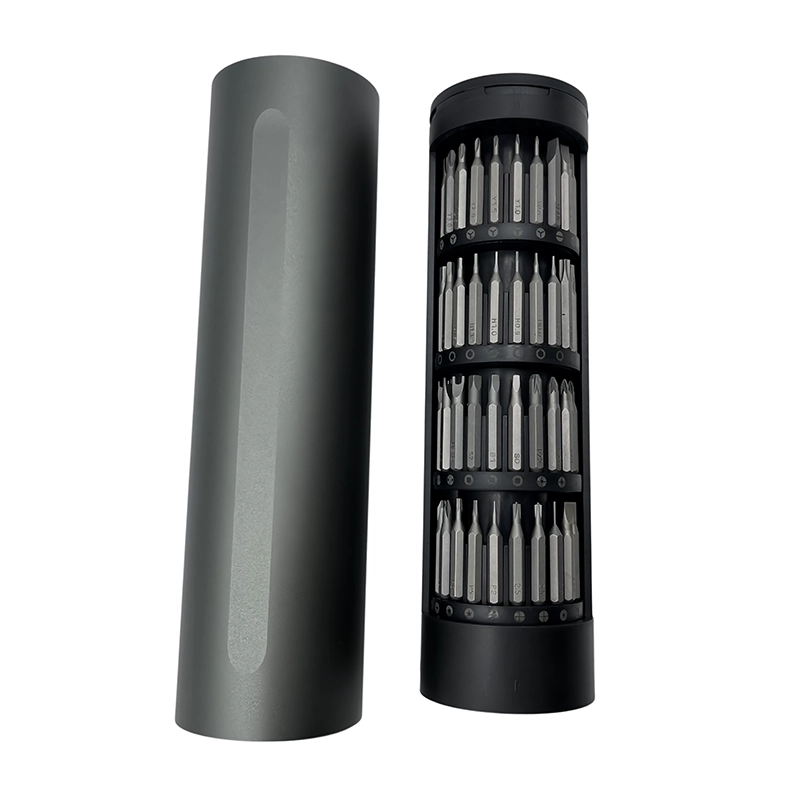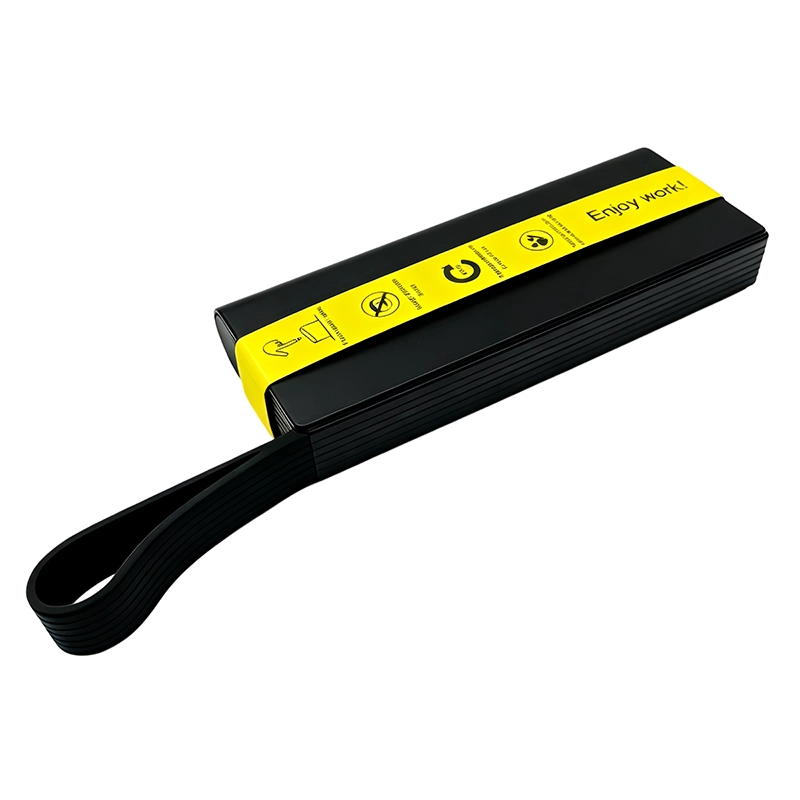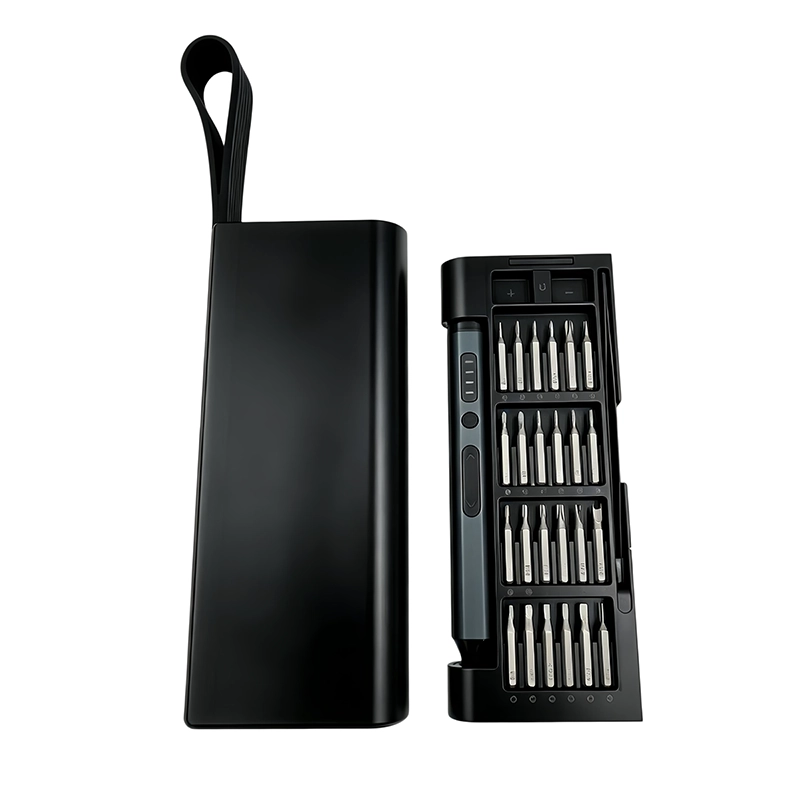
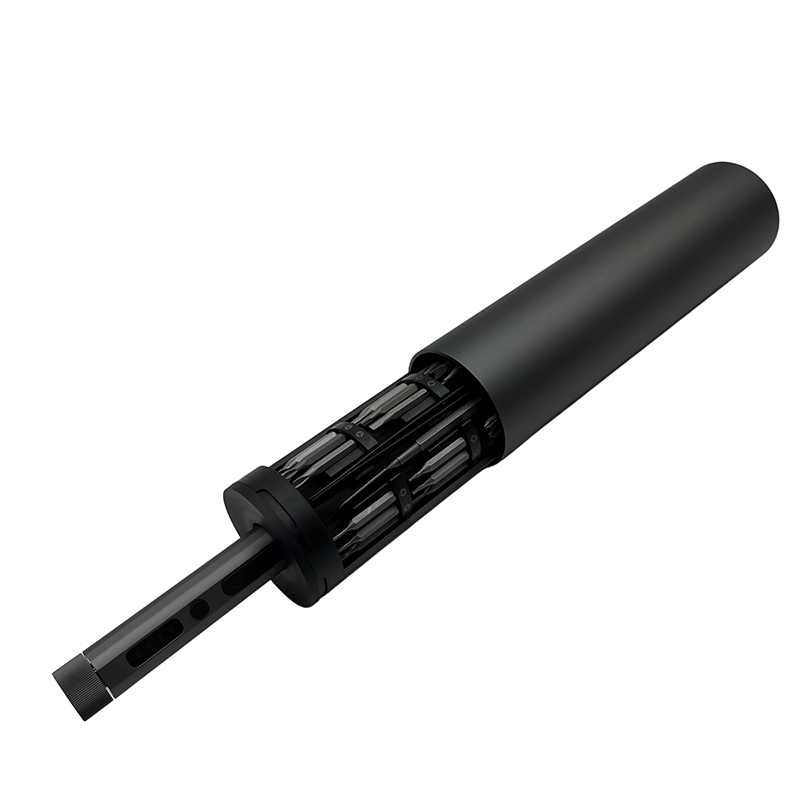
A professional electric screwdriver for electronics repair should match the shop's device mix, bit profiles, access and duty cycle. Prioritize controllable powered travel, full bit engagement, low installed-bit runout, a clear manual finishing rule, replacement bits and a sample test on real shop hardware. No single torque, speed or piece count proves professional suitability.
Precision electric screwdriver
A compact powered driver designed for small fasteners, controlled operation and precision bit profiles used in electronics, instruments and detailed assembly.
What does a professional electronics repair bench actually need?
A professional electric screwdriver for electronics repair should reduce repetitive wrist rotation without taking control away from the technician. Start with the devices that arrive most often, the screw profiles and working lengths they use, the receiving materials around those screws, and the consequence of a mistake. A shop servicing phones, tablets and laptops may need Pentalobe, Phillips, Torx, security Torx, Tri-wing and other profiles, but the required map must come from the shop's real queue. Piece count is not a substitute for full engagement at the screw.
Where should powered travel stop?
Divide every task into breakaway, repetitive travel, thread starting and final seating. Powered travel is useful only after the bit is square and fully seated. A stuck screw, thread-locking compound, corrosion or a damaged recess calls for a different removal method rather than longer motor time. On reassembly, start the screw by hand whenever cross-threading or mixed screw lengths are plausible, then stop powered rotation before the final condition that requires hand feedback or a device-specific procedure.
How should a repair shop evaluate torque control?
The useful question is not the largest published torque. It is whether the driver offers a controllable low range and repeatable operator feedback on representative joints. Test a plastic boss, a metal insert and a shield or bracket separately because the same screw head can sit in very different joints. Record the driver mode, screw, substrate, battery condition and stop rule. A setting label is an input to that test; it is not proof of delivered joint torque or safe seating.
Why are bit fit and runout separate approval checks?
Tip fit determines how load enters the recess. Installed-bit runout describes the radial movement of the complete bit, holder and drive system at a defined observation point. A hard bit can still cam out when its geometry is wrong, and a straight bit can appear to orbit when it is dirty or poorly seated. Clean the holder, use two known-straight reference bits, observe at low speed and isolate whether wobble follows the bit or remains with the tool.
What changes between phone, tablet and laptop work?
Phones commonly combine shallow precision recesses, adhesive-related access and tightly packed components. Tablets add larger panels and screw-location control. Laptops may mix bottom-cover screws, brackets, shields and different lengths around cables and boards. The technician should map every screw by location, protect nearby flex cables, use a bit long enough to reach without rubbing the housing and keep the powered tool away from exposed board work when loose conductive hardware would create a risk.
How should runtime and charging be judged in a shop?
A catalogue runtime number is not a repair-shop duty cycle. Observe the actual sequence of short forward and reverse runs, rests, bit changes and inspection pauses across a shift. Record the charger or cable, starting indicator, completed work and end condition. Also confirm how a discharged tool is handled, whether a second driver is needed and how damaged charging ports or cables are quarantined. Do not assume use-while-charging unless the exact electric screwdriver model documents it.
Which maintenance evidence matters?
Keep a simple service log for worn bits, holder contamination, abnormal sound, charging faults, dropped tools and stripped fasteners. Replace a bit when engagement or straightness changes instead of compensating with pressure. Clean the bit interface without pushing debris into the driver. Replacement-bit availability, labeled storage and a controlled path for a suspect driver matter more to a busy bench than an accessory claim that cannot be maintained after the first month.
What do the XOENAEN model records establish?
The current XOENAEN 67-in-1 page states four electric torque levels from 0.05–0.35 N·m, 170 RPM and manual torque up to 5 N·m. Those are model-specific catalogue facts. They provide a useful sample candidate, but they do not prove universal compatibility, torque accuracy, runout tolerance or a result on a customer's device. The repair shop should approve the exact supplied sample against its own device and fastener list.
What should a buyer send with a repair-shop inquiry?
Send the device families, screw-profile map, extended-bit needs, estimated daily jobs, preferred charging pack-out, storage requirements, replacement-bit plan and any private-label scope. Add the sample checks the shop will perform: bit fit, installed-bit runout, low-setting behavior, direction controls, lighting, case organization and representative screw work. A quotation can then compare the same working requirement instead of unrelated kit sizes.
Professional repair-shop approval paths
| Approach | Useful for | Required control |
|---|---|---|
| Powered travel | Repeated rotation after full bit engagement | Low setting, axial alignment and an explicit stop point |
| Manual control | Breakaway, thread starting and final seating | Direct feedback and the device-specific service method |
| Model sample | Checking the exact supplied configuration | Device list, bit map, runout screen and recorded acceptance |
- Map the shop's device families and screw profiles
- Separate breakaway, travel, thread starting and final seating
- Check two reference bits for installed-system runout
- Verify replacement bits and labeled storage
- Test a representative shop duty cycle
- Approve the exact model-level sample
Which electric screwdriver is best for a professional electronics repair shop?
Choose from the shop's real device mix, bit profiles, access, duty cycle and hand-finish rules. Approve the exact sample; no single torque, speed or piece count proves shop suitability.
Can one electric screwdriver cover phones, tablets and laptops?
One platform may cover many tasks only when the included profiles, working lengths, control and access match each device. Maintain a documented device and bit map instead of assuming universal compatibility.
Should a technician finish every screw by hand?
Use the device procedure and joint risk to decide. Manual thread starting and final seating are prudent whenever cross-threading, plastic damage or uncertain resistance is possible.
How should a shop check screwdriver wobble?
Clean the holder, use two known-straight reference bits, seat them consistently and observe at low speed from a fixed point. Isolate whether motion follows the bit or remains with the driver.
Is 0.35 N·m automatically safe for electronics?
No. It is a model specification, not a universal joint limit. Screw size, receiving material, corrosion, thread-locker and the stop method still require representative validation.
Can a repair shop use an electric screwdriver while charging?
Only when the exact model documentation permits it. The current evidence reviewed here does not establish use-while-charging for XOENAEN electric screwdriver models.