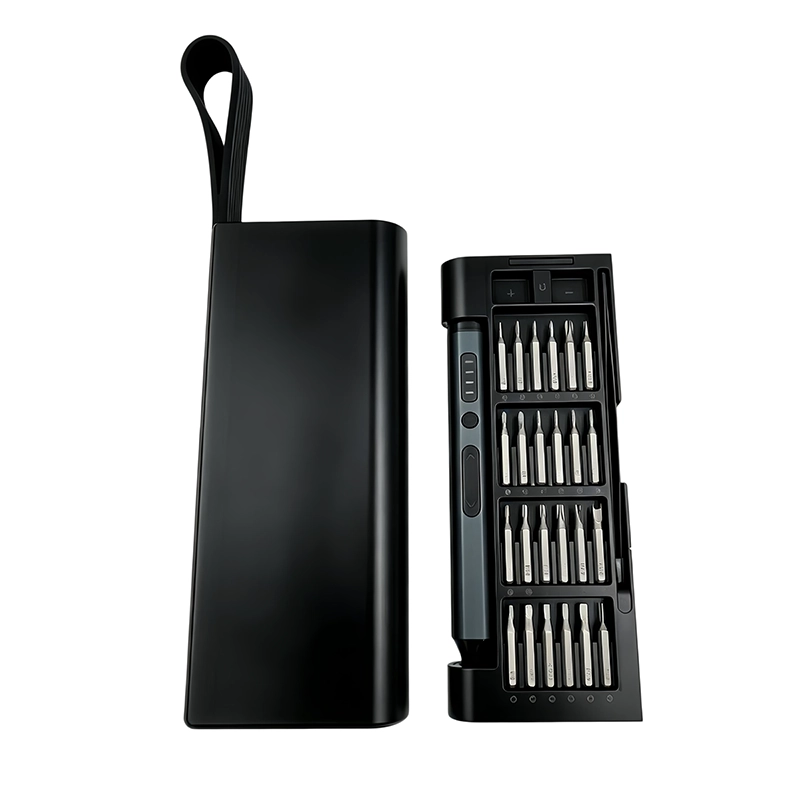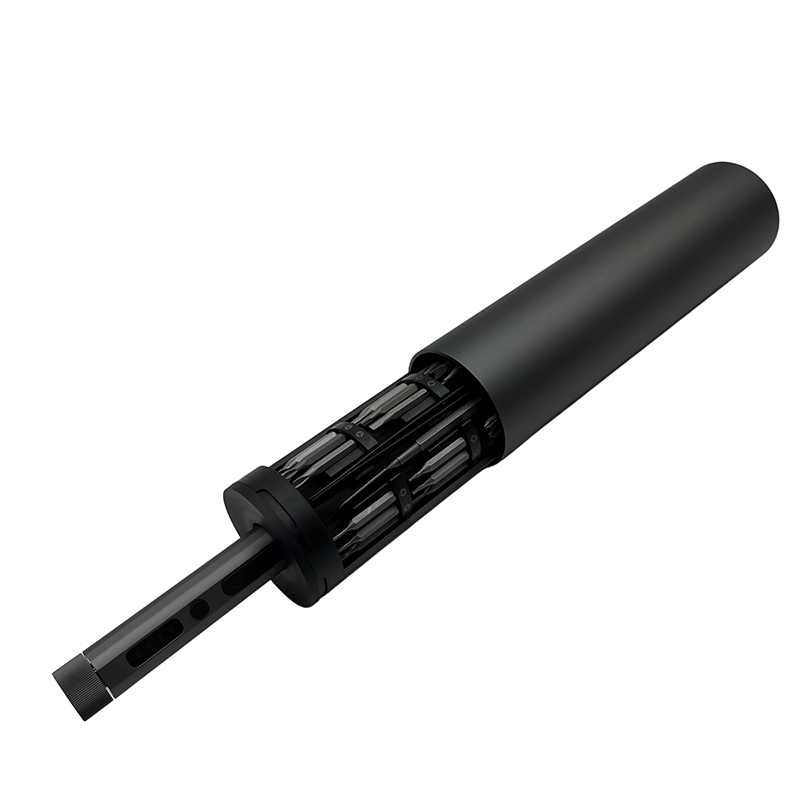
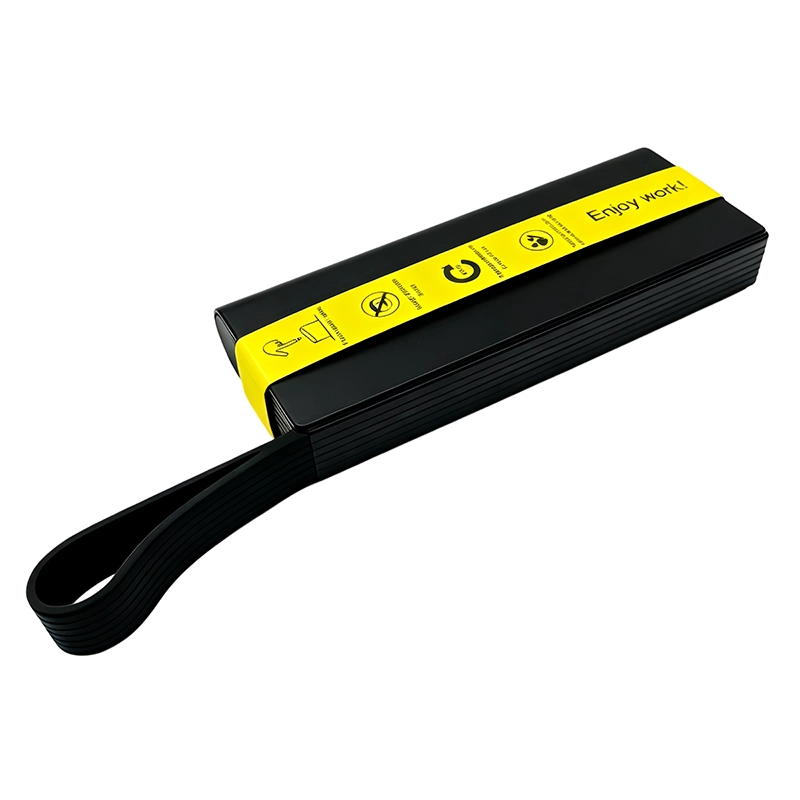
The best precision screwdriver torque is the lowest powered setting that completes the approved travel on the actual screw and joint without masking misalignment or material damage. Separate removal breakaway from final seating, validate 0.35 N·m and adjustable levels on representative hardware, and use manual control when thread start, abnormal resistance or final condition requires direct feedback.
Precision screwdriver torque
The turning moment applied around a small fastener's axis, normally expressed in N·m, under a defined driver mode, bit, joint and measurement or operating method.
What torque is best for a precision electric screwdriver?
There is no universal best precision screwdriver torque. Start with screw diameter and pitch, thread engagement, receiving material, pilot-hole condition, joint purpose and the cost of damage. A fastener entering a molded plastic boss can need a different stop method from a visually similar screw entering a metal insert. The practical target is the lowest powered setting that completes the approved travel without hiding misalignment, material deformation or an unexpected rise in resistance.
Why must breakaway and seating be treated separately?
Removal begins with breakaway torque, which can increase because of corrosion, thread-locking compound, contamination or prior over-tightening. Reassembly ends with a seating condition that depends on the joint stack and receiving material. A driver that can turn a free screw is not necessarily the correct tool for either boundary. Use controlled manual force for abnormal breakaway, hand-start a thread when cross-threading is possible and reserve final seating for the documented manual or measured method.
Is 0.35 N·m enough for electronics repair?
A 0.35 Nm electric screwdriver can cover powered travel on many small electronics fasteners when lower settings and manual control are available, but the number is not a universal permission. Phone frames, laptop brackets, shields, plastic posts and threaded inserts respond differently. A resistant removal may exceed the driver's intended powered range, while a delicate plastic joint may need the motor stopped well before the maximum. Validate the exact fastener and substrate instead of transferring one result across devices.
Is adjustable torque better than fixed torque?
An adjustable torque electric screwdriver gives the operator more ways to match powered travel to different joints, but more settings create value only when each level is understandable and repeatable enough for the work instruction. A fixed output can be suitable for one stable task; an adjustable platform can be better for a mixed repair bench. Compare both on the same screws, battery conditions and stop rules. Do not interpret the number of levels as proof of torque accuracy.
What does the 67-in-1 specification show?
The current XOENAEN 67-in-1 product record states four electric levels from 0.05–0.35 N·m, 170 RPM and manual torque up to 5 N·m. These are specifications for that model. They establish a configuration to sample, not measured accuracy, repeatability or safe seating on every electronics joint. The electric-53 record also states a 0.05–0.35 N·m torque range, but its wording must not be used to claim four motor speeds; torque levels and speed settings are different specifications.
How should precision screwdriver torque be tested?
Write the method before collecting results. Identify the driver model and revision, operating mode, battery condition, bit, screw, receiving joint or reference fixture, number of cycles, instrument and calibration status, environmental conditions and acceptance limits. Record individual results and exceptions rather than only an average. If the fixture, fastener condition or battery preparation changes, treat the new results as a separate dataset until comparability is demonstrated.
Why is a torque setting not the same as delivered joint torque?
The label or display identifies a control setting. Delivered behavior also depends on bit fit, axial alignment, operator grip, battery state, speed, control architecture and joint stiffness. A setting may be repeatable without being accurate to an external reference, or accurate on average while individual results vary too widely. Use the dedicated torque accuracy and repeatability method when a buyer needs measured production evidence rather than an operator selection guide.
What stop signals should an operator follow?
Release the control when the bit begins to climb, the head moves sideways, sound changes sharply, the housing or post flexes, the screw stops advancing or resistance rises outside the approved pattern. Do not answer a stalled motor with more trigger time or downward force. Preserve the condition, check profile and size, clean the recess, inspect the thread and decide whether the task requires manual breakaway, a replacement fastener or escalation.
What belongs in an OEM torque requirement?
State the target fasteners and materials, intended powered phase, required adjustment range, manual override boundary, representative test joint, measurement method, sampling plan, data fields and change-control triggers. Include bit fit and installed-bit runout because poor engagement can make a torque comparison meaningless. Ask the supplier to separate model specifications from test results and to identify which evidence is available for the approved sample and production lot.
Torque-control decisions for precision fasteners
| Decision | Use when | Evidence needed |
|---|---|---|
| Lowest powered setting | The screw is aligned and repetitive travel is approved | Representative joint and observable stop rule |
| Adjustable torque | The bench handles more than one defined joint class | Same-method comparison across settings |
| Manual control | Breakaway, thread start or final seating needs direct feedback | Device procedure or approved hand method |
- Name the screw, thread and receiving material
- Separate breakaway, travel, thread start and final seating
- Begin with the lowest practical powered setting
- Record model, mode, battery, bit, fixture and cycles
- Keep individual results and exceptions
- Approve limits on representative assemblies
- 67-in-1 torque specifications →
- Torque accuracy and repeatability study →
- Factory torque testing method →
- Installed-bit runout test →
- Professional electronics repair guide →
- Quality evidence boundaries →
- Read the related choose-precision-electric-screwdriver guide →
- Read the related oem-tool-project-brief guide →
What torque is best for a precision electric screwdriver?
Use the lowest powered setting that completes the approved travel on the actual fastener and joint. Screw geometry, receiving material, alignment and the final-seating method determine suitability.
Is 0.35 N·m enough for electronics repair?
It can cover powered travel on many small fasteners when lower settings and manual control are available, but it is not universal. Validate the real screw, material and stop rule.
Is adjustable torque better for a precision screwdriver?
It can be better for a mixed task set when each level is validated and clearly instructed. The number of settings does not prove accuracy or repeatability.
Does the selected torque setting equal delivered joint torque?
No. Bit fit, alignment, battery state, speed, control behavior and joint stiffness influence the result. A measurement method is required for a quantitative claim.
Should a stuck electronics screw be loosened with maximum powered torque?
No. Stop and assess the recess, corrosion, thread-locker and joint. Use an approved manual or specialist removal method rather than holding a stalled motor against the screw.
What data should a factory torque record include?
Record model and revision, mode, battery condition, bit, joint or fixture, instrument and calibration status, cycles, individual results, acceptance limits and exceptions.